



Nautical Display Model Hull
These nautical display model hull examples bring maritime craft indoors, offering a tactile piece of naval history for any room.
Nautical Display Model Hull
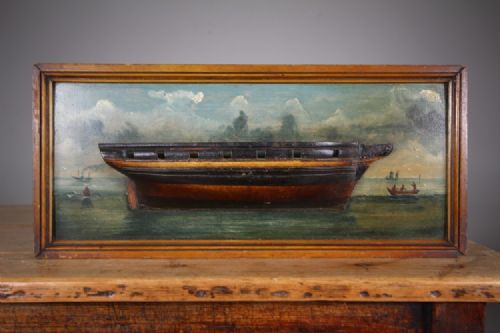
A nautical display model hull captures the forms of historical vessels, ranging from working pond yachts to detailed maritime dioramas. When you search for a nautical display model hull, you encounter items shaped by nineteenth and early twentieth-century maritime traditions.
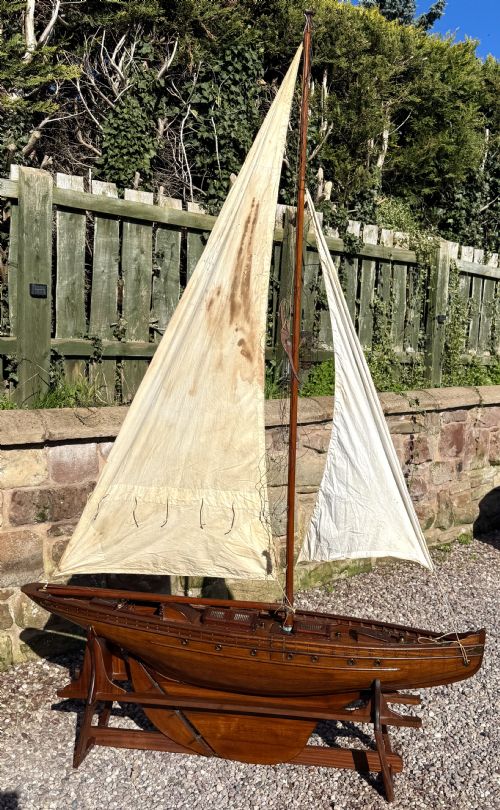
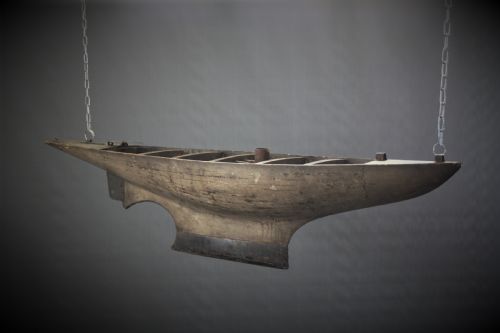
The pieces on this page span the Victorian and Edwardian periods, including large pond yacht hulls and carved sycamore models. These items serve as decorative objects and wall decor, reflecting the scale and presence of larger ships in miniature form.
Materials and construction
Makers shaped these hulls primarily from wood, utilising timber such as mahogany, pine, and sycamore to achieve durable and buoyant forms. Metal elements like brass often appear in fittings and stands, while paint finishes protect the wood and define the waterline.
Rigging and details incorporate canvas and cotton alongside glass in certain diorama formats. These materials reflect the standard shipbuilding practices adapted by maritime craftsmen for scale models.
One grand Victorian pond yacht stands nearly eight feet high, ensuring it commands the room just as well as the real vessel.
Distinctions in quality
Quality rests in the precision of the carve and the fidelity of the hull's proportions. A superior piece shows careful attention to the natural grain of the wood and the clean lines of the vessel's profile.
The presence of original stands, marble bases, or associated diorama elements elevates the visual weight of the object. Condition remains tied to the preservation of the painted surfaces and structural timber over the decades.
The Nautical Display Model Hull Glossary
- Pond yacht
- A model sailing boat designed and weighted to sail across a pond without human control. These items often feature deep keels and substantial wooden hulls.
- Diorama
- A three-dimensional scene depicting a ship at sea, enclosed behind glass with painted backgrounds. This format protects delicate rigging from dust and damage.
- Sycamore
- A dense hardwood commonly used by carvers for detailed scale models. Its fine grain allows for smooth, curved finishes on miniature hulls.
- Barque
- A sailing vessel with three or more masts, where the fore- and main-masts are square-rigged and the mizzen-mast is fore-and-aft rigged. Model makers frequently replicated this rigging configuration.
Nautical Display Model Hull: Frequently Asked Questions
What is a nautical display model hull?
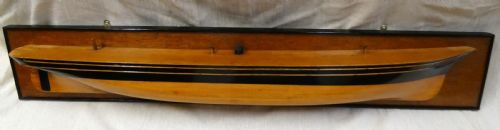
A nautical display model hull is a carved or built representation of a ship's lower body, often mounted for interior decoration. These pieces isolate the hull form to showcase the sculptural lines of historical vessels.
They reflect maritime traditions from the Victorian and Edwardian eras, serving as prominent decorative objects in homes and studies.
How were pond yachts used?
Pond yachts were functional sailing models sailed recreationally on park lakes during the nineteenth and early twentieth centuries. Owners tuned the sails and rudders so the boat could cross the water independently.
Today, surviving hulls are typically displayed on stands rather than sailed, appreciated for their weathered wooden surfaces and maritime heritage.
How do I date a model hull?
Dating relies on the materials, construction techniques, and style of the woodwork or associated stands. Victorian examples often display heavier timber construction and traditional paint finishes.
Later Edwardian and early twentieth-century pieces can show shifts in scale or deck fittings that align with the shipbuilding trends of those decades.
Are these models made of wood?
Most models on this page are constructed from traditional timbers such as mahogany, pine, and sycamore. These woods provided the necessary durability and workability for shaping detailed hulls.
Additional materials like brass, glass, and canvas appear in fittings, stands, and diorama settings to complete the presentation.