




Brown Wooden Sailing Boat
A brown wooden sailing boat brings genuine maritime heritage indoors, offering handcrafted craftsmanship and classic nautical character for any room.
Brown Wooden Sailing Boat
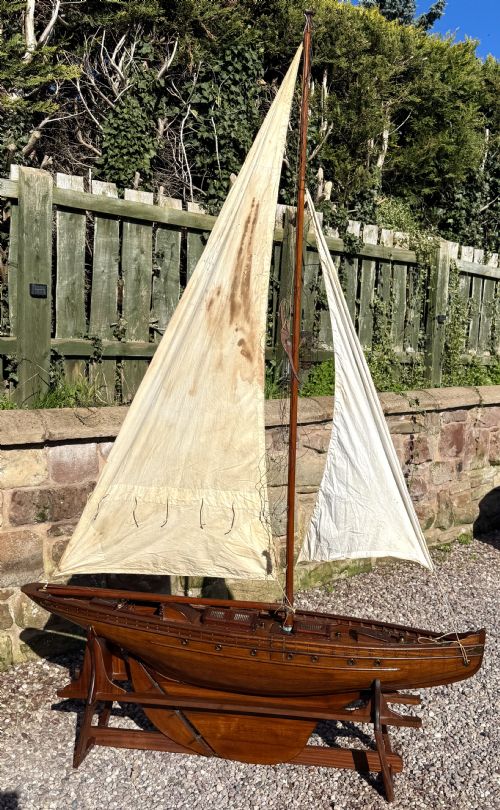
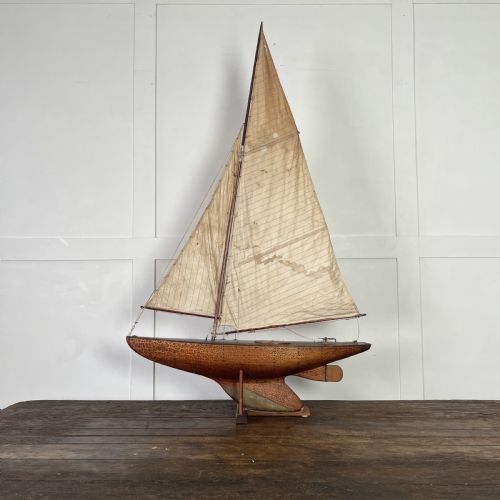
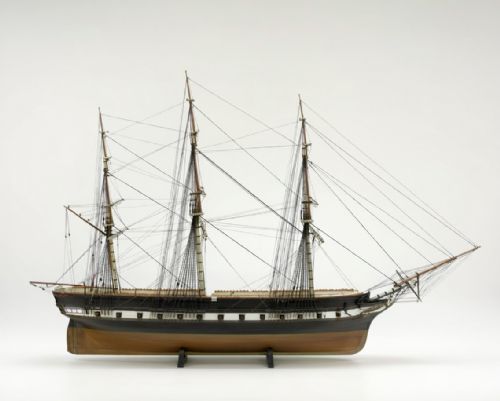
A brown wooden sailing boat represents a distinct branch of decorative marine history, appearing here as pond yachts, detailed scale models, and diorama displays. You will frequently encounter substantial pond yachts resting on stands, alongside cased models and carved vessels originating from the nineteenth and twentieth centuries.
The selection ranges from large Victorian hulls designed for actual sailing to intimate miniature scenes encased in glass bottles. These pieces capture the enduring appeal of maritime craftsmanship, connecting domestic spaces to historic coastal traditions.
Materials and construction
Constructed primarily from traditional woods like mahogany, these vessels utilise canvas sails, fine thread rigging, and brass fittings to achieve realistic detail. Artisans employed putty and specialised metal components to seal hulls and secure deck structures.
Makers shaped solid timber blocks or built up plank-on-frame hulls, applying careful joinery and paint or varnish finishes. Interior components in dioramas and cased models combine carved wood with painted backdrops behind glass.
Current listings feature wood, brass, glass, canvas, and thread across items dating from the early nineteenth century through the mid-twentieth century.
Assessing quality and character
Quality rests in the precision of the scale work, the fidelity of the rigging, and the integrity of the original wooden components. Finer examples display meticulous hand-carving and sophisticated hull shaping rather than simplified block forms.
The presence of original stands, intact glass cases, and undisturbed period fittings elevates a piece. Superior execution is visible in the proportional balance of the masts and the clean integration of brass and canvas elements.
The Brown Wooden Sailing Boat Glossary
- Pond yacht
- A model sailing boat traditionally designed for recreational sailing on park lakes. These are often built with substantial wooden hulls and fitted with functional rudders.
- Diorama
- A three-dimensional scene depicting a ship or harbour, frequently enclosed behind glass within a wooden case or bottle. This technique protects delicate rigging from dust.
- Rigging
- The system of ropes, cords, and thread used to support masts and control sails on a model ship. Historical accuracy in this area indicates skilled craftsmanship.
- Scale model
- A meticulously proportioned representation of a specific vessel based on architectural plans. These models prioritize accurate documentation over toy-like simplicity.
- Hull
- The main body of a ship or boat providing buoyancy and structural integrity. In antique models, these are typically carved from solid wood or assembled from individual planks.
Brown Wooden Sailing Boat: Frequently Asked Questions
How do I clean a wooden model boat?
Dust these delicate models gently using a very soft, dry brush or a feather duster to protect fragile rigging and thread.
Avoid using liquid cleaners, water, or chemical sprays on the wood, canvas, or brass components, as moisture causes degradation.
Where should I display a pond yacht?
Place your model on a sturdy surface away from direct sunlight, radiators, and damp areas to prevent the wood from warping and the canvas from fading.
Ensure the supporting stand securely holds the weight of the hull, particularly with larger vessels that measure several feet tall.
Are these model boats meant for water?
While historic pond yachts were originally built for sailing on water, surviving antique examples are now valued as fragile display pieces.
Placing an antique wooden boat back in water risks swelling the timber, dissolving adhesives, and ruining historic finishes and rigging.
How do I identify the age of a model ship?
Examine the construction methods, types of wood, and fastening materials, comparing them against known manufacturing styles from the Victorian and Edwardian eras.
Documentation, specific naval vessel names, and enclosed display formats often provide clues regarding the decade of creation.