
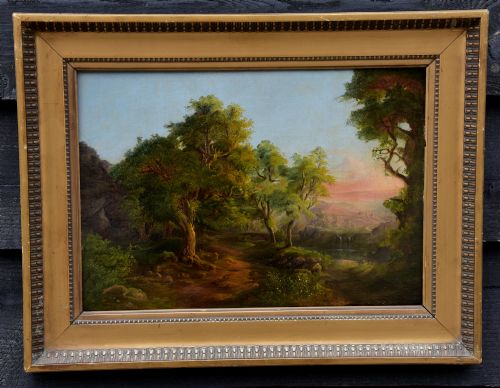
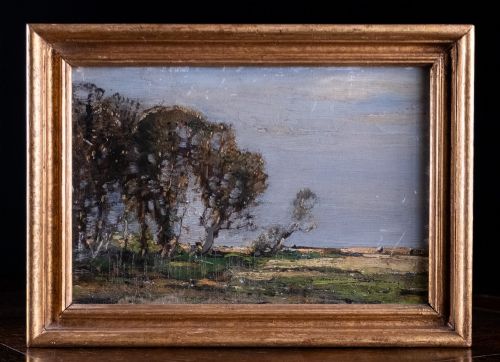
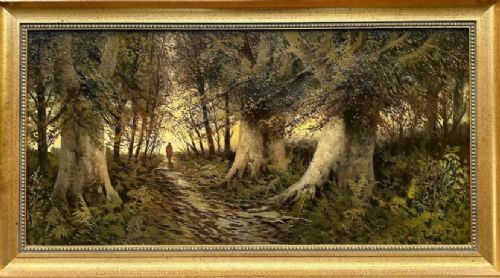
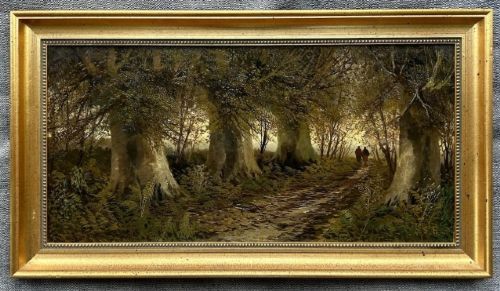


Nature Landscape Oil Painting
When you search for nature landscape oil painting, you find works executed on canvas and board spanning from the nineteenth century into the mid-twentieth century.
Nature Landscape Oil Painting
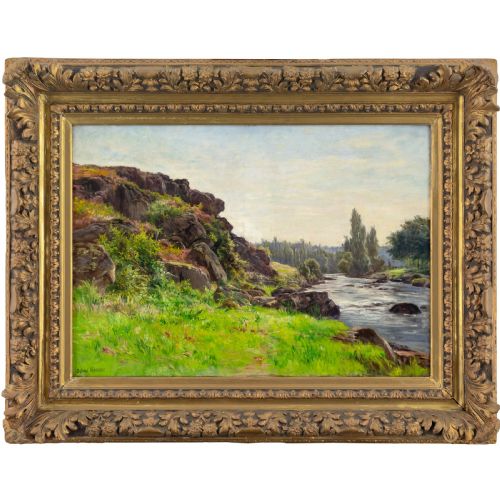
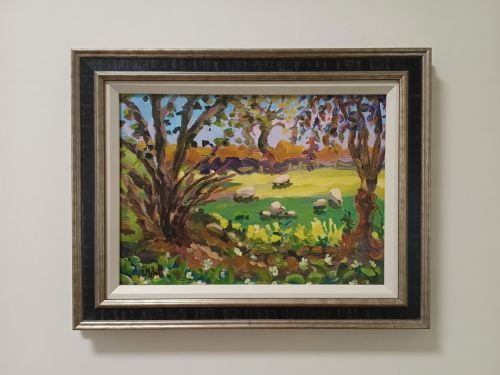
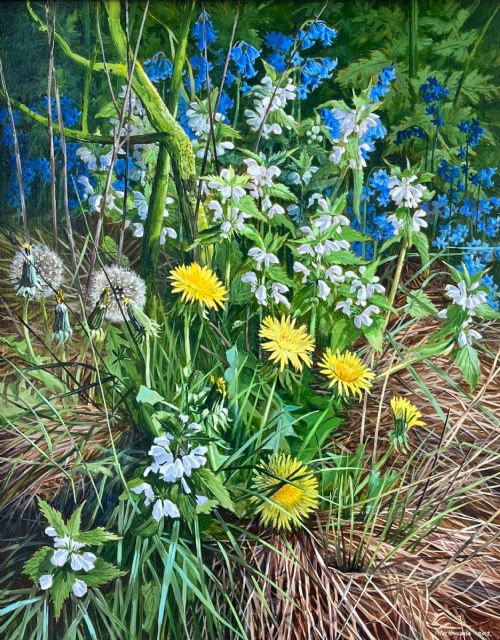
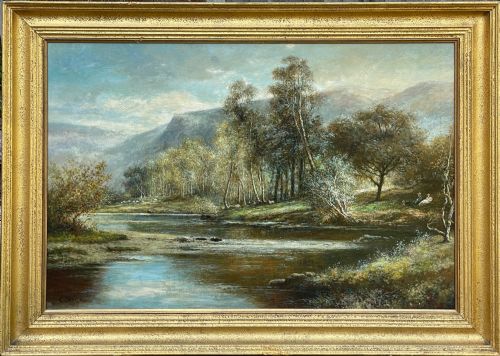
A nature landscape oil painting captures rural scenes, woodland views, and river valleys created by artists working in Britain and France. These works range from small board studies to large framed canvases depicting rivers, lakes, and pastoral settings.
The pieces on this page frequently originate from the nineteenth century and the early decades of the twentieth century. Common subjects include Scottish highlands, Welsh river glens, woodland paths, and pastoral scenes with sheep or figures.
How They Were Made
Artists painted primarily with oil paint on stretched canvas or wooden boards, occasionally applying techniques associated with French impressionism, British naturalism, and post-impressionism. Pigments were brushed onto the support to capture natural light, foliage, and water.
Many surviving examples retain their period frames constructed from wood, often finished with gesso and gold leaf to complement the painted surface.
Listings feature works spanning from the nineteenth century through the 1960s, executed in oil on canvas and board.
What Varies in Quality
Quality rests in the handling of light and atmosphere, the subtlety of the brushwork, and the distinctness of the composition. Stronger works convey depth and texture in foliage and water convincingly.
The condition of the painted surface and the retention of the original or period-appropriate frame influence the overall integrity of the piece.
Kershaw Schofield·Thomas W Lascelles·Gabriel Mathieu·Lucy Pratt·Peter Newcombe·Margaret Maitland Howard·William Mellor·John Wright Oakes·William Langley·George F Wetherbee·Owen Bowen·Ernest Moore·Adolphe Gumery·James Poole·Fred Merriman·Kenneth Washburn
The Nature Landscape Oil Painting Glossary
- Canvas
- A heavy woven fabric stretched across a wooden frame to serve as a support for oil paint. It provides a flexible yet durable surface favoured by artists for centuries.
- Oil Paint
- A slow-drying paint made by mixing pigments with oils such as linseed. This medium allows painters to blend colours smoothly and build rich textures.
- Board
- A rigid wooden panel used as a support for painting. Artists often utilised board for smaller plein air studies and quick landscape compositions.
- Gesso
- A plaster mixture applied to wood frames or panels to prepare a smooth surface for gilding or painting. It provides a solid base for gold leaf application.
- Impressionism
- A nineteenth-century painting style focusing on the accurate depiction of light and its shifting qualities. Practitioners often painted outdoors to capture immediate visual impressions.
Nature Landscape Oil Painting: Frequently Asked Questions
What periods do these landscape paintings come from?
The listings include works from the nineteenth century, the Victorian era, and through the 1920s, 1930s, and 1940s up to the mid-twentieth century.
Earlier pieces often reflect nineteenth-century naturalism and impressionist techniques, while later examples extend into modernist interpretations.
Where were these landscape paintings produced?
The works originate from various regions including England, Scotland, Wales, and France. Artists captured specific local topographies such as North Wales, Cumberland, and the French countryside.
Regional landscapes often bear inscriptions or signatures linking them directly to these locations.
How should I display an antique oil painting?
Antique oil paintings are typically displayed on walls away from direct sunlight and excessive moisture to protect the canvas and the painted surface. Ensuring stable room temperatures helps preserve the integrity of both the wood stretcher and the oil pigments.
Many pieces come with period frames that support safe wall mounting.