



Traditional Riverbank Wall Art
Traditional riverbank wall art captures serene rural waterways in oil and watercolour across the nineteenth and twentieth centuries.
Traditional Riverbank Wall Art
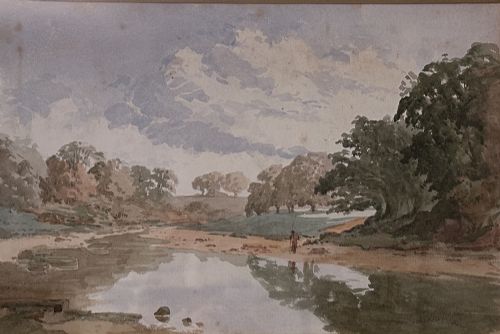
Traditional riverbank wall art encompasses oil paintings and watercolours depicting pastoral scenes, livestock, and anglers beside water. These pieces frequently date from the nineteenth century through the mid-twentieth century, capturing rural life in British landscapes.
The selection on this page relies heavily on Victorian and impressionist canvases, framed in wood and gilt. Expect works featuring rivers, lakes, and becks populated by figures, cattle, horses, and ducks.
Buyers seeking traditional riverbank wall art encounter regional British scenes ranging from English country schools to Scottish landscapes. Oil on canvas dominates the works available, alongside occasional pastels and watercolours.
How they were made
Artists painted primarily with oil paint on stretched canvas and wooden panels, employing brushwork characteristic of nineteenth-century naturalism and impressionism. Canvas supports often sit within original or period-appropriate wood and giltwood frames.
Watercolours and pastels on paper appear in specific works, protected behind glass within traditional framing. Pigments applied to these paper supports capture softer atmospheric effects along riverbanks.
Traditional Riverbank Wall Art Retail Price Guide 2026
Typical asking prices for traditional riverbank wall art among the pieces listed under this phrase on Sellingantiques today, from the lower quarter to the upper quarter. They describe what is for sale here now, not the wider market.
Listings feature oil on canvas, canvas boards, wood panels, and paper supports framed in wood and gilt.
What varies in quality
The distinction between standard works and superior pieces rests upon the artist's handling of light, atmosphere, and natural detail. Masterly brushwork in depicting moving water, cattle anatomy, and foliage elevates certain canvases above generic pastoral scenes.
Framing and provenance further differentiate the works, with original giltwood frames and documented signatures from established regional painters commanding greater appreciation among collectors.
Archibald Kay RSA RSW·Frank Hyde·William Manners·Harry Pennell ARCA·Constant Ludovic Artz·Henry Cheadle·T B Garvie·Augustus William Ennes·Thomas E Francis
The Traditional Riverbank Wall Art Glossary
- Oil on Canvas
- Pigment mixed with drying oil applied to a woven fabric stretched across a wooden frame. This medium allowed artists to build rich textures and deep tones.
- Giltwood
- Wood carved and coated with gold leaf or a gold-coloured metallic finish. It provides ornate framing for traditional landscape paintings.
- Impressionism
- A nineteenth-century painting style focusing on accurate depiction of light in its changing qualities. Artists captured spontaneous moments of outdoor river life.
- Pastel
- A dry art medium consisting of powdered pigment and a binder. It creates soft, velvety surfaces seen in mid-twentieth-century river views.
Traditional Riverbank Wall Art: Frequently Asked Questions
What periods do these paintings date from?
The available works span from the nineteenth century through the mid-twentieth century. Most examples cluster around the Victorian era and the early nineteen-hundreds.
Specific dates on this page include the eighteen-eighties, nineteen-tens, and nineteen-twenties up to nineteen-fifty. This reflects shifts from nineteenth-century naturalism to British impressionism.
What subjects appear in these scenes?
Common subjects include rivers, becks, pools, and wooded riverbanks populated by human figures and livestock. Fishermen, monks fishing, and children by water frequently anchor the composition.
Animals feature prominently alongside the water, including cattle, horses, ducks, and ducklings. These pastoral elements reflect English country school and Victorian genre painting traditions.
Are these works signed by artists?
Many pieces bear signatures or attributions to named painters such as William Manners and Frank Hyde. These signatures link works to documented nineteenth and twentieth-century artists.
Other canvases remain unsigned, representing anonymous regional output from the period. Both signed and unsigned works share identical canvas and framing materials.
How should I frame and hang them?
Many works retain their original wood or giltwood frames, which complement the traditional subject matter. These frames require stable indoor conditions away from direct sunlight and dampness.
Wall placement benefits from natural light that enhances the oil paint and canvas textures. Standard picture hooks suitable for heavy gilt frames ensure secure hanging.