


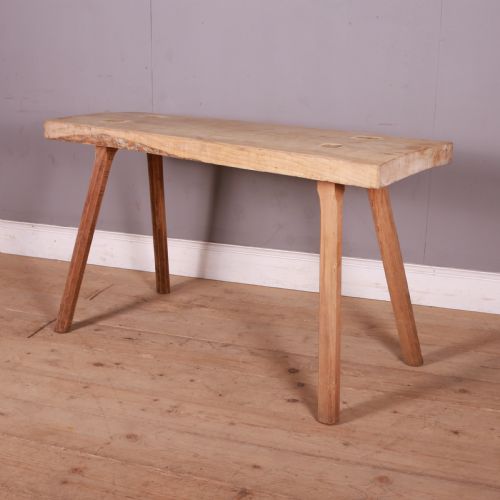


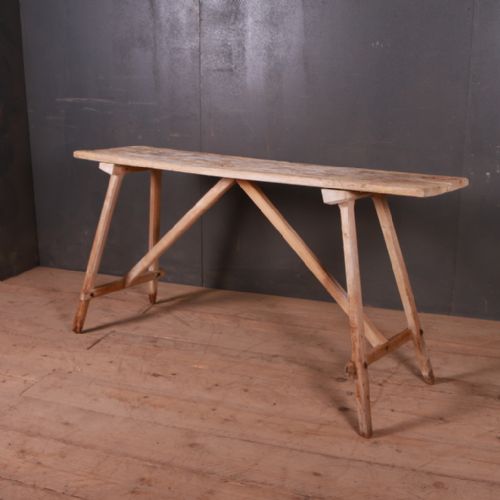


Natural Timber Trestle Table
A natural timber trestle table brings honest construction and warm grain into a room, offering sturdy utility shaped by generations of practical use.
Natural Timber Trestle Table
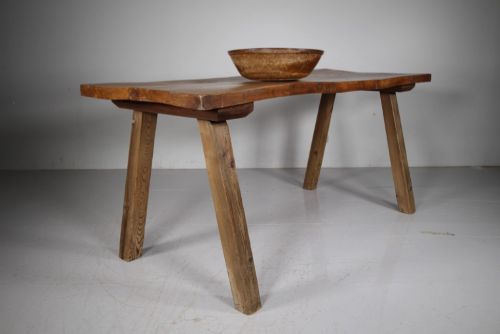
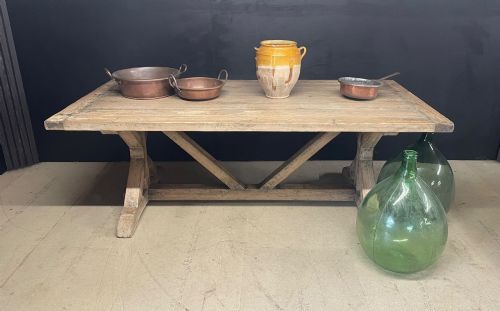
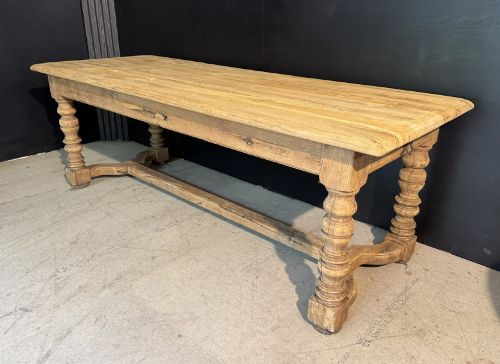
A natural timber trestle table combines long horizontal surfaces with supportive end frames, appearing across styles from French Provincial to Arts and Crafts. Buyers exploring this category will find dining tables, tavern tables, and console tables designed for straightforward daily use.
The versions most commonly met on this page span the nineteenth century through the early twentieth century, utilising sturdy timbers like pine, elm, oak, and sycamore. These pieces range from primitive kitchen furniture to large French farmhouse and trestle designs featuring scrubbed surfaces.
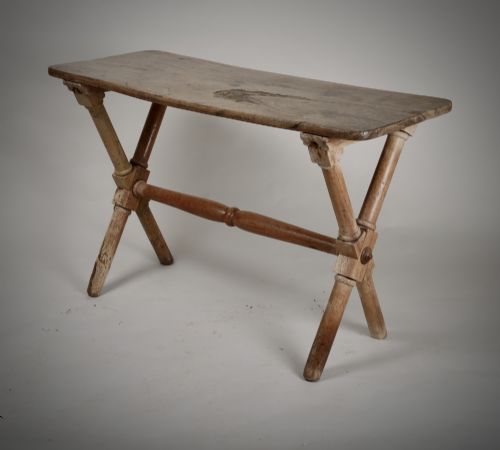
Many examples display regional vernacular characteristics, such as cross bases, drawer additions, or simple plank construction. Each piece demonstrates how plain materials were assembled to serve basic domestic and tavern requirements over decades.
Materials and construction
Construction relies on solid hardwoods and softwoods such as oak, elm, pine, and sycamore, selected for local availability and structural strength. Timbers are often left with a scrubbed finish or natural grain, occasionally complemented by small iron or brass components.
Joinery methods prioritize utility and stability, utilising thick planks and robust trestle frames to support heavy daily loads. Tables frequently show the marks of hand-tool shaping and long physical use rather than factory standardisation.
Listings feature items built from pine, elm, oak, and sycamore across the Victorian era and the early twentieth century.
Judging quality and proportion
Quality rests in the integrity of the timber selection and the balance of the proportions, where older pine, oak, or elm boards display deep, honest patination. Tables with tightly fitted joints and substantial top planks hold up better to scrutiny than hastily assembled items.
The character of the surface finish dictates visual success, particularly where scrubbed sycamore and elm reveal the natural texture of the wood grain. Superior examples maintain structural soundness while showing genuine signs of age across the trestles and tops.
The Natural Timber Trestle Table Glossary
- Trestle table
- A table structure consisting of two or more supports connected by a horizontal beam, holding a loose or fixed top. This design allows maximum legroom along the length of the furniture.
- Scrubbed finish
- A timber surface washed and scoured repeatedly with water and stiff brushes, removing old dirt and revealing clean, pale wood grain. This treatment is typical of nineteenth-century kitchen and work tables.
- Vernacular
- Everyday objects built by local craftspeople using regional materials and traditional methods, prioritizing function over high-style academic design. These pieces reflect the specific domestic needs of their local area.
- Primitive
- Furniture constructed with minimal ornamentation and straightforward joinery, often predating industrial manufacturing standards. Such items display direct solutions to basic household requirements.
- Cross base
- A structural support formed by intersecting timbers beneath a tabletop, providing lateral stability without traditional corner legs. This configuration appears frequently in Arts and Crafts and continental dining forms.
Natural Timber Trestle Table: Frequently Asked Questions
How do I clean a scrubbed timber top?
Scrubbed timber surfaces respond best to gentle cleaning with warm water and a mild soap, using a soft brush along the grain. Avoid harsh chemical cleaners that strip the natural patination built up over decades.
Dry the wood thoroughly after washing to prevent warping or water staining. Regular light dusting keeps the open grain free from daily debris.
Are these tables suitable for modern dining?
These tables provide generous surface area and sturdy construction, making them practical for daily meals and gatherings. Their varied lengths accommodate multiple seating arrangements comfortably.
Placing felt pads beneath the feet helps protect modern flooring from heavy timber bases. Ensure chairs match the height of the specific apron or trestle clearance.
What does a scrubbed finish mean?
A scrubbed finish indicates that a wooden top has been intensely washed and scoured to remove dark stains, grease, and old finishes. This historical maintenance method leaves the bare grain exposed and clean.
Over time, this process creates a pale, matte surface texture highly prized in farmhouse furniture. It highlights the natural growth rings of pine, sycamore, or elm.
How can I tell nineteenth-century pine from later pine?
Nineteenth-century pine typically exhibits tighter growth rings, deeper surface patination, and hand-cut joinery marks compared to twentieth-century alternatives. The timber often shows softer, worn edges around the corners and aprons.
Later pieces tend to have more uniform plank thickness and machine-planed surfaces. Examining the underside often reveals the transition from handmade nails to modern fasteners.