




Natural Coral Beads
Natural coral beads bring deep Mediterranean warmth to the neck and wrist, shaped by hand in Victorian, Georgian and mid-century workshops.
Natural Coral Beads
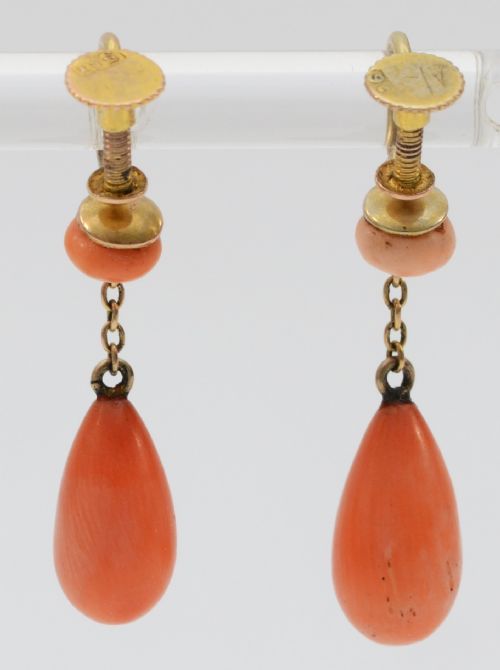
Natural coral beads appear in various forms across this selection, most commonly as single or multi-stranded necklaces alongside pendants, earrings, and bracelets. These pieces stretch from the Georgian and Victorian eras into the twentieth century, capturing distinct periods of jewellery design.
Necklaces dominate the offerings, ranging from short graduated strands to exceptionally long ropes exceeding sixty inches. Buyers also encounter pairings with gold, silver, and seed pearls that highlight the vibrant red, pink, and salmon hues of the material.
The assortment includes specialised forms such as floral cameo bracelets and French antique cross pendants. Each item demonstrates the enduring appeal of organic marine materials shaped into classic personal adornments.
Making natural coral beads
Artisans fashioned these items from natural red, pink, and salmon coral, utilising whole branches, rods, and rounded beads. The material requires careful cutting and polishing to reveal its organic grain and deep colour.
Craftspersons strung the beads securely onto silk thread or mounted them in gold and silver settings. Metal components often feature clasps and detailed metalwork that complement the organic warmth of the coral.
Judging natural coral beads
Quality rests upon the uniformity and depth of colour within the coral material, alongside the precision of the bead grading. Graduated necklaces require careful matching so that hues transition smoothly from smaller terminals to larger centre stones.
The integrity of the stringing and the quality of the metal clasps in gold or silver influence the overall execution of the piece. Items that retain their original length and feature secure mountings command greater interest.
The Natural Coral Beads Glossary
- Graduated
- A design where beads increase steadily in size from the clasp towards the front centre of the necklace. This layout ensures a balanced drape against the collarbone.
- Seed pearl
- A very small, naturally formed pearl often used as an accent beside coral beads in Victorian and Georgian clusters. These tiny pearls add a delicate white contrast to the red coral.
- Cameo
- A method of carving a relief image onto a shell or stone, appearing here in Victorian bracelet links alongside coral. This technique showcases miniature sculptural detail.
Natural Coral Beads: Frequently Asked Questions
How do I clean natural coral beads?
Clean these pieces gently with a soft, damp cloth to remove surface dust without harsh chemicals. Coral is an organic material that reacts poorly to ultrasonic cleaners and abrasive substances.
Store necklaces flat or hung carefully away from other hard items to prevent scratching the polished surface. Regular gentle maintenance preserves the natural lustre of the red and pink tones.
Are these beads dyed?
Many listings specify natural un-dyed coral, displaying the authentic organic colours formed within the marine structure. Examination under magnification reveals the natural growth patterns characteristic of genuine Mediterranean material.
Makers across the Victorian and twentieth-century periods prized the true hues of red, pink, and salmon coral. Buyers should check individual descriptions for confirmation of un-dyed status.
How do I wear a long coral necklace?
Long strands exceeding fifty inches offer versatility, allowing the wearer to loop them twice for a layered effect or knot them loosely. This length reflects twentieth-century styling preferences seen in pieces from the nineteen-thirties and fifties.
Shorter necklaces sit closer to the neck, pairing well with period earrings and pendants. Each length creates a distinct silhouette depending on the scale of the individual beads.
What metal is used in the mountings?
Gold and silver provide the primary metal settings for earrings, pendants, and clasps across these historical periods. Victorian and nineteenth-century pieces frequently incorporate yellow gold to complement the warm red coral.
Later items utilise silver or specific gold carats to secure the strands. These precious metals provide structural support while enhancing the overall visual harmony of the jewellery.