

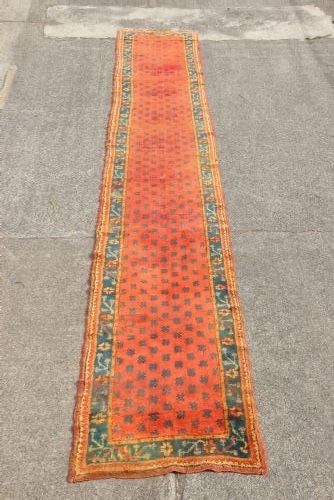
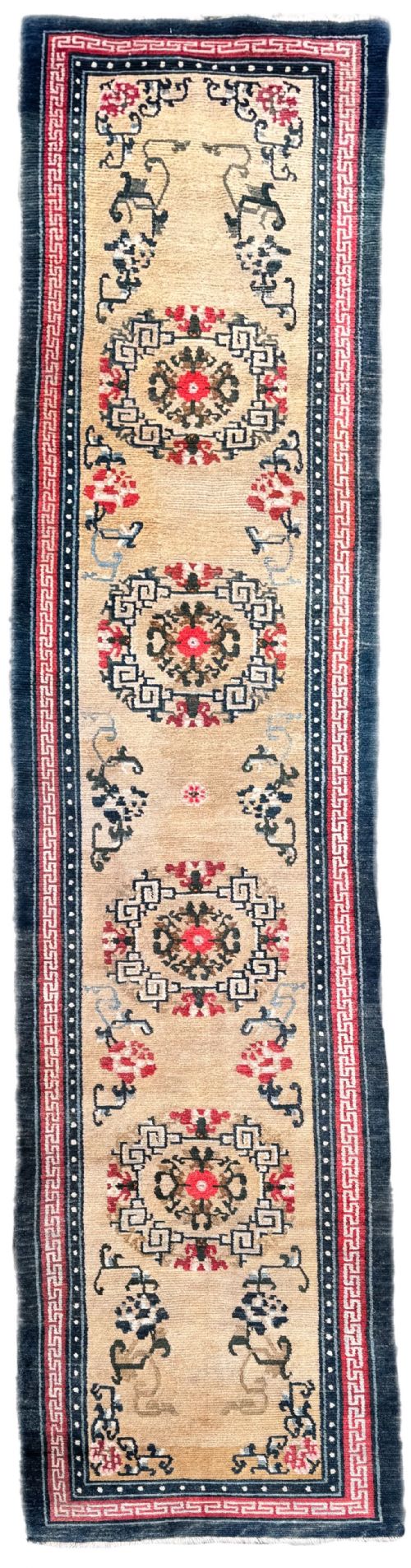

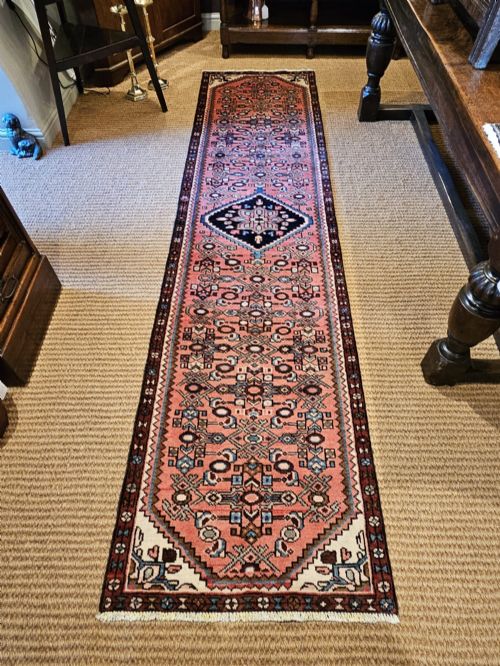
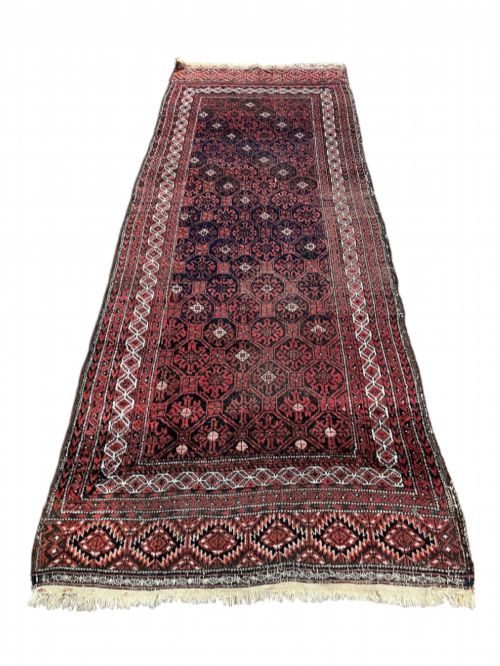
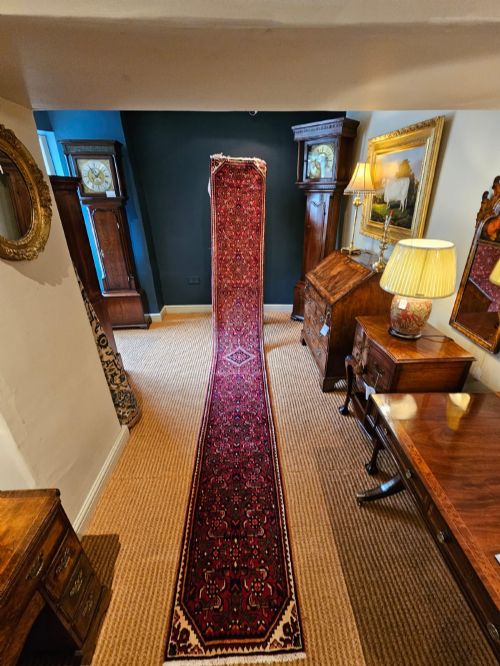
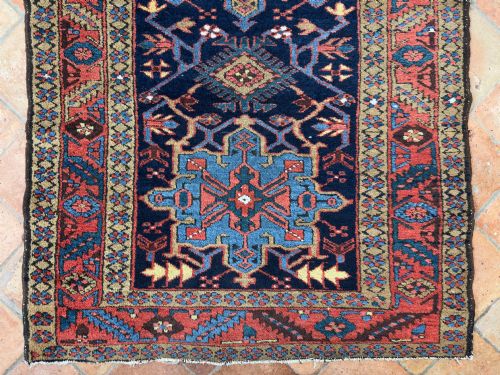
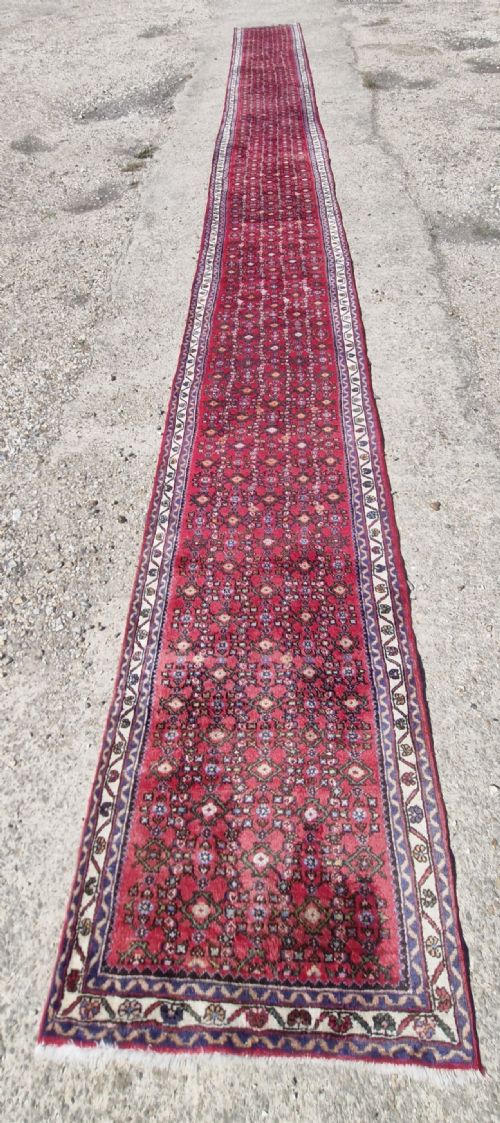
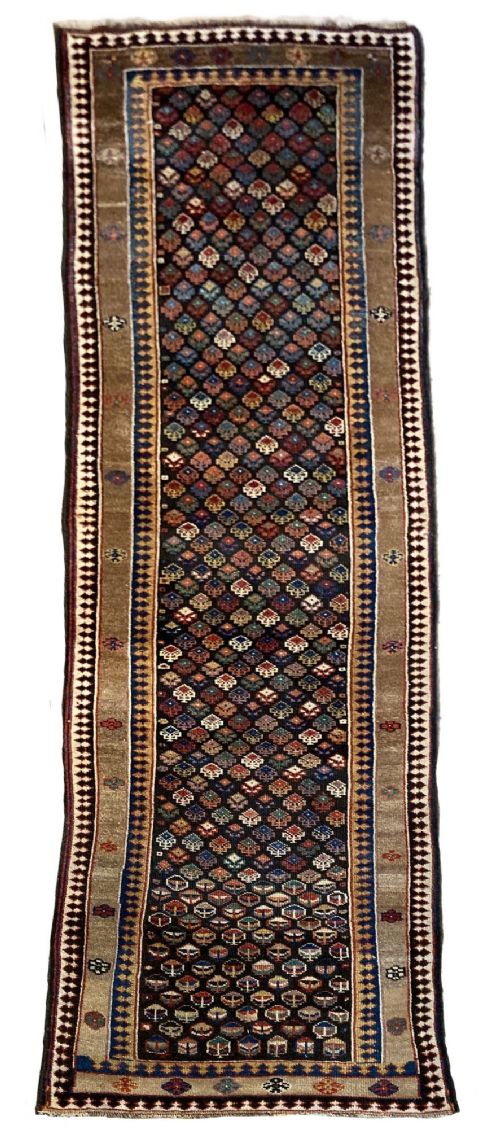


Narrow Wool Runner
A narrow wool runner brings character and linear warmth to hallways and landings using traditional materials and age-old designs.
Narrow Wool Runner
A narrow wool runner is a long, stretched carpet designed specifically for corridors, stairs, and halls, appearing frequently in Persian, Turkish, Kurdish, and Moroccan tribal styles. These floor coverings span production dates from the nineteenth century through the early twentieth century, encompassing various regional weaves and formats.
Buyers encounter traditional village and nomadic formats, such as Heriz, Hamadan, Bidjar, Oushak, and Berber pieces, which measure significantly longer than they are wide. These items utilise durable pile weaves or flat-woven kilim structures suited to heavy foot traffic areas.
The selections range from compact lengths under three metres to expansive floor coverings stretching past ten metres, offering specific proportions tailored to long architectural spaces.
Quality factors
Quality rests in the precision of the tribal or geometric design execution, the crispness of the colour palette, and the fineness of the knot density across the wool foundation. Finer knotting allows intricate medallion and herati patterns to render with sharper detail.
The integrity of the original selvedges and the uniform straightness of the runner along its length distinguish superior examples from uneven or heavily restored pieces.
One exceptionally long corridor piece stretches out to thirty-two feet, requiring a remarkably patient weaver.
The Narrow Wool Runner Glossary
- Kilim
- A flat-woven carpet or runner produced without a pile, created by tightly interweaving warp and weft threads. These items offer a smooth, durable surface.
- Selvedge
- The finished side edges of a runner that protect the foundation threads from unravelling. Original intact selvedges indicate careful preservation.
- Warp
- The vertical foundation threads stretched tightly on the loom before weaving begins. Cotton and wool serve as the primary materials for these structural elements.
- Weft
- The horizontal threads passed across the warp to hold the knots in place. Beating the weft down firmly creates a dense, durable textile structure.
Narrow Wool Runner: Frequently Asked Questions
Where should I place a narrow wool runner?
These pieces fit naturally along long hallways, corridors, and narrow landings where linear floor coverings soften footfall and protect wooden floorboards.
Their elongated proportions also suit narrow entryways and high-traffic transitional spaces within a home.
How do I identify a Persian tribal runner?
Persian tribal runners typically display geometric medallions, boteh motifs, and repeating field patterns woven from memory by nomadic or village weavers rather than urban workshops.
Look for characteristic regional palettes such as deep blues, olive greens, and terracotta reds bound by sturdy wool foundations.
Are these runners made from pure wool?
Many examples consist of pure wool pile set onto cotton or wool foundation warps and wefts, providing natural resilience and elasticity under foot.
Some nomadic pieces also incorporate camel hair within the un-dyed wool mix for subtle earthy tones.
How do I care for an antique wool runner?
Regular gentle vacuuming without a rotating brush roll prevents dust accumulation in the wool pile without pulling at the knots or fringe.
Professional specialist cleaning is recommended for antique wool textiles to preserve the natural lanolin and dye stability.