

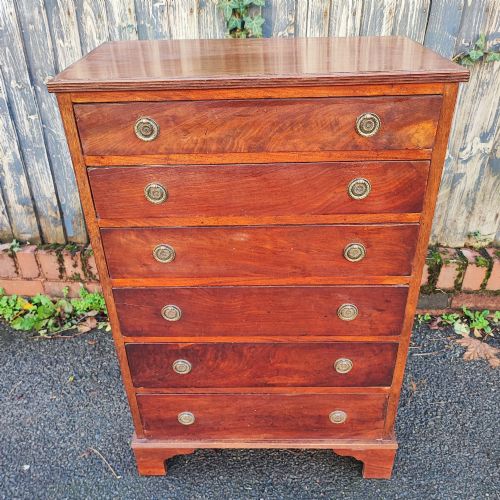
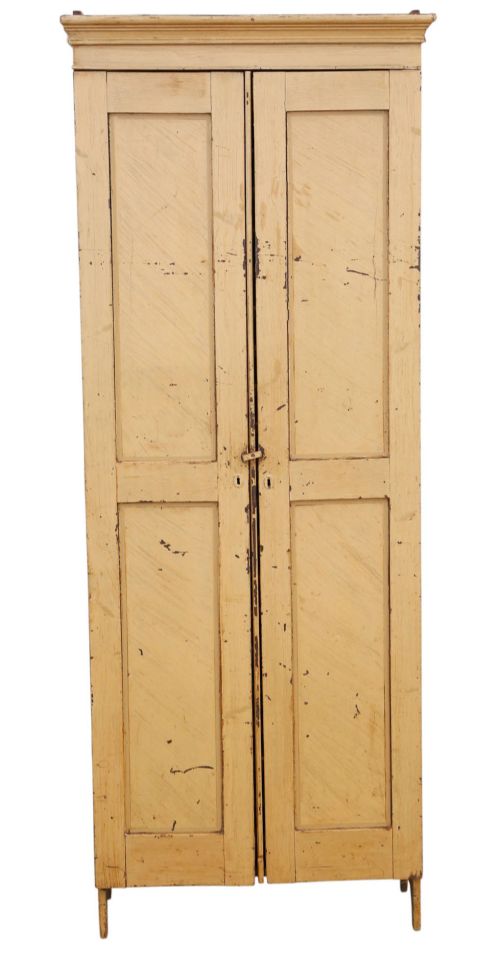
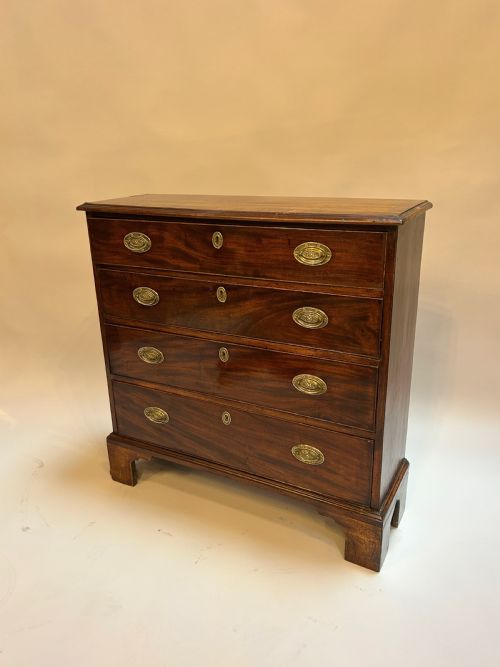
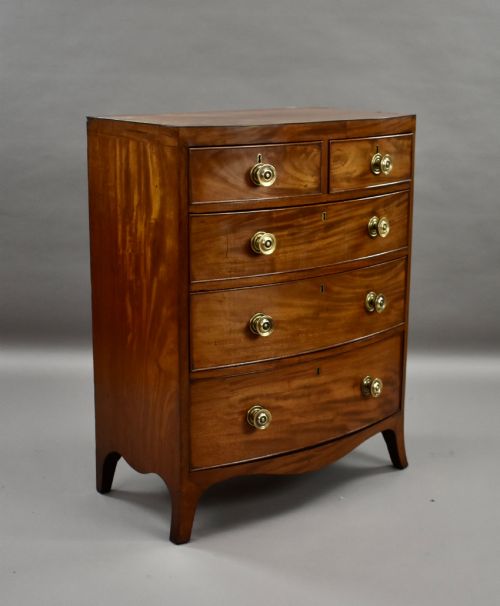
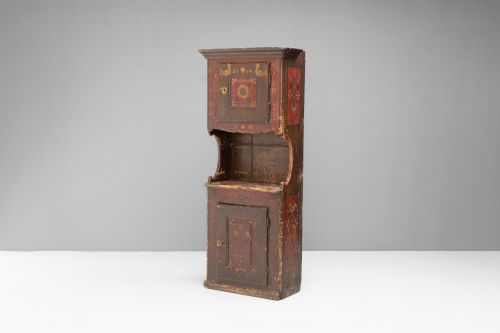


Narrow Wooden Dresser
These narrow wooden dresser examples offer compact storage and display, bringing period character and practical proportions to compact rooms.
Narrow Wooden Dresser
A narrow wooden dresser provides functional storage through vertical proportions suited to rooms where floor space is limited. The selection includes country pine cupboards, oak pieces, and mahogany chests.
The inventory ranges from Georgian and Regency items to Victorian and Edwardian examples. Forms span from tall kitchen housekeepers' cupboards and potboard servers to slender chests and dressers.
Makers and workshops utilised various woods such as yew, pine, oak, and mahogany. These timber choices reflect both formal cabinetmaking and country vernacular traditions.
How they were made
Construction relies on solid timbers like oak, pine, and mahogany, often enhanced with brass hardware or iron details. Cabinetmakers shaped these materials using traditional joinery suited to upright proportions.
Surface treatments vary from polished wood finishes and wax coatings to painted surfaces and marquetry. Some pieces incorporate marble tops or retain original paint applications.
Narrow Wooden Dresser Retail Price Guide 2026
Typical asking prices for narrow wooden dresser among the pieces listed under this phrase on Sellingantiques today, from the lower quarter to the upper quarter. They describe what is for sale here now, not the wider market.
Housekeepers once guarded the keys to these tall cupboards fiercely, as they held the household sugar loaves and precious spices.
What varies in quality
Quality rests in the choice of timber and the figuration of the wood, particularly in mahogany and yew examples. Superior execution shows in the precision of drawer construction and balanced proportions.
The retention of original surface treatments, whether polished mahogany or early painted finishes, distinguishes pieces. Finer examples display careful attention to detail in brass handles, feet, and panel work.
Gillows of Lancaster·Reprodux
The Narrow Wooden Dresser Glossary
- Potboard
- An open lower shelf on a dresser or server, traditionally used for storing pots and heavy kitchen equipment. This feature appears on nineteenth-century servers and trestle tables.
- Bowfront
- A convex, curved front to a chest of drawers or cabinet. This shaping softens the vertical lines of narrow furniture.
- Wellington chest
- A tall, narrow chest of drawers secured by a hinged locking side stile that fastens with a key. This form maximises storage within a compact footprint.
- Housekeeper's cupboard
- A tall storage piece traditionally used for linens and provisions in large houses. Scale and internal partitioning define these substantial cupboards.
- Marquetry
- Decorative veneer work arranged in geometric or pictorial patterns on furniture surfaces. French pieces often employ this technique.
Narrow Wooden Dresser: Frequently Asked Questions
What defines a narrow wooden dresser?
A narrow wooden dresser combines vertical storage drawers or upper display shelving with a compact footprint. These items suit rooms that require functional furniture without occupying excessive floor space.
The selection includes Georgian oak pieces, Victorian pine cupboards, and later Edwardian designs. Each version offers distinct timber characteristics and period details.
How do I care for antique timber?
Maintain wooden surfaces by keeping them away from direct heat sources and sudden humidity changes. Regular dusting with a dry cloth preserves the finish.
Wax-finished pine and oak benefit from occasional application of traditional beeswax to nourish the wood. Polished mahogany requires gentle cleaning to protect the polished surface.
Are painted finishes original?
Painted finishes on kitchen cupboards and pine chests often date to later periods or maintenance over time. Some pieces retain early or original paint layers that show natural wear.
Examine the surface for craquelure and underlying timber visibility to understand the history of the finish. Waxed pine items were frequently painted in subsequent decades.
How do I identify the period?
Period identification relies on timber selection, construction methods, and stylistic hardware details. Georgian and Regency pieces show classical proportions and formal cabinetmaking techniques.
Victorian and Edwardian items often display utilitarian country construction or revival styles. Drawer linings, backboards, and handles provide further clues to dating.