

Narrow Wooden Cabinet
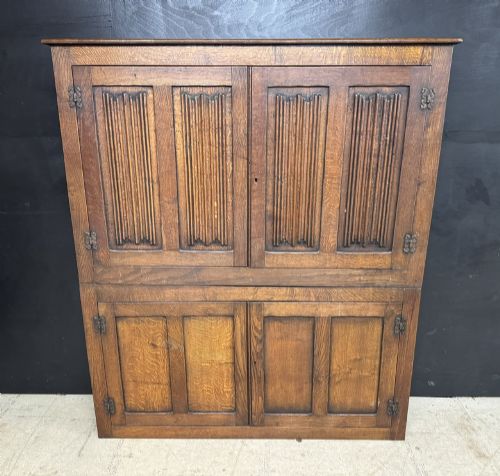
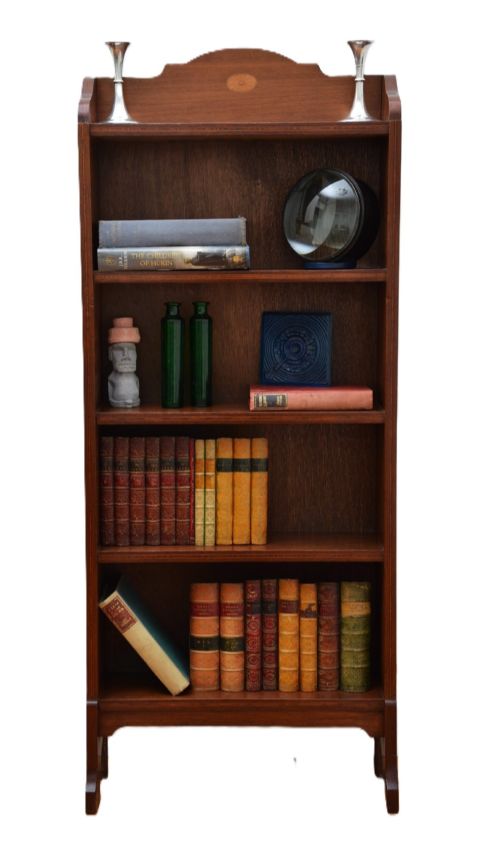
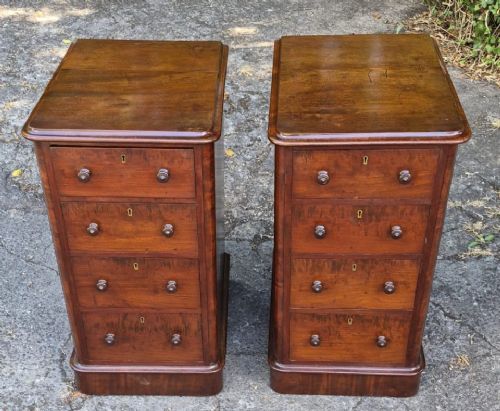
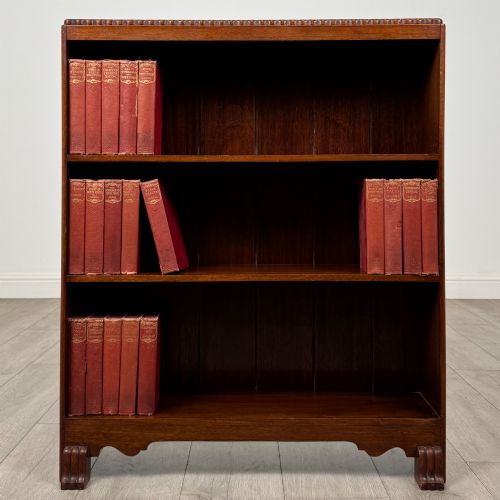
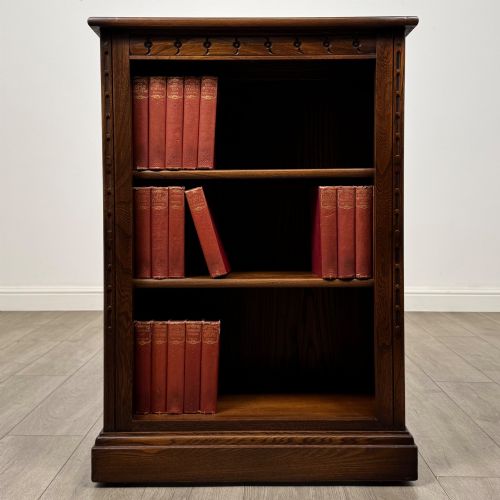
A narrow wooden cabinet offers a neat solution for storing books or linen in a compact footprint.
Narrow Wooden Cabinet
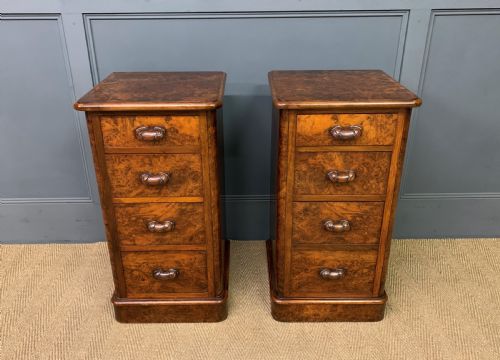
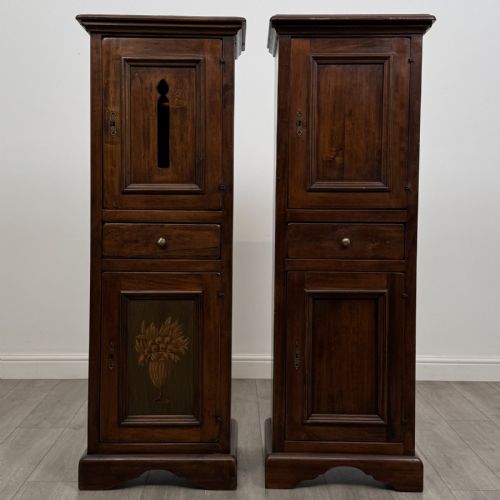
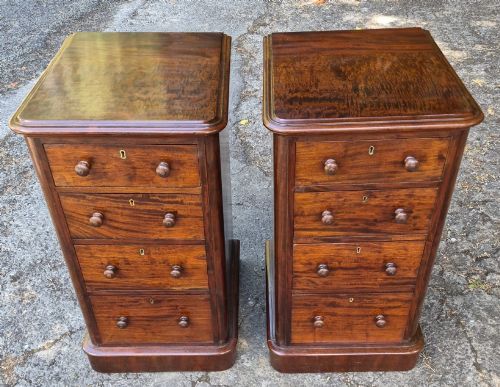
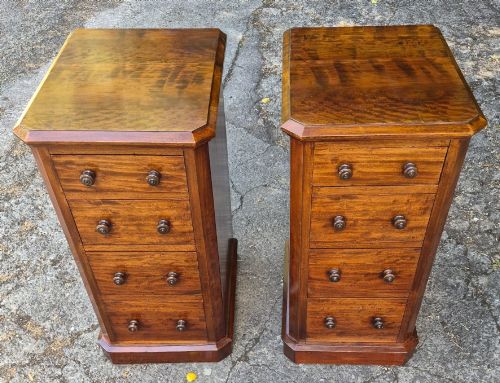
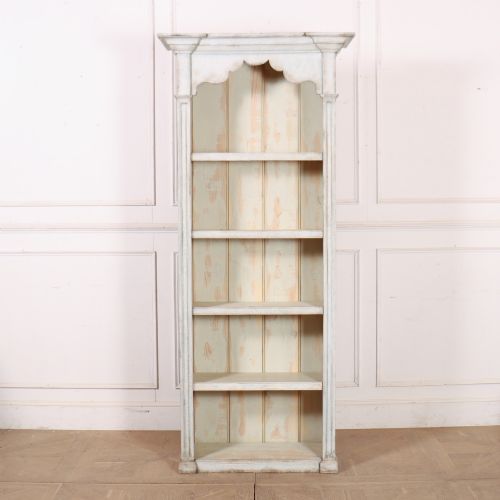
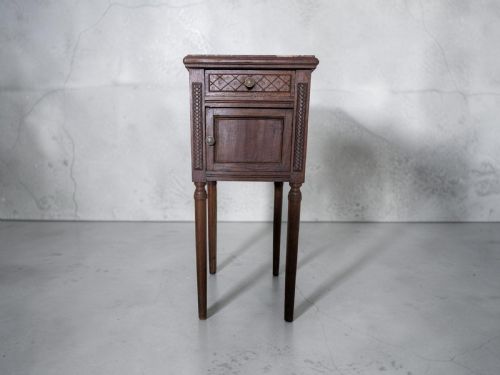
A narrow wooden cabinet serves rooms where floor space is limited, bringing vertical storage to tight corners. Buyers searching for a narrow wooden cabinet encounter tall bookcases, bedside chests, and slim cupboards spanning the Georgian, Victorian, and Edwardian periods.
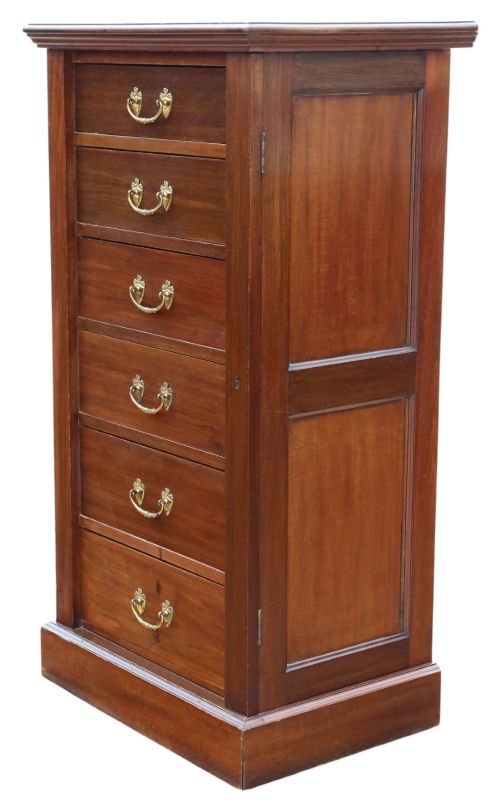
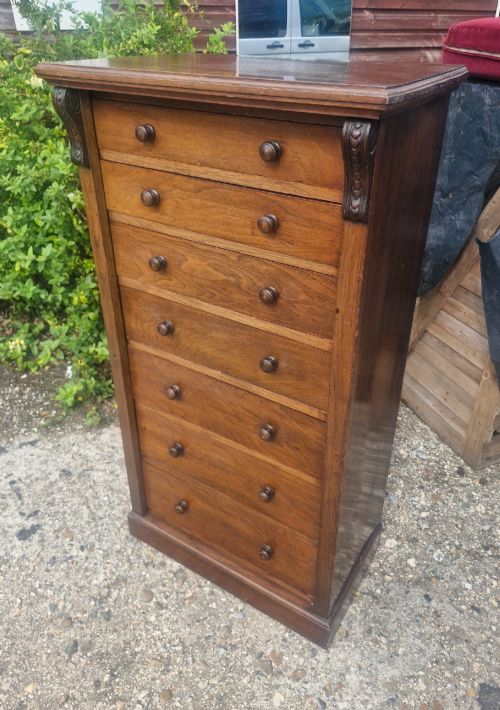
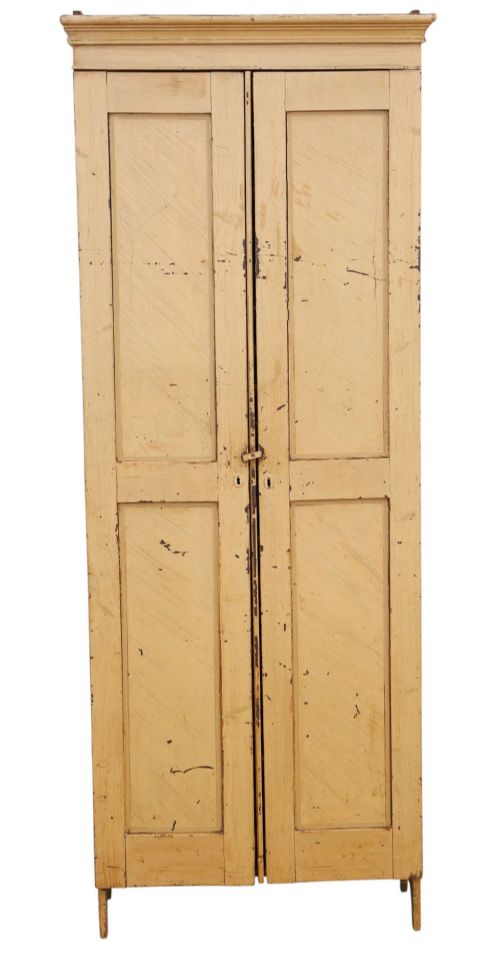
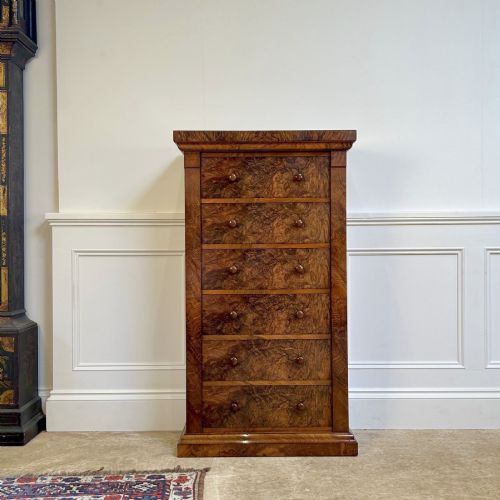
The most common iterations on this page are Victorian and Edwardian mahogany bookcases, alongside pine chimney cupboards and walnut Wellington chests. These pieces range from open shelving units to locking bedside cabinets fitted with brass hardware.
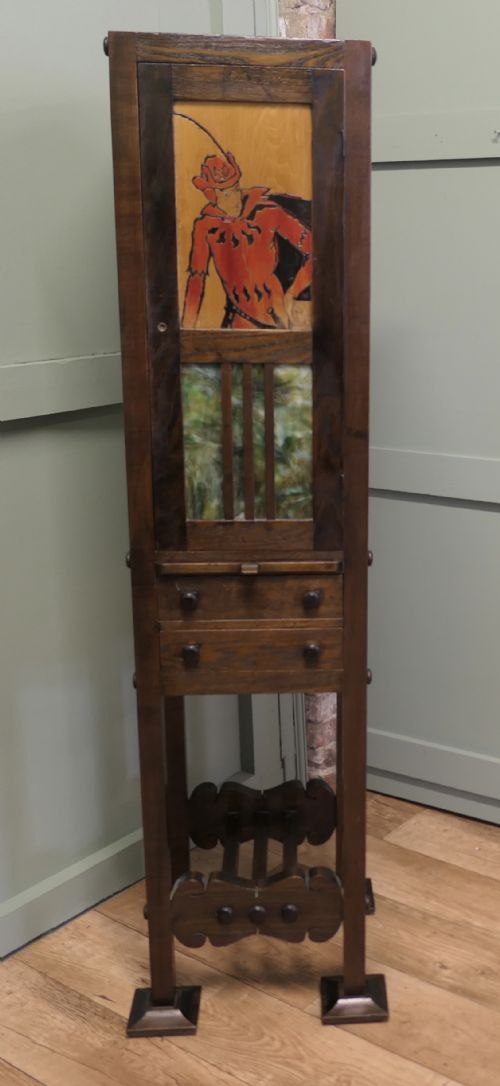
Origins vary from English workshops to French provincial makers, utilising native and imported timbers like oak, pine, rosewood, and satinwood. Each form reflects the domestic storage needs of its era, from bedroom commodes to parlour bookcases.
Materials and construction
Cabinet makers relied heavily on solid hardwoods like mahogany, oak, and walnut for structural integrity, often pairing them with softer timbers such as pine for internal framing and drawer linings. Surface decoration frequently involved book-matched veneers, burr walnut grains, or subtle boxwood inlay.
Joints were cut by hand using traditional dovetails for drawers and mortise-and-tenon construction for frames, ensuring durability across decades of daily use. Exterior finishes ranged from waxed polish on open pine to French polish on fine rosewood and painted treatments on provincial cupboards.
Listings span the Georgian, Victorian, and Edwardian eras, featuring native oak and pine alongside imported mahogany, walnut, and rosewood.
Assessing quality in timber furniture
Quality reveals itself in the selection of timber and the precision of the grain alignment, particularly on veneered drawer fronts and carved top edges. Finer examples display symmetrical wood figuring, tight dovetail joints, and original brass fittings rather than later replacements.
Proportion and execution distinguish standard utility pieces from workshop-marked creations by makers such as Gillows or Shapland & Petter. The crispness of carved details and the smooth action of drawers sliding within their runners set the hierarchy of value.
Shapland & Petter·Gillows·Ercol·Minty
The Narrow Wooden Cabinet Glossary
- Wellington chest
- A tall, narrow chest of drawers secured by a hinged vertical locking bar on one side. This locking mechanism originally protected valuable papers or linen.
- Chiffonier
- A low sideboard or cabinet featuring a shelf or enclosed cupboard space beneath the surface. It evolved during the Georgian period for dining room storage.
- Waterfall bookcase
- A tiered open bookcase where each successive shelf steps back from the one below it. The cascading sides resemble the drop of a waterfall.
- Chimney cupboard
- A remarkably slender cupboard designed to fit into the narrow recess beside a chimney breast. These pieces maximise awkward alcove spaces in older homes.
- Campaign furniture
- Portable furniture built in sections with recessed brass handles and corner brackets to withstand travel. These cabinets dismantle easily for transit.
Narrow Wooden Cabinet: Frequently Asked Questions
What rooms suit a narrow wooden cabinet?
These compact pieces fit easily into tight hallways, compact bedrooms, and small alcoves where standard furniture overwhelms the floor plan. They provide useful vertical storage without protruding too far into walking spaces.
Bedside cabinets and slim bookcases organise personal items and reading material while keeping circulation paths clear in smaller modern or period rooms.
How do I identify a Wellington chest?
A Wellington chest is instantly recognisable by its tall, narrow proportions and a hinged locking stile on the right or left edge of the drawers. This vertical wooden flap fastens with a key to secure all drawers simultaneously.
Most examples date from the Victorian era and utilise rich timbers like mahogany or burr walnut with multiple shallow drawers.
Where were chimney cupboards used?
Chimney cupboards were built specifically to occupy the awkward wall recesses flanking a domestic fireplace. Their exceptional narrowness allowed homeowners to utilise dead space for storing linens or dry goods.
Today, these rustic pine or painted cupboards work well in kitchens and bathrooms for vertical storage of everyday items.
Are these cabinets difficult to maintain?
Maintaining wooden furniture requires simple dusting with a dry cloth and occasional application of traditional beeswax to nourish the timber. Avoid placing antique cabinets in direct sunlight or beside active heat sources to prevent wood splitting.
Polished mahogany and walnut surfaces respond well to minimal intervention, preserving the natural patina accumulated over generations.