






Narrow Wall Console
A narrow wall console brings architectural grace and surface utility to compact spaces, combining slender proportions with classic decorative presence.
Narrow Wall Console
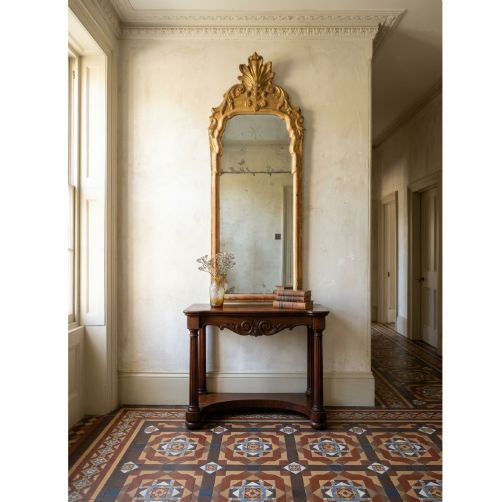
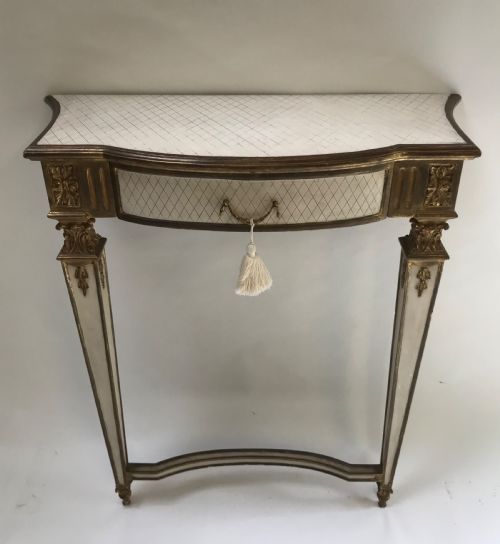
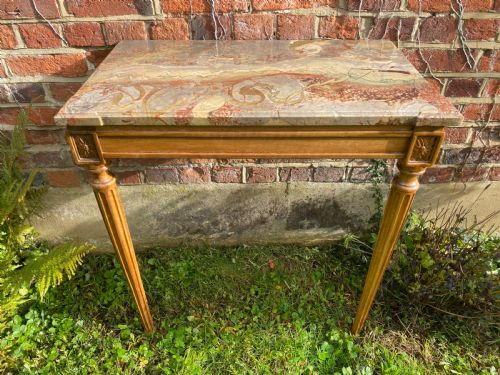
A narrow wall console is primarily designed to occupy restricted hallway, landing or reception room spaces without obstructing foot traffic. The forms encountered span standard console tables, pier tables and tall wall-mounted mirrors with integrated console shelves.
The aesthetic heritage draws heavily on Neoclassical, Georgian Revival, and Victorian design idioms. Pieces range from straightforward mahogany and walnut timbers to ornate gilded and painted finishes intended to reflect light in narrow interiors.
Materials and Construction
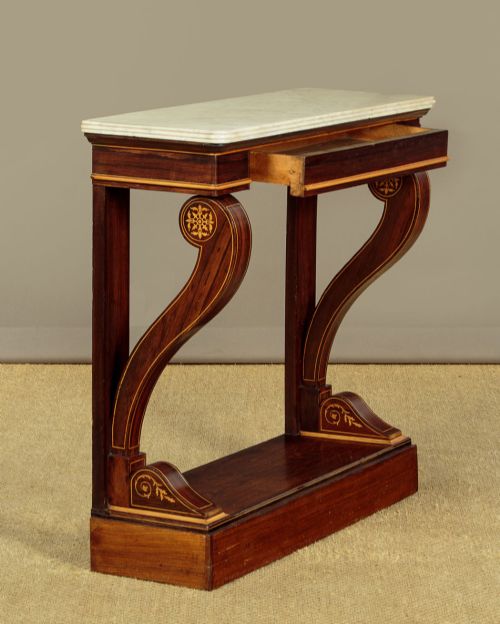
Cabinetmakers utilised dense timbers such as mahogany, walnut, and general wood substrates finished with painted surfaces or ebonised details. Marble tops provide a durable, cool surface suited to the shallow depth of these tables.
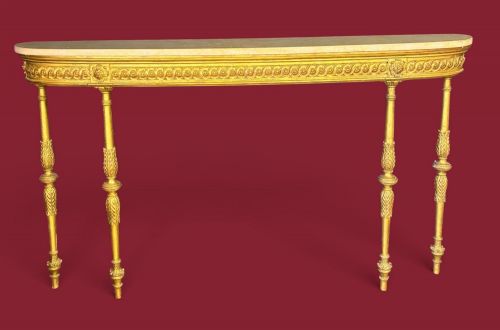
Decorative embellishment relies on traditional gesso and giltwood applications to create intricate neoclassical motifs. Glass is integrated both as inset mirror plates within tall pier frames and as functional surface elements.
Narrow Wall Console Retail Price Guide 2026
Typical asking prices for narrow wall console among the pieces listed under this phrase on Sellingantiques today, from the lower quarter to the upper quarter. They describe what is for sale here now, not the wider market.
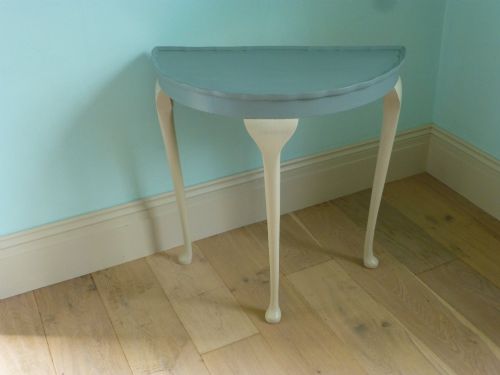
Current listings demonstrate materials ranging from solid mahogany and marble to delicate giltwood and hand-painted wood finishes.
Judging Quality and Execution
Quality rests in the crispness of carved gesso details and the depth of the gilding or painted finish. Superior examples display harmonious proportions where the narrow depth balances securely against the supporting wall structure.
Material selection dictates longevity, with dense hardwoods and genuine marble inserts outperforming softer secondary woods and lighter composite replacements. The integration of mirror glass and timber framing in pier tables demands precise joinery to remain stable.
The Narrow Wall Console Glossary
- Console Table
- A table designed to be fixed against a wall, frequently supported by front legs or brackets because the rear relies on wall attachment for stability. These tables maximise surface utility in confined rooms.
- Pier Table
- A specialised console table historically placed against the wall space between two windows, often positioned directly beneath a pier mirror. They share the same shallow footprint as narrow wall consoles.
- Pier Mirror
- A tall, narrow mirror designed to hang on the pier wall between windows, sometimes featuring an attached console shelf or standing directly above a matching console table. This arrangement doubled light and perceived space in Victorian interiors.
- Gesso
- A plaster-like material applied to wood surfaces and carved or moulded before being gilded or painted. It provides the crisp relief work seen on neoclassical frames.
- Demi-lune
- A half-moon shape characteristic of the top and frame of certain console tables. This curved profile allows the furniture to project minimally into a hallway.
Narrow Wall Console: Frequently Asked Questions
What is a narrow wall console used for?
These tables provide a compact surface for display and storage in hallways, entryways, or narrow reception rooms where standard furniture would block movement.
They serve as a place for lighting, decorative objects, or correspondence while enhancing the architectural character of the room.
How do I secure a wall console?
Because narrow consoles possess a shallow depth relative to their height, many designs require physical attachment to the wall for stability and safety.
Brackets or hidden fixing points ensure the piece remains secure during daily use.
What distinguishes a pier table from a console?
A pier table is historically linked to the architectural pier space between windows, whereas a console is a broader term for any table fixed against a wall.
In practice, both terms overlap significantly in antique listings due to their shared narrow proportions.
How can I tell the period of a console?
Dating relies on identifying stylistic markers such as Neoclassical symmetry, Georgian Revival proportions, or Victorian ornamentation combined with timber analysis.
Construction methods and material patination further clarify whether a piece originates from the eighteenth, nineteenth, or twentieth century.