





Narrow Pedestal Table
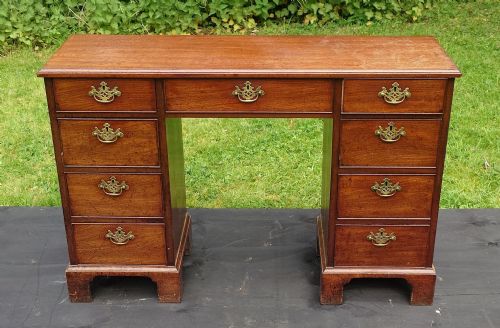
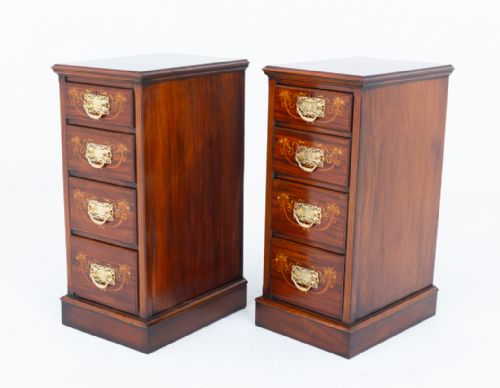
These narrow pedestal table pieces provide compact surface space and storage, combining practical utility with refined period timber construction.
Narrow Pedestal Table
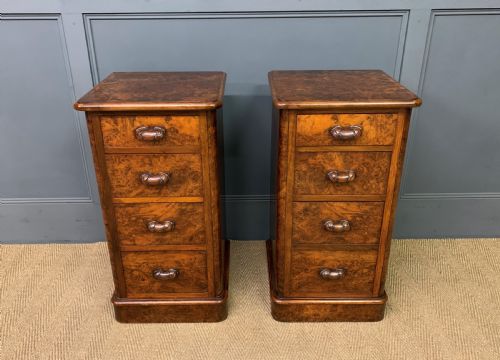
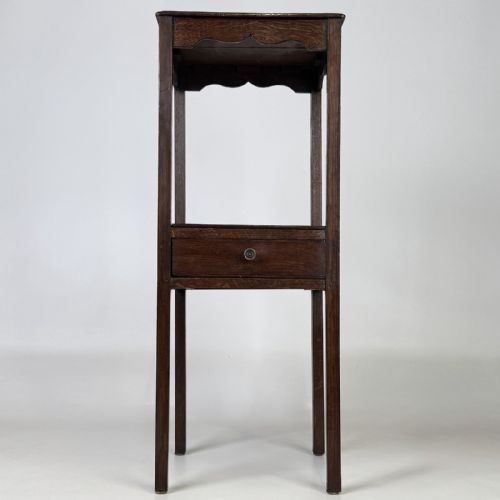
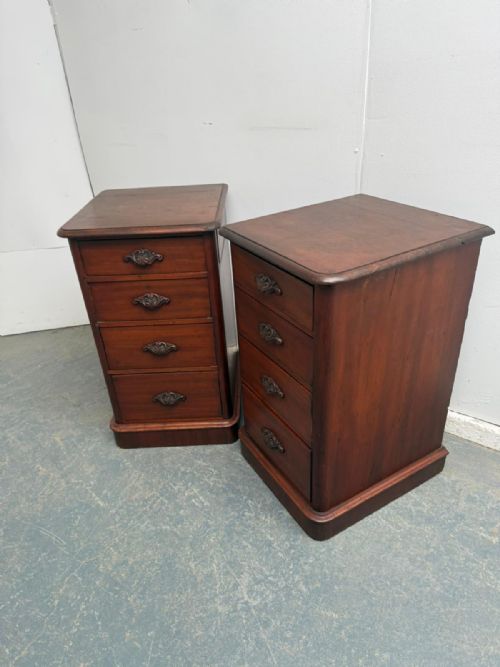
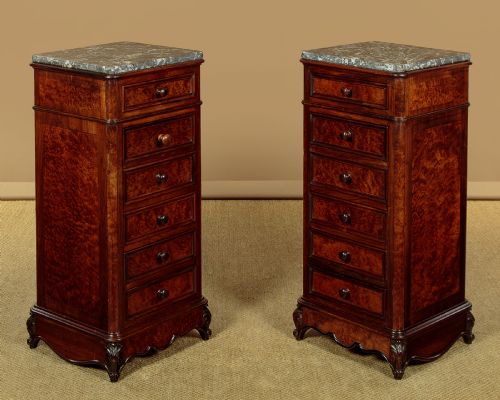
A narrow pedestal table fulfills the need for a compact surface beside a bed or in a tight hallway, appearing most frequently in forms such as bedside chests, cabinets, and nightstands. The selection spans the Georgian period through to the 1930s, offering compact proportions suited to smaller spaces.
The objects take many forms, including side tables, small chests of drawers, and bedside lockers. Victorian and Edwardian examples dominate the offerings, alongside Georgian and 1930s pieces that prioritise vertical height or minimal width over generous surface area.
Buyers encounter variations in internal configuration, from single cupboards and open stands to small multi-drawer chests. Timber choices range from standard utility woods to decorative veneers, reflecting the diverse domestic uses these tables served across different centuries.
Materials and Construction
Cabinetmakers relied heavily on dense hardwoods such as mahogany, walnut, and oak to construct stable frames that could support multiple drawers within a restricted footprint. Rosewood and amboyna appear as choice surface veneers, often applied to add visual richness through intricate grain patterns.
Inlaid details and marquetry introduce contrasting tones of lighter woods, while brass hardware provides functional pulls and handles on drawers and cabinet doors. Waxed finishes protect the timber surfaces while maintaining a natural lustre that develops over decades of use.
Narrow Pedestal Table Retail Price Guide 2026
Typical asking prices for narrow pedestal table among the pieces listed under this phrase on Sellingantiques today, from the lower quarter to the upper quarter. They describe what is for sale here now, not the wider market.
Listings include pieces from the Georgian, Victorian, and Edwardian periods, constructed in mahogany, oak, walnut, rosewood, and amboyna.
Assessing Quality and Craftsmanship
Superior examples demonstrate meticulous attention to timber selection, matching grain patterns across drawer fronts and ensuring structural integrity without relying on excessive modern repairs. The precision of the joinery and the subtlety of any marquetry inlay distinguish finer cabinetwork from more utilitarian pieces.
Proportions dictate much of the appeal, where genuinely narrow dimensions are achieved through careful design rather than crude alteration. Original hardware, intact veneers, and smooth drawer operation separate high-grade period items from those with replaced components.
The Narrow Pedestal Table Glossary
- Marquetry
- Decorative patterns formed by fitting together small pieces of veneer into wooden panels. This technique creates pictorial or geometric designs on tabletops and cabinet doors.
- Nightstand
- A small low table or cabinet placed beside a bed for holding personal items. Period variations often incorporate drawers or enclosed cupboards.
- Pedestal
- A structural support or base that elevates a cabinet or table. In narrower furniture, it provides stability while keeping the footprint compact.
Narrow Pedestal Table: Frequently Asked Questions
Where do narrow pedestal tables work best?
These pieces fit comfortably beside low beds, in narrow hallways, or as accent surfaces in compact sitting rooms.
Their restricted width allows them to provide storage and display space without crowding surrounding furniture.
How do I identify a Victorian bedside chest?
Victorian examples often feature rich mahogany or walnut timbers, sometimes with hand-cut dovetails inside the drawers and turned wooden pulls.
They frequently appear as pairs and may incorporate small panelled doors or narrow banks of drawers designed for bedside storage.
What is the difference between a nightstand and a bedside cabinet?
A nightstand typically provides an open shelf or single drawer surface, while a bedside cabinet encloses the space behind a small hinged door.
Both serve the same domestic function of holding bedside items but offer different levels of concealed storage.
How should I care for antique hardwood tables?
Keep these timber surfaces away from direct heat sources and strong sunlight to prevent the wood from drying out or veneers from lifting.
Apply a gentle beeswax polish occasionally to maintain the lustre of the original finish without building up heavy residues.