

Narrow Oak Shelving
Narrow oak shelving brings compact utility to tight spaces, offering sturdy timber uprights designed to hold books and papers without dominating a room.
Narrow Oak Shelving
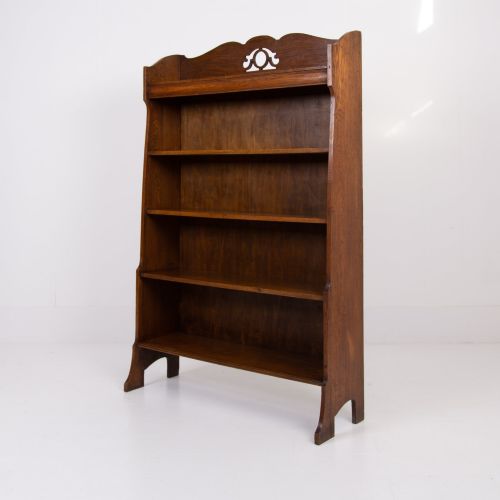
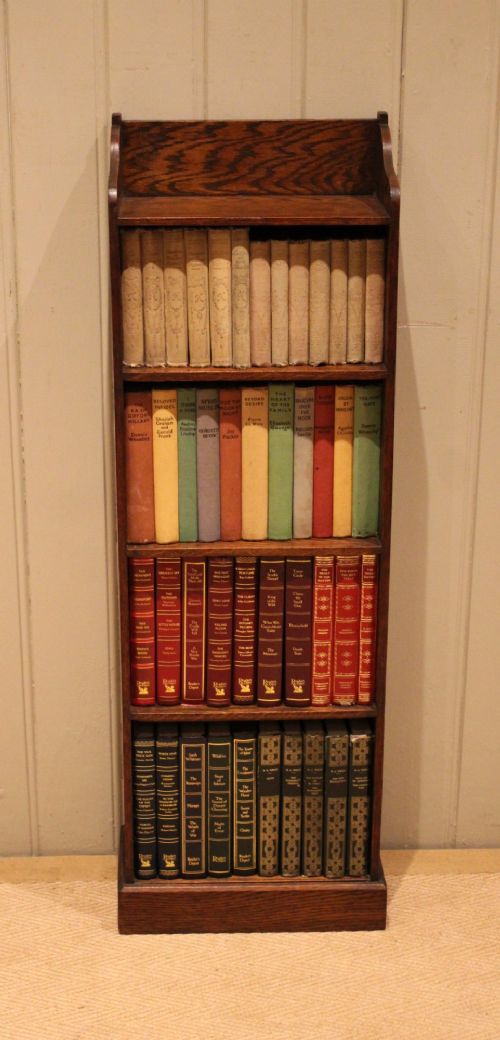
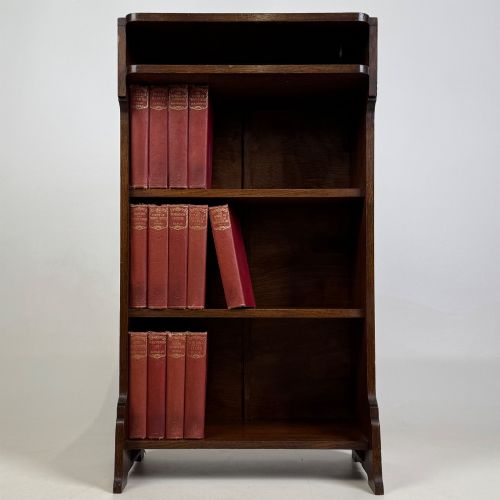
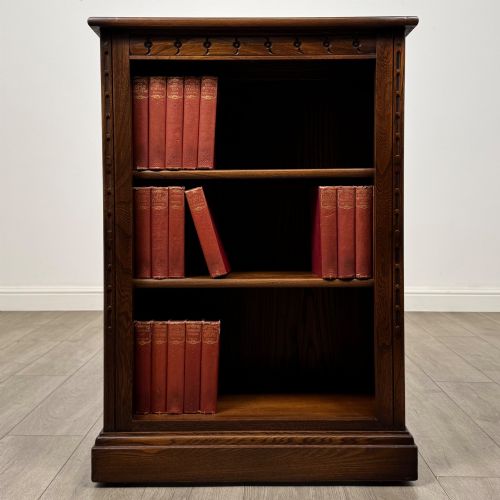
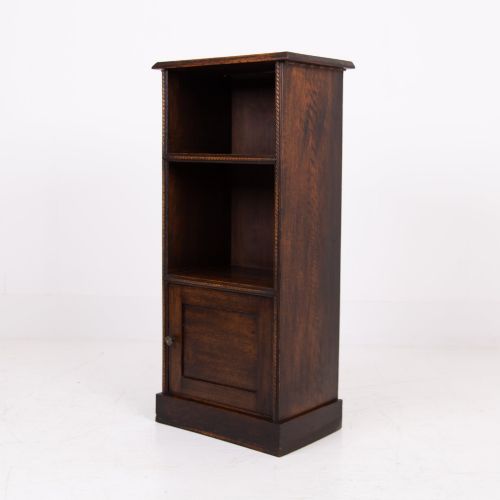
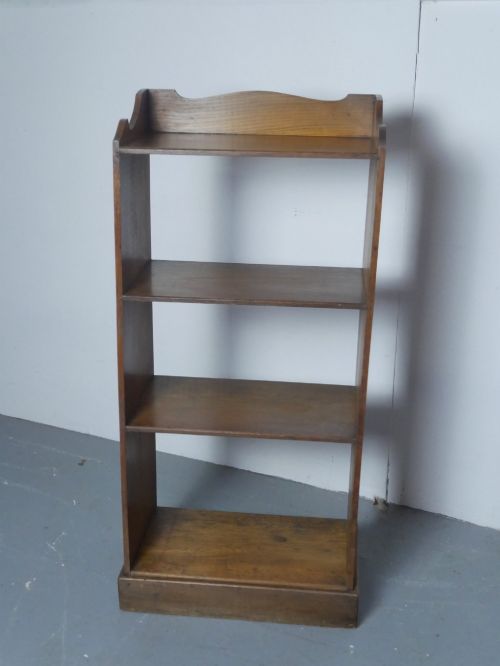
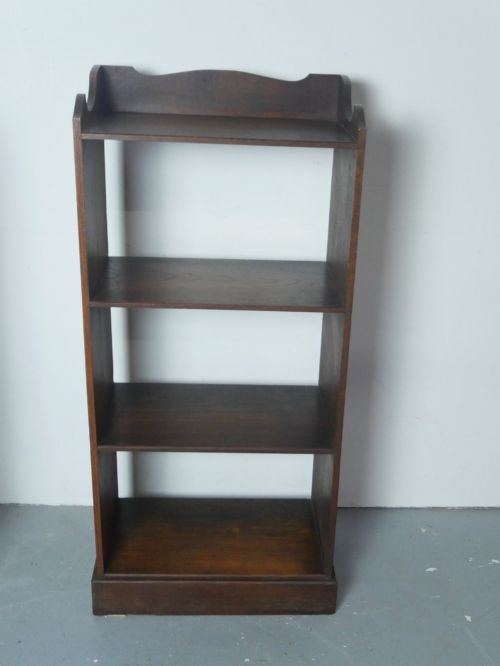
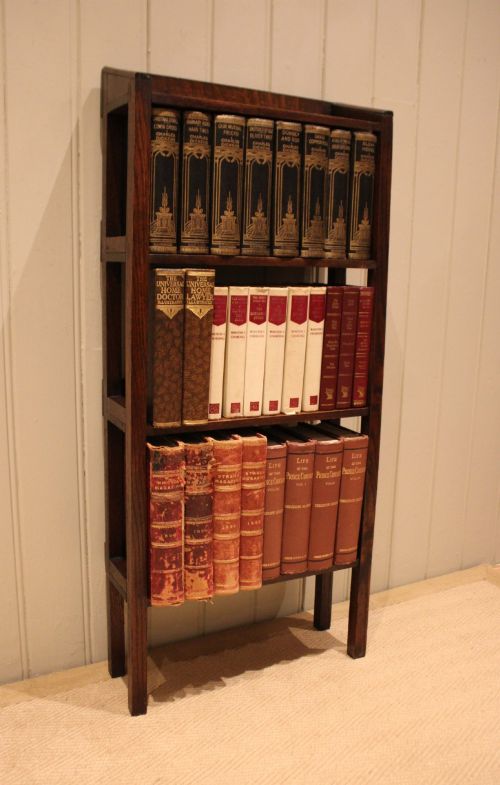
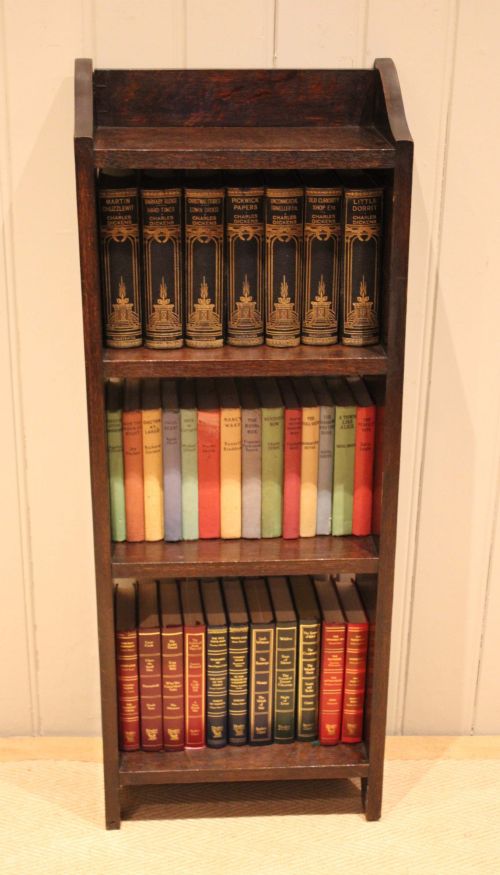
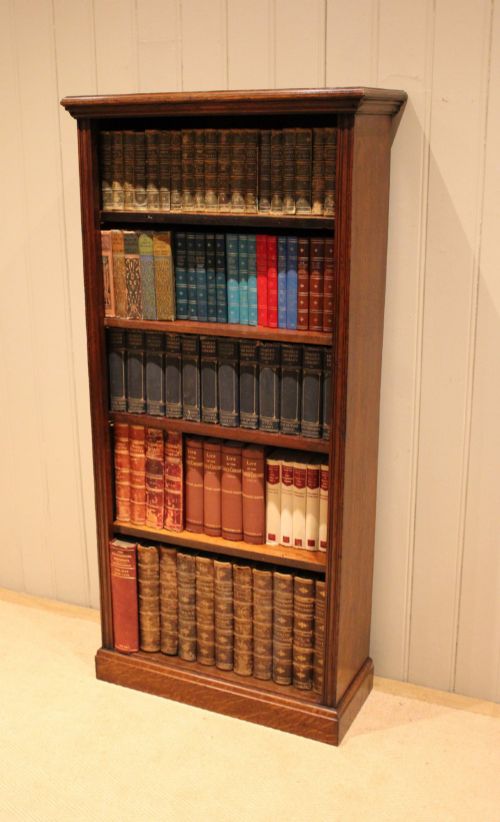
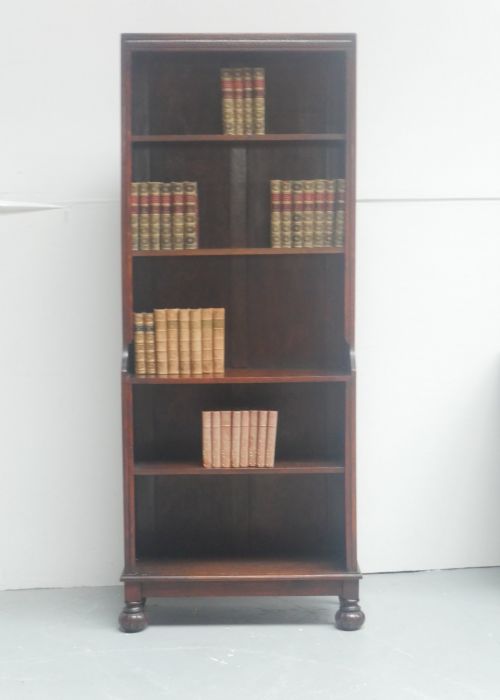
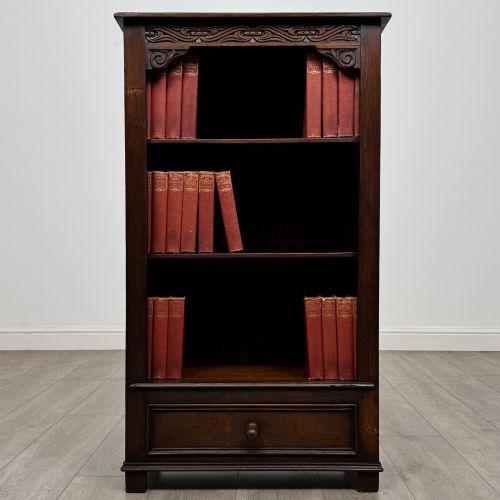
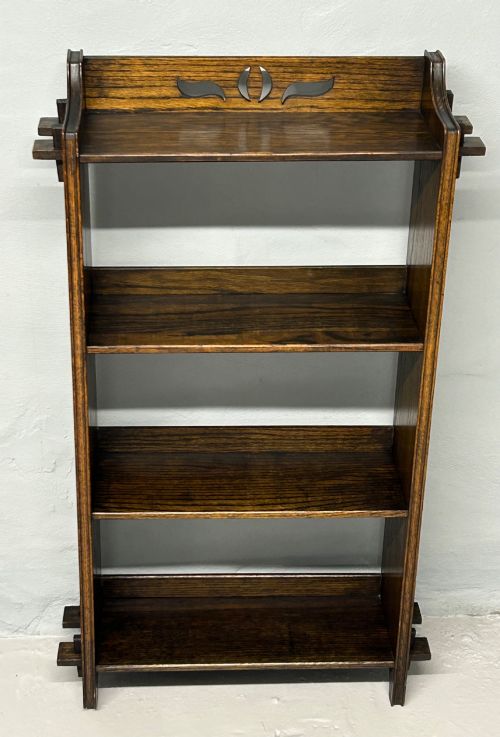
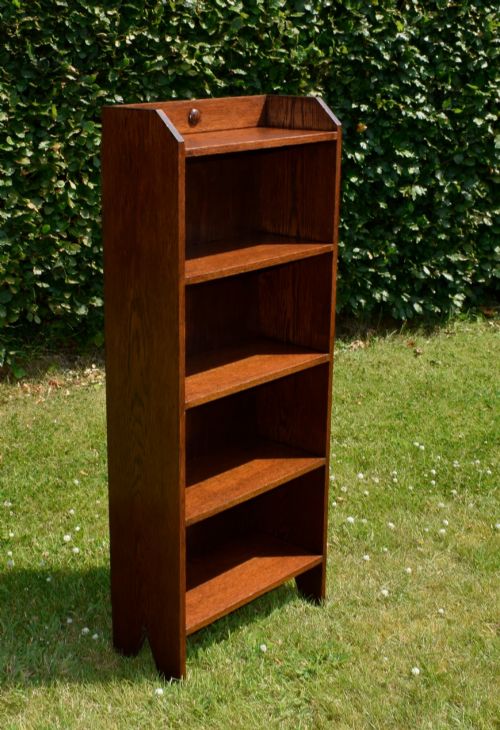
Narrow oak shelving most frequently appears as open bookcases and small upright units dating from the late nineteenth century through to the nineteen thirties. These pieces serve domestic spaces where floor space is limited, often taking the form of open bookcases or small standing units.
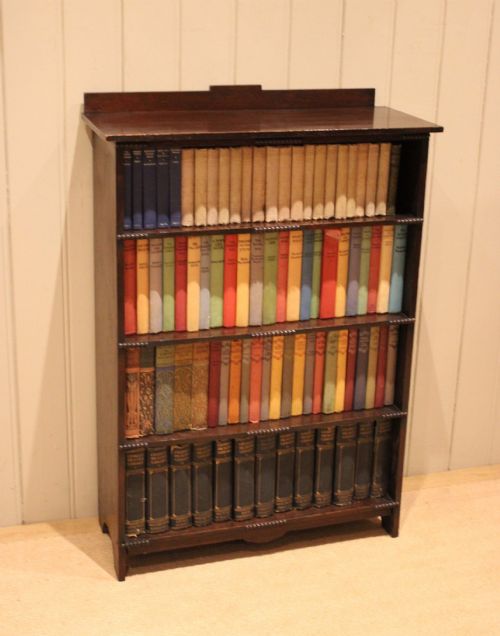
The selection centres heavily on Edwardian and nineteen-twenties production, alongside Victorian and Arts and Crafts examples. Buyers encounter variations including beaded edges, waterfall tiers, and decorative cut-outs alongside taller adjustable shelving.
How they were made
Construction relies primarily on oak, including solid oak and dark oak timber, supplemented by brass and iron details on hardware and fittings. Wood surfaces receive finishes that highlight the natural grain while sometimes incorporating carved elements or mouldings.
Joinery methods reflect the period of manufacture, ranging from straightforward Victorian carriagework to the distinctive aesthetic of the Arts and Crafts movement. Makers utilised timber strength to support narrow vertical proportions without requiring bulky frames.
Listings span periods from eighteen eighty to nineteen thirty, encompassing Victorian, Edwardian, Arts and Crafts, and Art Deco styles.
What varies in quality
Quality separates ordinary utility pieces from finer items through the crispness of timber selection, the refinement of mouldings, and the integration of decorative details such as cut-outs or beaded edges. The handling of the oak grain and the proportion of the vertical structure dictate the visual success of each unit.
Earlier Victorian and Arts and Crafts examples often demonstrate greater individuality in design, whereas later twentieth-century pieces tend toward standardised commercial forms. The presence of adjustable shelving or specific architectural styling elevates the character of individual pieces.
Wylie Lochhead of Glasgow·E.A. Taylor
The Narrow Oak Shelving Glossary
- Oak
- A hard, durable timber with a prominent grain used extensively for structural stability and surface appearance in these pieces.
- Arts and Crafts
- A design movement emphasising handcraftsmanship, simple forms, and honest construction, visible in several bookcases here.
- Beaded edge
- A small, rounded decorative moulding applied to the edge of shelving or uprights to soften the rectilinear profile.
- Waterfall bookcase
- A stepped shelving form where each tier sits slightly further back than the one below it, creating a cascading silhouette.
- Adjustable shelving
- A functional system allowing internal shelves to be repositioned at different heights using metal pins or wooden notches.
Narrow Oak Shelving: Frequently Asked Questions
Where do these narrow shelves work best?
These compact units fit easily into alcoves, hallways, and small rooms where standard furniture proves too bulky.
Their shallow depth keeps floor space clear while still accommodating substantial quantities of books.
How do I identify an Edwardian bookcase?
Edwardian pieces often feature lighter oak tones, simpler decorative mouldings, and slender vertical proportions.
They bridge the heavy styling of the Victorian era and the cleaner lines of the twentieth century.
What is a beaded edge detail?
A beaded edge is a narrow, rounded profile machined or carved along the vertical frames or shelves.
This subtle touch adds texture and catches the light differently than plain square-cut timber.
Are these shelves suitable for heavy books?
Solid oak construction provides natural strength and stability for supporting everyday reading material.
Units featuring adjustable shelving let you configure the vertical spacing to match larger volumes.