

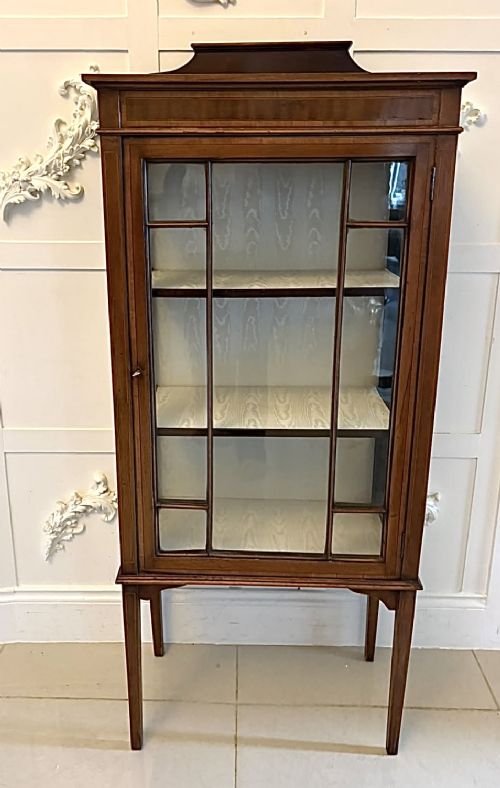
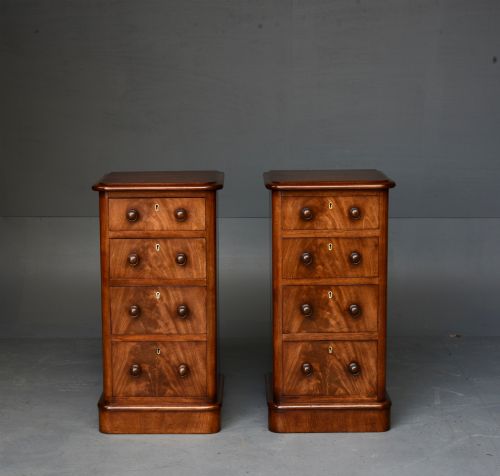
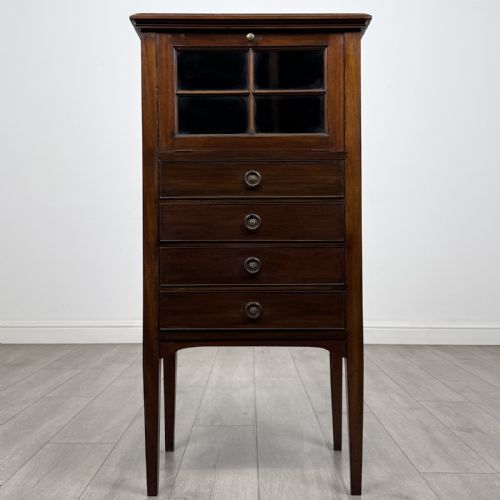
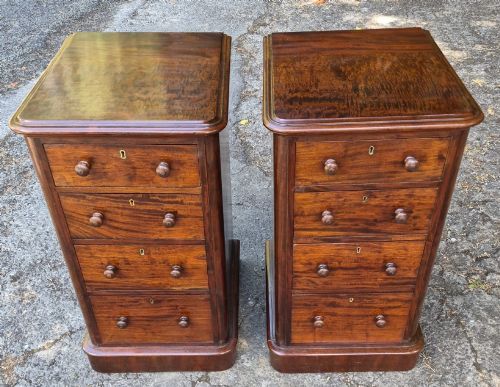
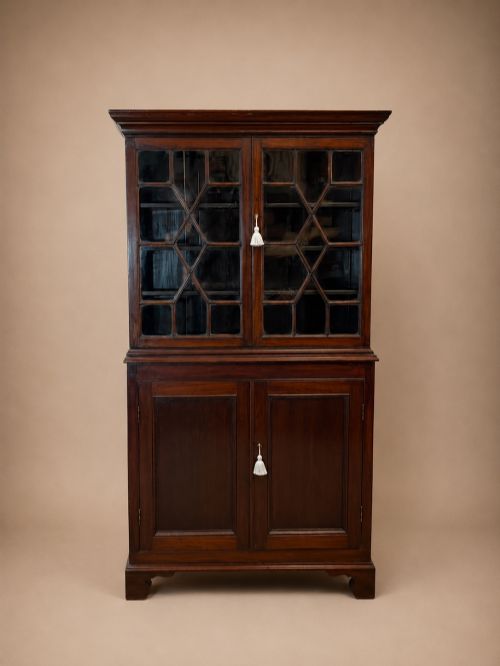
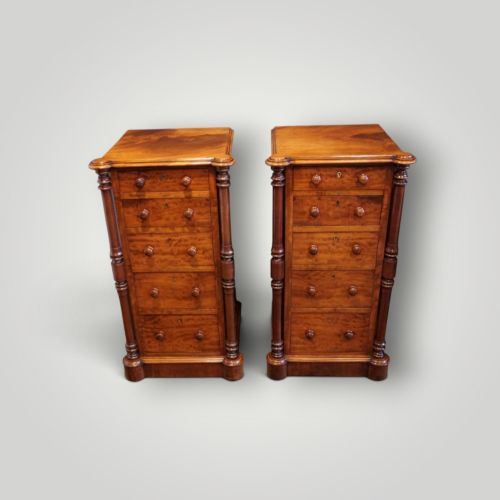
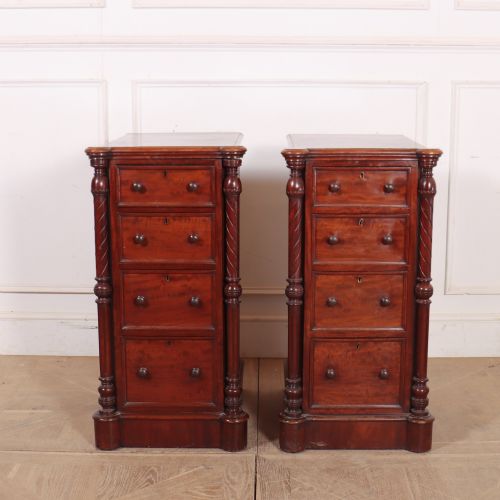
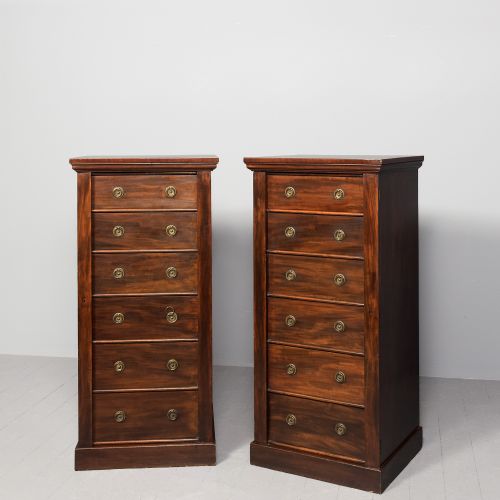

Narrow Mahogany Cupboard
A narrow mahogany cupboard solves spatial challenges with compact proportions and rich timber grain.
Narrow Mahogany Cupboard
A narrow mahogany cupboard offers practical storage in confined footprints while maintaining traditional aesthetic presence. These pieces emerge across nineteenth and twentieth century periods, spanning Victorian, Edwardian, and Georgian revival eras.
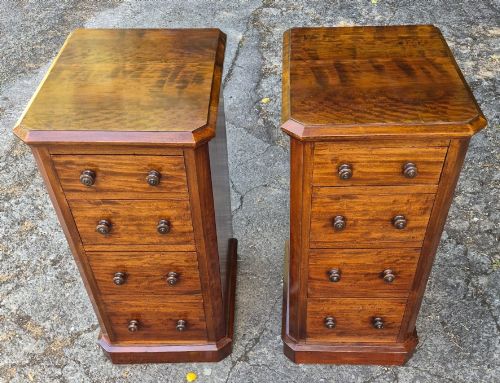
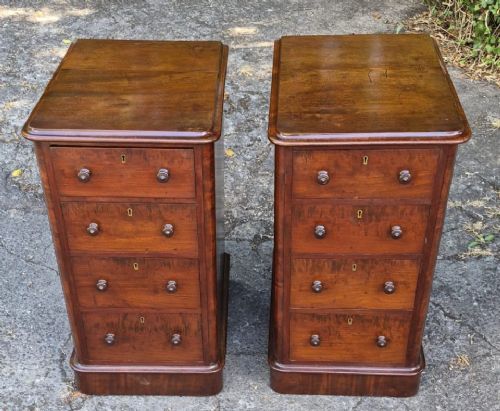
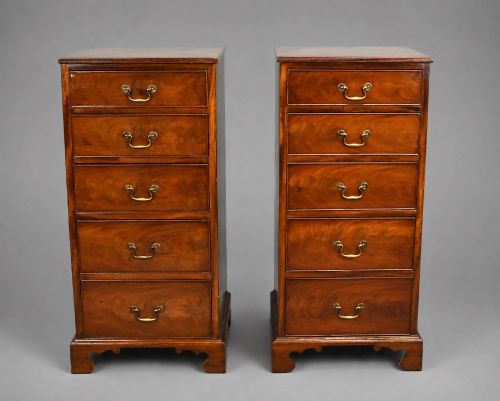
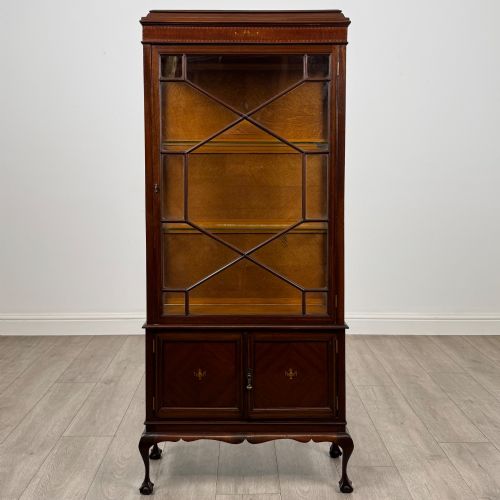
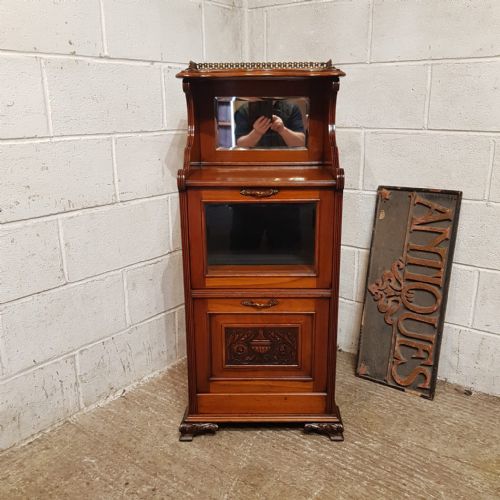
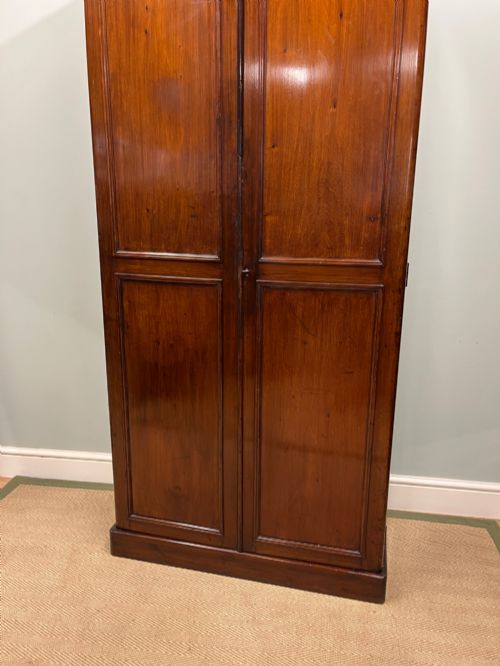
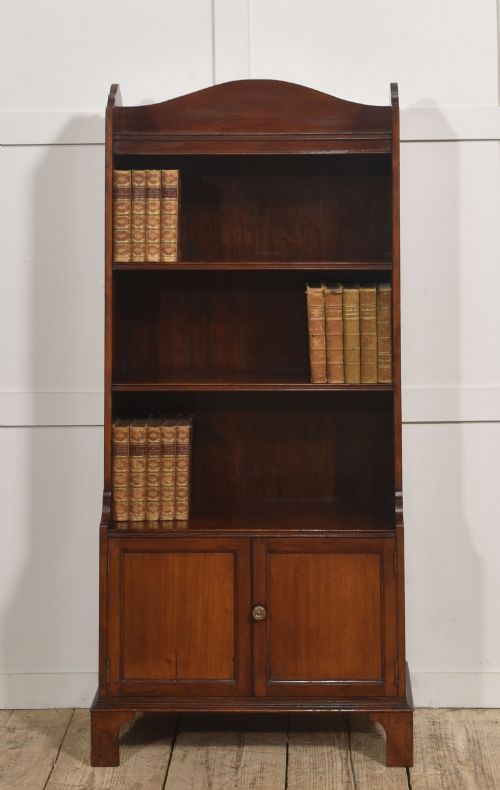
The selections here frequently take the form of bedside chests, tall bookcases, display cabinets, and side cabinets designed for tight domestic spaces. Buyers encounter matching pairs and single upright storage units built with shallow depths.
Originating largely from British workshops and regional cabinetmakers, these narrow formats served bedrooms, hallways, and compact parlours where floor space remained at a premium.
What Varies in Quality
The tier of craftsmanship shows in the selection of timber figures, particularly where flame mahogany veneer or intricate satinwood inlay adorns the facade. Superior examples display seamless grain continuity across multiple drawers and doors.
Internal construction details such as secondary timber selection, drawer lining materials, and original brass hardware distinguish workshop standards. Refined pieces maintain crisp mouldings and tight joinery that survive decades of daily use without distortion.
Narrow Mahogany Cupboard Retail Price Guide 2026
Typical asking prices for narrow mahogany cupboard among the pieces listed under this phrase on Sellingantiques today, from the lower quarter to the upper quarter. They describe what is for sale here now, not the wider market.
A former sheet music cabinet once stored parlour symphonies before beginning its second life as an antique hallway cupboard.
Warings Liverpool·James Shoolbred
The Narrow Mahogany Cupboard Glossary
- Mahogany
- A durable tropical hardwood prized for its reddish-brown colour and stability in fine cabinetmaking. It forms the primary structural and visual material for the majority of these pieces.
- Flame mahogany veneer
- A thin slice of timber cut from the fork of the tree where branches meet the trunk, producing a rippling, flame-like grain pattern. Makers applied this decorative layer to prominent surfaces like drawer fronts.
- Wellington chest
- A tall, narrow chest of drawers secured by a hinged locking stile on one side that fastens with a key. This form originated in the nineteenth century for secure storage.
- Chiffonier
- A compact sideboard or low cabinet equipped with shelves or enclosed storage, popular during the Victorian period. These pieces suited smaller reception rooms and parlours.
- Satinwood
- A pale, lustrous exotic timber utilised for contrasting stringing and inlay work on Edwardian and revival furniture. It highlights geometric borders and panel outlines.
Narrow Mahogany Cupboard: Frequently Asked Questions
What rooms suit a narrow mahogany cupboard?
These compact pieces fit easily into alcoves, small bedrooms, and narrow hallways where standard furniture proves too deep. Their vertical orientation maximises storage without crowding the floor area.
They function effectively as bedside tables, auxiliary book storage, or display units in modest living spaces. The restrained footprint allows them to integrate into both traditional and contemporary interiors.
How do I date a Victorian piece?
Dating relies on examining construction methods, hardware styles, and timber characteristics recorded across the nineteenth century. Victorian pieces often display hand-cut dovetails and specific proportions typical of the era.
Secondary woods and backboards provide further clues to the manufacturing decade. Comparing the piece to documented examples from the same period helps narrow down the origin.
Are these cupboards suitable for book storage?
Many listings combine cupboard storage with open shelving or glazed bookcase sections designed specifically for books. The narrow depth keeps volumes within easy reach.
Adjustable shelves appear in several variations, allowing the interior layout to accommodate different book heights. Enclosed lower compartments protect heavier volumes from dust.
How should I maintain the mahogany surface?
Regular dusting with a soft, dry cloth preserves the polished finish without building up residue. Avoid placing the timber in direct sunlight or near heat sources to prevent fading and veneer lifting.
Occasional application of appropriate furniture wax nourishes the wood and maintains its natural lustre. Gentle care ensures the polish develops a deeper patina over time.