



Narrow Leg Table
A narrow leg table offers slim proportions to fit tight hallways and alcoves, combining practical surface space with refined joinery.
Narrow Leg Table
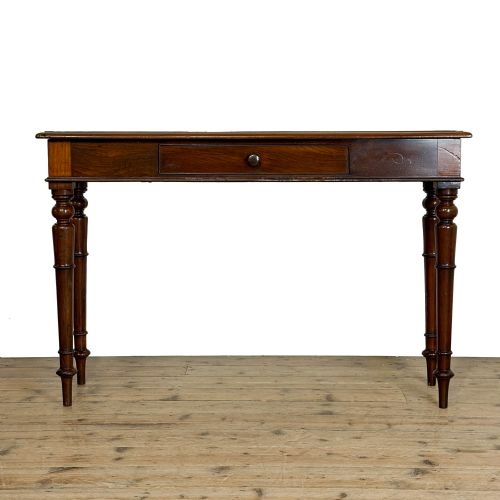
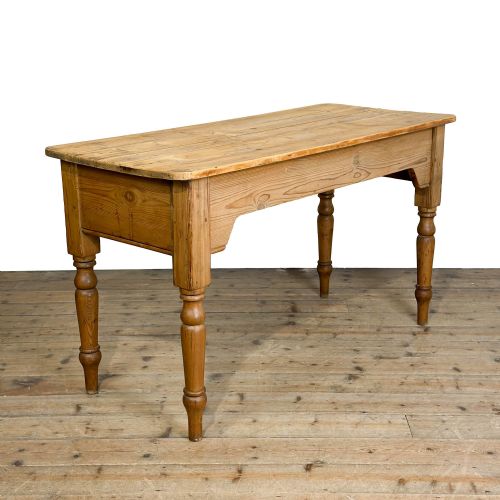
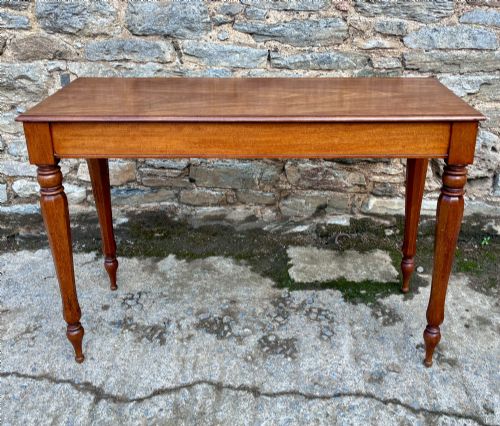
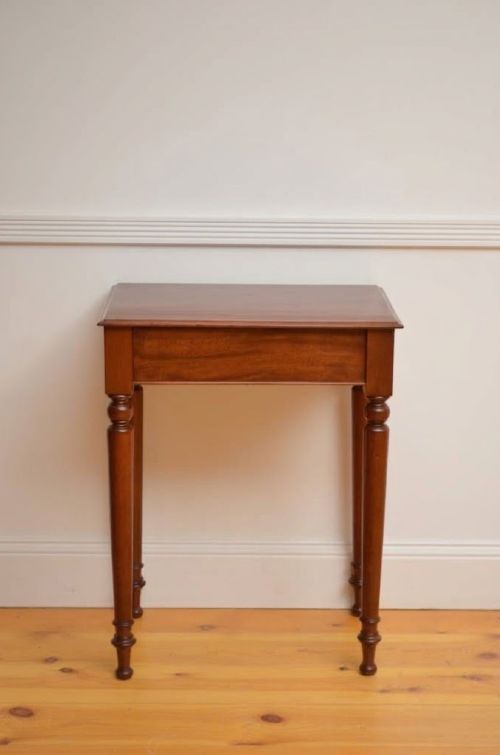
A narrow leg table primarily takes the form of a console table, side table, or occasional table designed to occupy minimal floor space in domestic interiors. These pieces appear across various periods, including Victorian, Edwardian, and the early twentieth century, reflecting shifting domestic requirements for compact furniture.
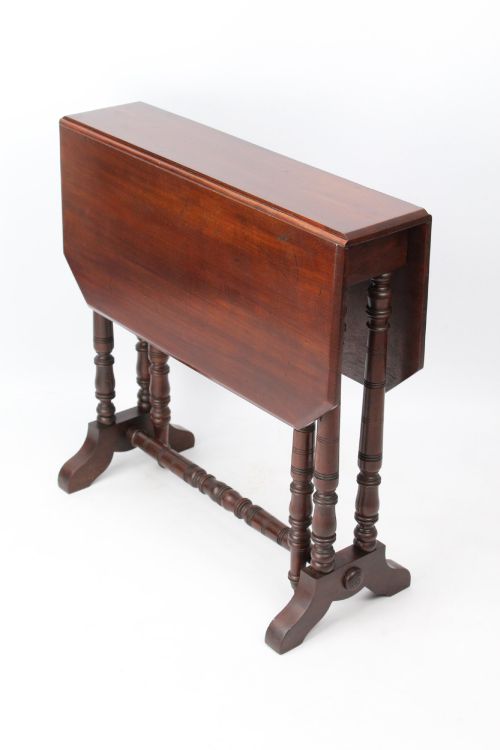
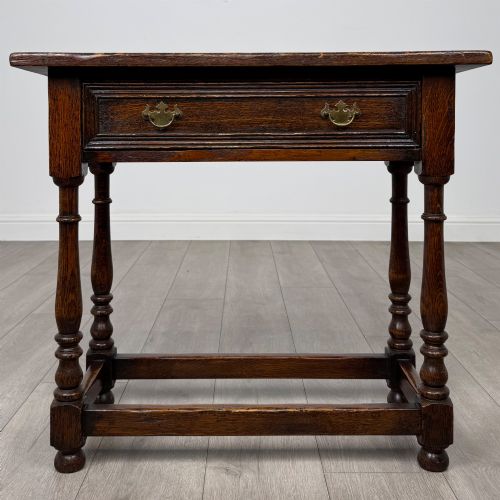
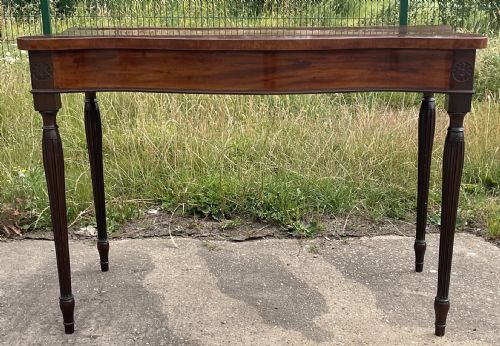
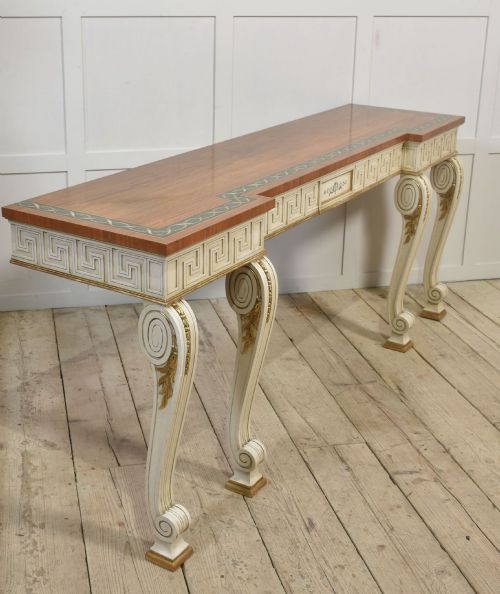
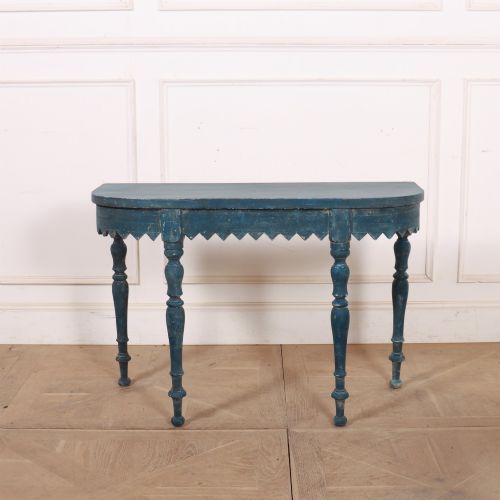
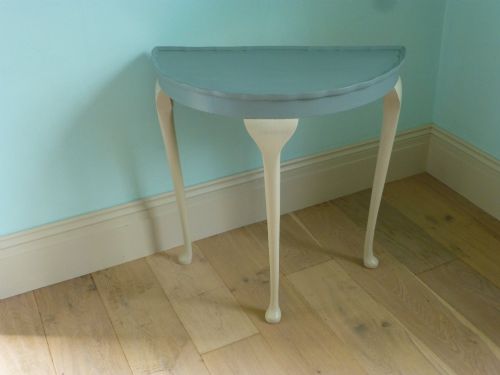
The selections on this page encompass console tables with potboard bases, small Sutherland tables, drop-leaf Pembroke tables, and painted demi-lune hall tables. Woods such as mahogany, oak, walnut, and painted timber dominate the offerings, spanning styles from Georgian revival to neoclassical.
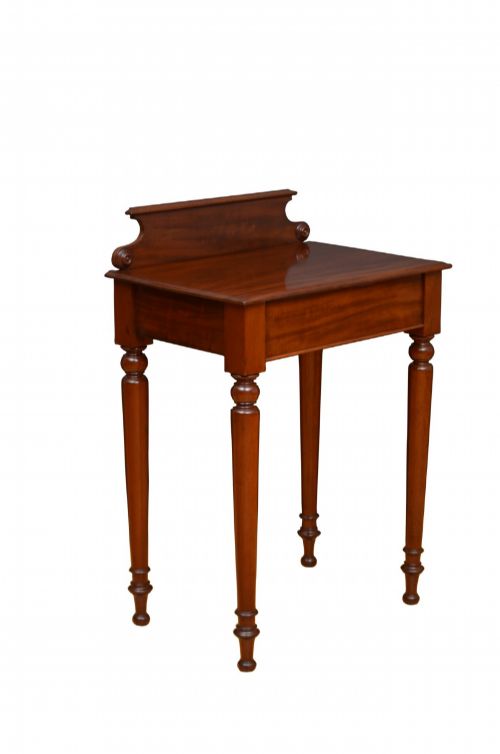
Buyers seeking a narrow leg table will encounter slender profiles suited to hallways, drawing rooms, and bedside positions. The forms range from straightforward Victorian mahogany hall tables to intricate Edwardian spider-leg occasional tables and French scrubbed trestle designs.
How they were made
Cabinetmakers utilised dense timbers like mahogany, oak, and walnut, often selecting figured veneers for top surfaces to add visual depth. Supporting structures rely on slender turned legs, tapering supports, or trestle bases designed to maintain stability despite restricted overall dimensions.
Surface treatments vary between polished wood finishes that expose the grain and painted or enamelled timber. Decorative elements include brass hardware, inlaid borders, and carved detailing reflecting neoclassical or Georgian revival tastes.
Narrow Leg Table Retail Price Guide 2026
Typical asking prices for narrow leg table among the pieces listed under this phrase on Sellingantiques today, from the lower quarter to the upper quarter. They describe what is for sale here now, not the wider market.
Listings feature mahogany, oak, and walnut alongside painted wood, spanning the Victorian, Edwardian, and 1920s eras.
What varies in quality
The grade of a narrow leg table depends largely on the selection of timber and the precision of the joinery. Finer examples display carefully matched grain patterns on the top and well-executed structural joints that withstand regular use.
Proportion and execution distinguish standard production from superior pieces. Workshops known for high-standard cabinet work achieved balanced scaling, ensuring slender legs remain structurally sound while supporting the weight of the top.
Druce and Co·Gillows
The Narrow Leg Table Glossary
- Console table
- A table designed to stand against a wall, frequently secured to it or balanced on slender legs. These tables suit narrow spaces such as hallways and corridors.
- Sutherland table
- A narrow drop-leaf table where the flaps comprise a large portion of the top surface, supported by swinging gate legs. When folded down, the piece occupies minimal depth.
- Demi-lune
- A half-moon shape used for table tops and commodes, allowing the piece to sit flush against a wall. This profile is common in painted hall tables.
- Pembroke table
- A table with hinged flaps on either side that can be raised to increase surface area. They frequently incorporate a single drawer and slender legs.
- Potboard base
- An open lower shelf fitted between the legs of a console or sideboard, originally intended for storing earthenware vessels.
Narrow Leg Table: Frequently Asked Questions
Where should I place a narrow leg table?
These tables find natural placement in narrow hallways, entrance passages, and compact landings where standard furniture impedes movement. Their shallow depth allows them to sit against walls without obstructing thoroughfares.
They also function effectively in living rooms as lamp tables or behind sofas, and in bedrooms as small side tables or bedside cabinets.
How do I identify an Edwardian narrow table?
Edwardian examples often feature lighter timbers, subtle inlay work, and slender profiles influenced by Sheraton or neoclassical revivals. They frequently appear as Sutherland tables, spider-leg occasional tables, or oak lamp tables.
The construction tends to be neat and domestic in scale, reflecting the interior fashions of the early twentieth century.
What is the difference between a console and a side table?
A console table is traditionally designed to stand directly against a wall, sometimes relying on the wall for partial stability. Side tables are freestanding pieces that can occupy a perimeter position or float adjacent to seating.
In practice, narrow leg tables often blur these definitions, serving interchangeable roles depending on their base construction and drawer configuration.
How do I care for polished mahogany tables?
Polished mahogany surfaces benefit from regular dusting with a soft, dry cloth to prevent abrasive particles from accumulating. Periodic application of appropriate wax polish maintains the lustre of the timber.
Keep these tables away from direct sources of heat and strong sunlight to prevent the wood from drying out or the finish from fading over time.