



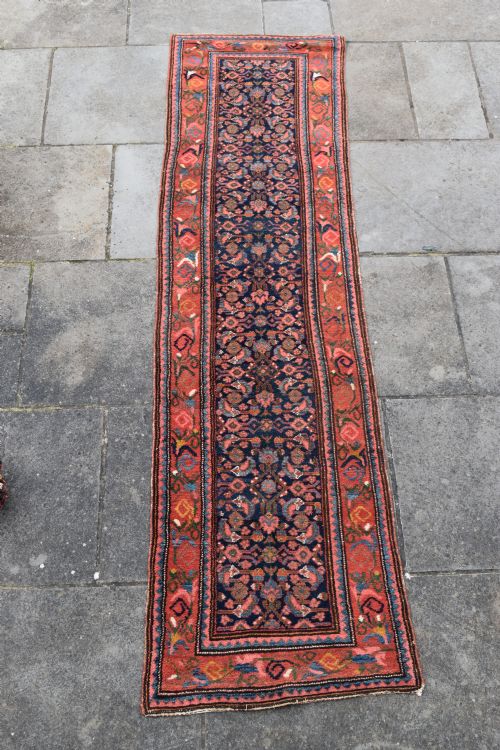


Narrow Hall Carpet
A narrow hall carpet grounds a long corridor with wool and colour, turning bare floors into a defined architectural axis.
Narrow Hall Carpet
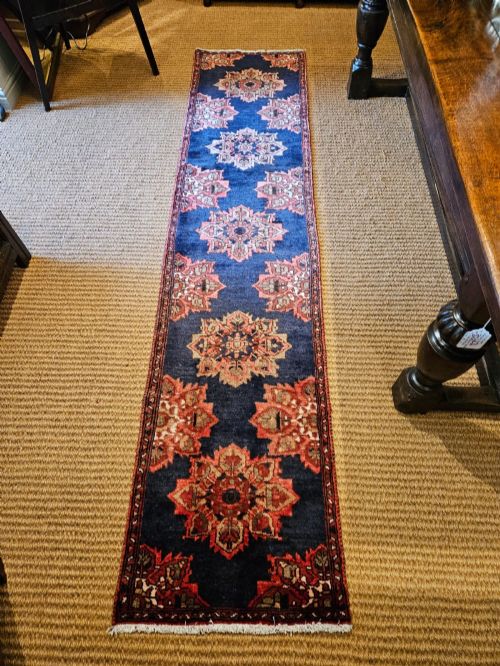
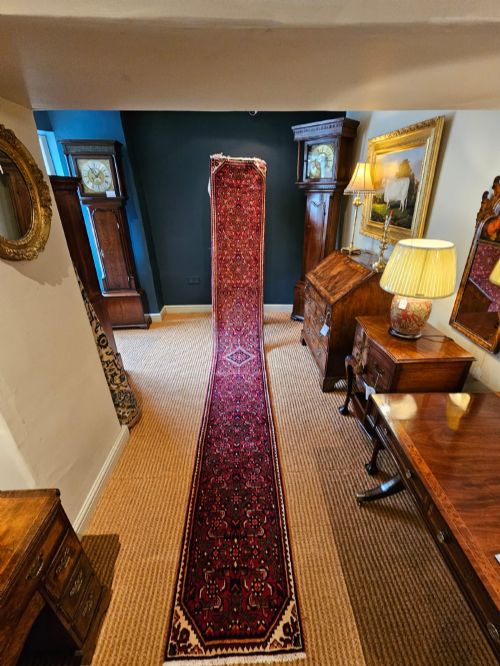
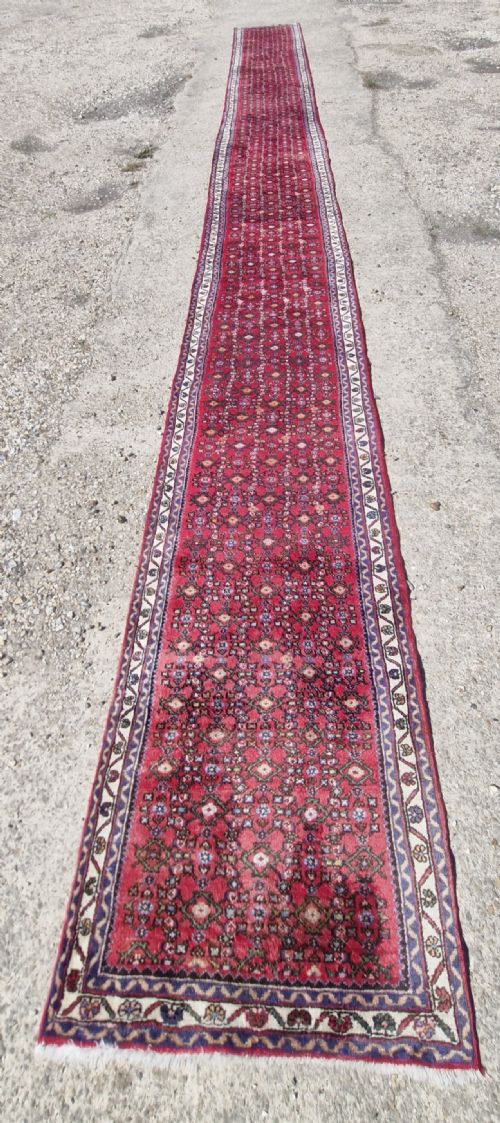
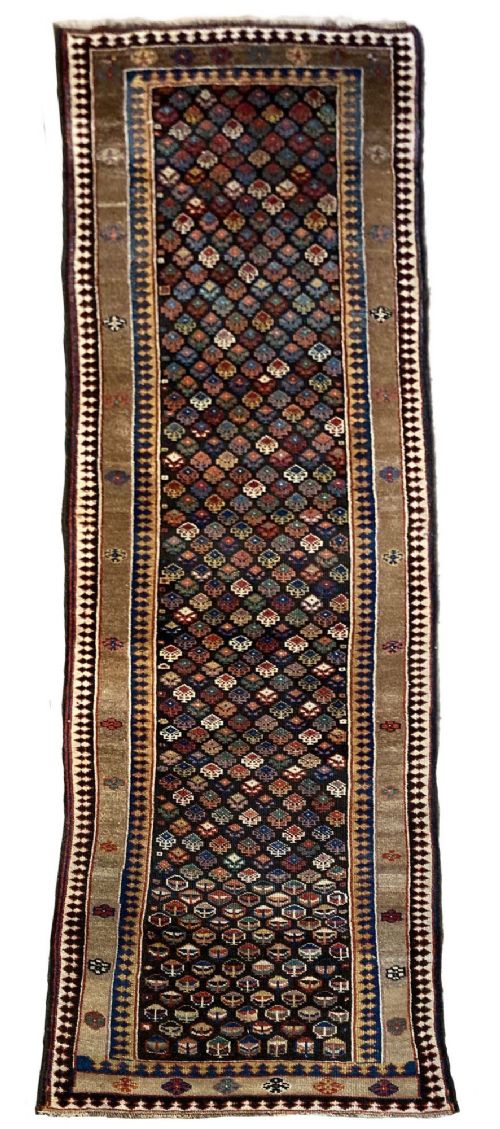
A narrow hall carpet is an elongated runner rug designed specifically for hallways, landings and long passages. You are looking at pieces that span from the late nineteenth century through to the mid twentieth century, originating primarily from Persian, Kurdish, Caucasian and Ottoman workshops.
The versions you will most commonly meet on this page are hand-knotted wool and cotton runners of substantial length, often measuring under a metre wide but stretching past four metres, and occasionally reaching exceptional proportions.
These carpets use traditional Persian, tribal Persian and Persian tribal styles, alongside specific regional weaving traditions such as Bidjar, Hamadan, Heriz Karaja, Sarouk, Serab, Shirvan, Ushak and Varamin.
Materials and construction
The construction relies heavily on wool piles knotted onto cotton or wool foundations, utilising durable natural materials built to withstand heavy foot traffic in narrow spaces. Camel hair also appears in the fibre mix, adding distinct warmth and texture to the weave.
Weavers employed traditional hand-knotting techniques characteristic of regional workshops and nomadic tribes across Persia, the Caucasus and Anatolia. These methods produce dense, resilient piles that hold rich, natural dye colours over decades of use.
Narrow Hall Carpet Retail Price Guide 2026
Typical asking prices for narrow hall carpet among the pieces listed under this phrase on Sellingantiques today, from the lower quarter to the upper quarter. They describe what is for sale here now, not the wider market.
Named regional origins on this page include Bidjar, Hamadan, Heriz Karaja, Sarouk, Serab, Shirvan, Ushak and Varamin.
Separating top from bottom
Quality in a narrow hall carpet rests on the precision of the knot density and the crispness of the tribal or traditional motifs. Tighter, finer knots allow complex geometric and floral patterns to remain sharp along extreme proportions.
The integrity of the wool and the depth of the dye work also divide standard examples from superior ones. Healthy, lustrous wool retains its resilience under foot, whereas brittle or heavily worn fibre lacks the structural life expected in a fine antique runner.
Kurdish·Hamadan·Heriz Karaja·Bidjar·Sarouk·Ushak·Shirvan·Varamin
The Narrow Hall Carpet Glossary
- Runner rug
- An elongated carpet format designed for corridors, hallways and stairs. Its narrow width and extended length suit tight architectural spaces.
- Pile
- The raised surface of a carpet formed by the ends of knotted yarn. Dense pile construction protects the foundation threads beneath.
- Knot density
- The number of knots per square unit in a carpet. Higher density allows for more intricate pattern definition.
- Foundation
- The underlying structure of warp and weft threads that supports the knotted pile. Cotton and wool are the primary foundation materials seen here.
- Tribal Persian
- A style of weaving originating from nomadic or village groups rather than city workshops. These designs often feature geometric motifs and spontaneous colour choices.
Narrow Hall Carpet: Frequently Asked Questions
How do I choose the right length for my hallway?
Measure the clear floor space of your corridor, leaving an equal margin of bare wood or stone visible around the edges. Long narrow runners can stretch past four metres to anchor an entire hallway.
Keep in mind that extremely long formats require straight corridors without sharp turns. Ensure doors can swing freely over the pile thickness before settling on a final size.
Where should I place a narrow runner?
These carpets are built for high-traffic circulation spaces such as entrance halls, long corridors and stair landings. They add warmth and acoustic dampening to narrow architectural zones.
Avoid placing them in areas prone to dampness unless adequate ventilation is present. A quality underlay helps keep the runner stable on hard hallway floors.
How do I care for an antique wool runner?
Vacuum the rug regularly with a suction-only attachment, avoiding rotating brush bars that can pull at the wool pile. Rotate the runner periodically to ensure even wear across the length.
Attend to spills immediately by blotting with a clean cloth rather than rubbing. Professional cleaning should be carried out by specialists familiar with antique vegetable-dyed wool.
What defines a tribal Persian design?
Tribal Persian designs originate from village and nomadic weavers working outside major city workshops. They typically feature geometric patterns, stylized medallions and bold, repeating motifs.
These patterns often include spontaneous shifts in colour and design elements, reflecting the weaver's personal expression rather than a rigid factory template.