





Narrow Entryway Table
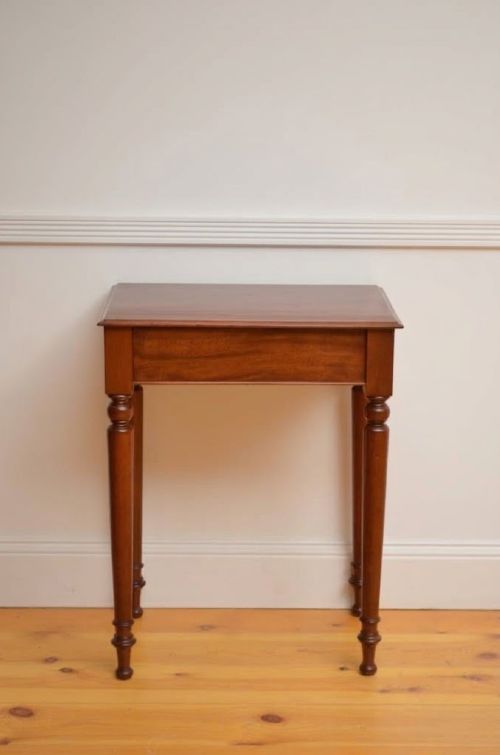
A narrow entryway table fits tight halls and landings, offering a surface for letters and lamps without blocking passage.
Narrow Entryway Table
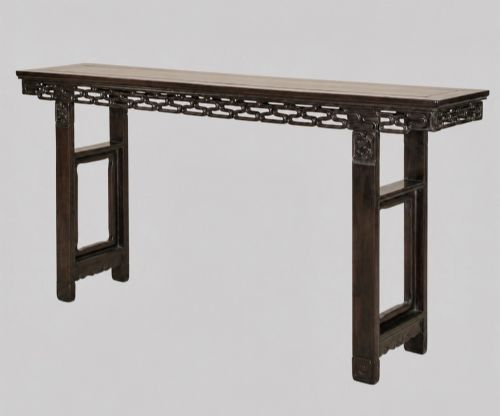
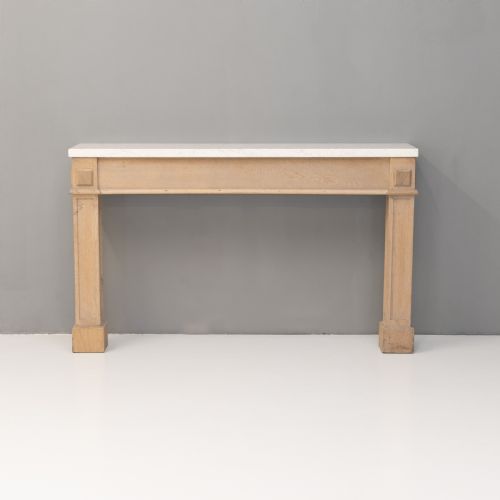
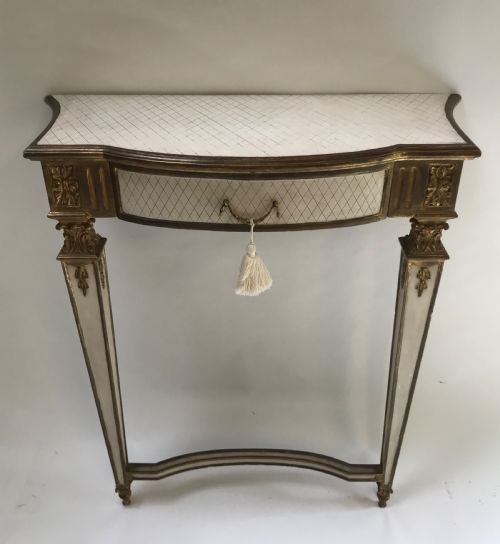
A narrow entryway table serves as a functional anchor in a hall or corridor, providing a slim surface for daily essentials. The pieces gathered under this phrase include console tables, altar tables, and small sideboards designed with shallow depths.
The selection ranges widely in origin and aesthetic, spanning European painted timber to hardwood Chinese altar tables from the nineteenth century. Buyers will frequently encounter console tables and console forms dating from the Edwardian era up to nineteen-twenty.
How they were made
Construction relies heavily on traditional timber framing using oak, elm, pine, and dense Asian hardwoods. Many surfaces receive a painted finish or a pale bleached treatment to lighten the visual weight of the wood.
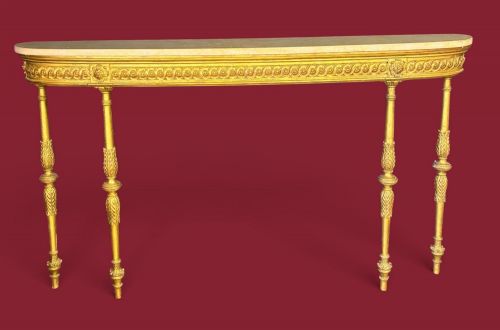
Certain formal European examples incorporate carved giltwood frames paired with inset marble tops. Joinery methods reflect the specific period and regional workshop traditions of each piece, from Chinese joinery to English cabinetmaking.
Materials span hardwood, oak, marble, elm, giltwood, painted wood, and pine.
What varies in quality
Quality rests in the integrity of the timber framing and the crispness of any applied carving or painted finish. Heavier hardwood construction and genuine marble inserts distinguish higher-tier formal consoles from simpler pine or softwood pieces.
Proportion and structural balance dictate the success of these narrow tables in a compact space. Pieces retaining their original surface treatment and sound structural joinery hold greater integrity than those altered over time.
The Narrow Entryway Table Glossary
- Console table
- A table designed to stand against a wall, traditionally fixed to the wall or supported by front legs. These form the majority of slim hall furnishings.
- Altar table
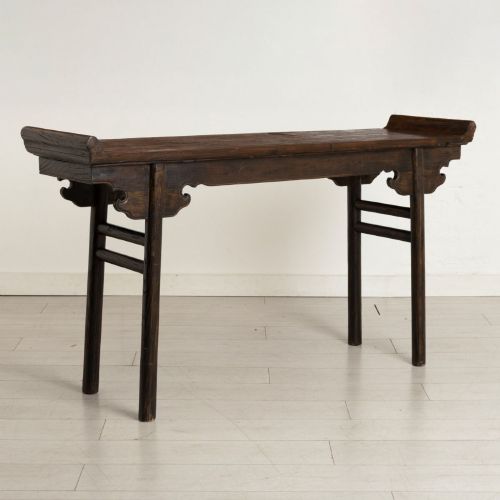
- A traditional Chinese form featuring a long, narrow rectangular top, often with upturned flange ends. They provide a striking silhouette in modern hallways.
- Giltwood
- Timber coated with a thin layer of gold leaf or gilt paint. This finish appears on Neoclassical French and European console tables.
- Bleached oak
- Oak timber treated to lighten its natural tone. This finish creates a contemporary appearance on nineteenth-century tables.
Narrow Entryway Table: Frequently Asked Questions
Where should a narrow table go?
Place a slim console or altar table against a hallway or landing wall where floor space is limited. It provides a drop zone for keys and post without obstructing movement.
Ensure the depth leaves sufficient clearance for doors to open fully and people to pass comfortably.
How do I style a hall table?
Keep the surface uncluttered to maintain the clean lines of a narrow piece. A single lamp or a low bowl works well without overwhelming the shallow depth.
Mounting a mirror or small artwork above the table balances the vertical space of a narrow entryway.
What is an altar table?
An altar table is a traditional Chinese form characterised by a narrow rectangular top and often high relief carving or recessed leg placement. Nineteenth-century examples utilise dense hardwoods like elm or other Asian timbers.
These pieces bring architectural presence and a distinct linear profile to domestic hallways.
Are marble tops heavy?
Marble inset tops add considerable weight to console tables, which helps anchor them securely against a wall. They also provide a durable, cool surface for everyday use.
Take care when moving these tables to lift the stone separately if loose, or ensure the frame supports the weight evenly.