



Narrow Entry Tables
Narrow entry tables are slim console and hall tables designed to sit flush against a hallway or corridor wall.
Narrow Entry Tables
Narrow entry tables encompass slim console tables, side tables, and hall tables built to fit restricted spaces without blocking passage. These pieces stand against walls in hallways, corridors, and entrance spaces where floor area is at a premium.
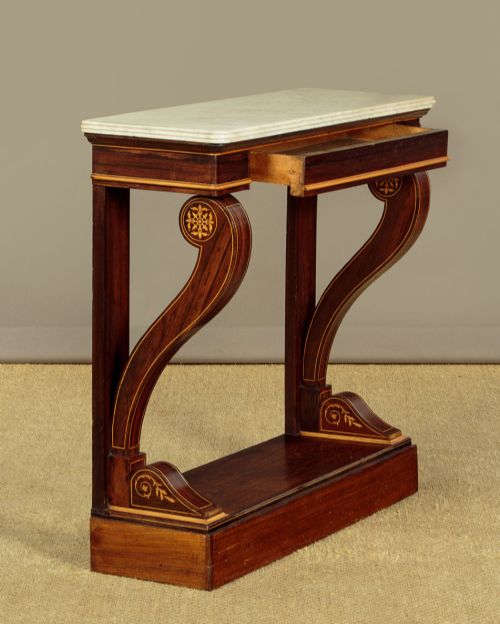
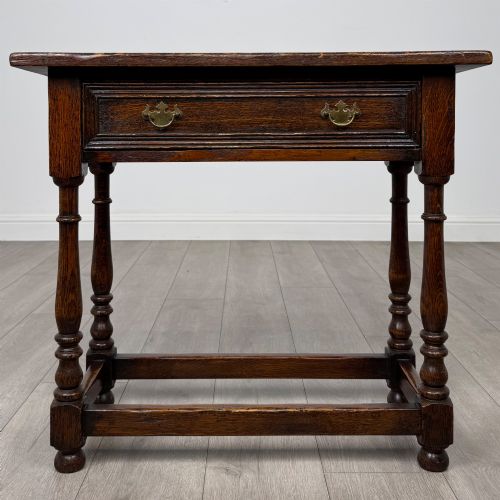
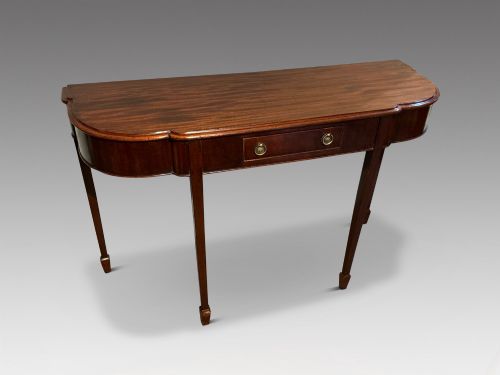
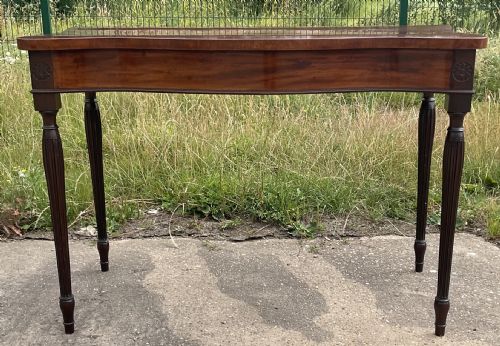
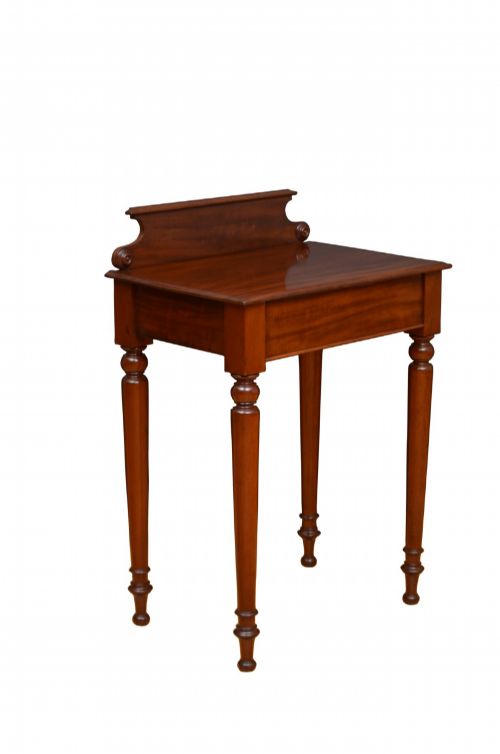
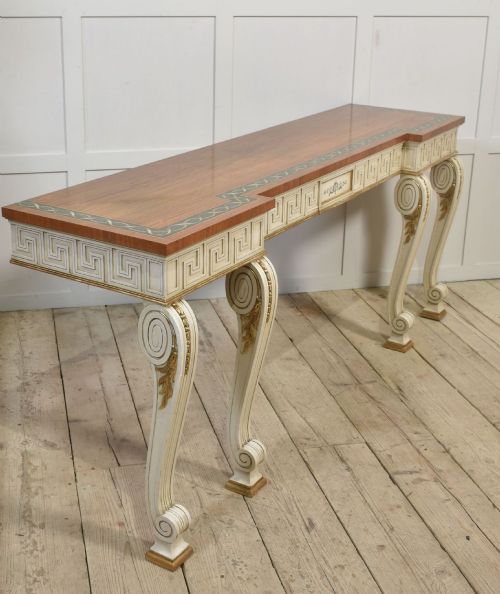
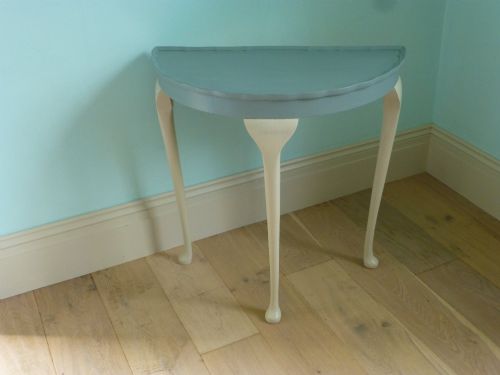
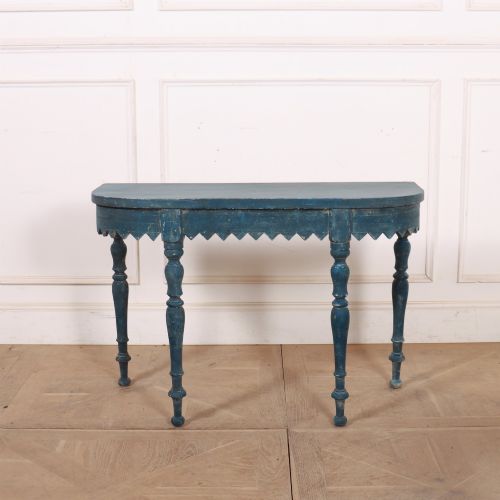
Mahogany and oak dominate the selection, alongside painted wood, pine, walnut, and marble-topped variants. Forms range from simple rectangular side tables to bow-fronted, serpentine, demi-lune, and breakfront console shapes.
Victorian and Edwardian examples sit alongside pieces from the nineteenth and early twentieth centuries, drawing on Georgian, Neoclassical, Jacobean Revival, and French Provincial styles. Occasional pieces include Chinese Qing Dynasty and alter tables.
How they were made
Carpenters constructed these tables using solid timbers such as mahogany, oak, pine, and walnut, frequently incorporating wood inlay and painted finishes. Tops often feature polished wood or fitted marble slabs supported by slender legs, trestles, or brass mounts.
Joinery methods reflect the period of manufacture, utilising traditional framing, drawer construction, and structural bracing to maintain stability despite shallow depths.
Narrow Entry Tables Retail Price Guide 2026
Typical asking prices for narrow entry tables among the pieces listed under this phrase on Sellingantiques today, from the lower quarter to the upper quarter. They describe what is for sale here now, not the wider market.
Some demi-lune tables are described as pairs, ready to lead a double life in symmetrical hallways.
What varies in quality
Quality rests in the selection of timber, the crispness of carved details or wood inlay, and the integration of secondary materials like marble tops. Finer examples show careful proportioning across serpentine, bow-front, and demi-lune shapes.
The sophistication of the stylistic revival - whether Georgian, Neoclassical, or French Provincial - determines the refinement of the finished piece, alongside the integrity of the structural frame.
Druce and Co
The Narrow Entry Tables Glossary
- Console table
- A table designed to be fixed or placed flat against a wall, frequently supported by brackets or slender legs.
- Demi-lune
- A half-moon shape characteristic of certain console and hall table tops.
- Serpentine front
- A furniture front curving inward centrally and outward at the ends, or vice versa.
- Pier table
- A table designed to fit against the wall space between windows.
- Inlay
- A technique where pieces of contrasting wood or material are fitted into a recess to form a design.
Narrow Entry Tables: Frequently Asked Questions
Where should I place a narrow entry table?
These tables suit hallways, corridors, and tight entrance spaces where a standard table would obstruct movement. Their shallow depth allows them to sit flat against walls while providing a surface for lamps or post.
They also function effectively in living rooms or dining areas as side or lamp tables where floor space is limited.
What styles are available?
The selection includes Victorian and Edwardian pieces, alongside styles referencing Georgian design, Neoclassical proportions, and French Provincial or Qing Dynasty aesthetics.
Woods range from dark mahogany and walnut to lighter oak, pitch pine, and painted or inlaid surfaces.
Do these tables have drawers?
Certain examples include a single integrated drawer beneath the top for storing small items like keys.
Others are purely open tables designed for display and support without storage compartments.
How do I identify the period?
Dating relies on timber choice, construction methods, and stylistic cues such as Victorian proportions or Edwardian inlay work.
Cabinetmakers of different decades utilised specific woods and decorative vocabularies that indicate the era of production.