




Narrow Drawer Unit
When you need a narrow drawer unit, these compact chests, cabinets and bookcases provide storage in restricted spaces without losing period character.
Narrow Drawer Unit
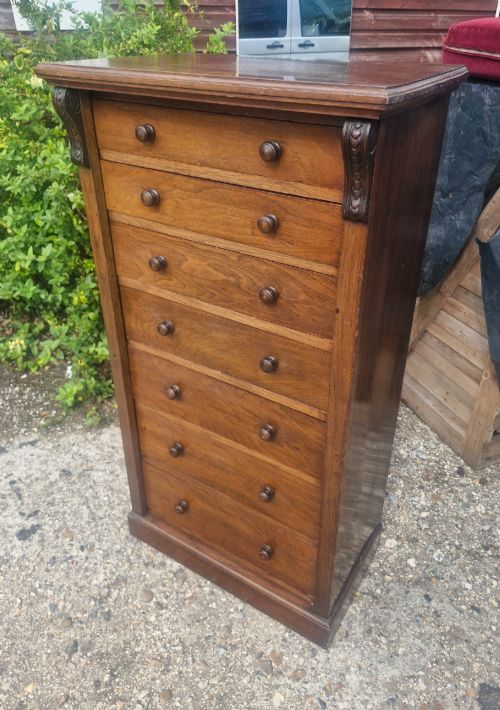
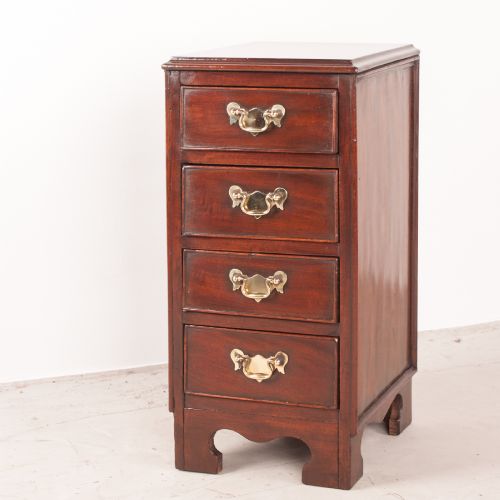
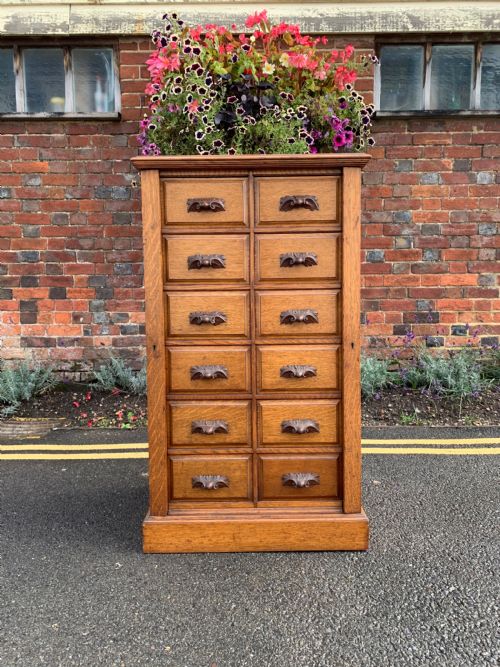
A narrow drawer unit encompasses various compact forms designed for vertical storage in limited floor spaces. The selection includes tall Wellington chests, bedside tables, music cabinets, and slim chests of drawers spanning the Georgian, Victorian, and Edwardian periods.
Buyers will encounter multiple wood types and formats, from Georgian oak splayed foot chests to Edwardian mahogany slim chests and walnut filing cabinets. Many incorporate lower drawers beneath bookcases or combine display space with practical compartment storage.
Materials and Construction
Cabinet makers utilised dense hardwoods such as mahogany, oak, walnut, and yew wood to construct these durable storage pieces. Finer examples feature decorative veneers like satinwood and burr walnut, occasionally accented with intricate inlay.
Hardware details typically include brass drawer pulls and locking mechanisms, particularly on secure filing formats and Wellington chests. Construction methods range from traditional dovetail joints on drawers to carved ornamentation characteristic of Arts and Crafts and revival styles.
Narrow Drawer Unit Retail Price Guide 2026
Typical asking prices for narrow drawer unit among the pieces listed under this phrase on Sellingantiques today, from the lower quarter to the upper quarter. They describe what is for sale here now, not the wider market.
Some narrow cabinets managed to lock all their drawers at once with just a single swinging wooden flap.
Assessing Quality and Craftsmanship
Quality in a narrow drawer unit rests on the selection of timber figures, such as figured walnut or distinct mahogany grain, and the precision of the cabinet work. Superior examples demonstrate seamless veneer matching and well-proportioned architectural details.
Maker attribution and original hardware further elevate a piece, as seen in stamped furniture bearing manufacturer details. The integrity of the internal drawer construction and the crispness of carved elements distinguish exceptional workshop production from standard output.
Gillows·J. Shoolbred
The Narrow Drawer Unit Glossary
- Wellington chest
- A tall, narrow chest of drawers traditionally secured by a locking hinged vertical side flap that bars access to the drawers. This design originated in the nineteenth century for efficient document storage.
- Waterfall bookcase
- A set of open shelves diminishing in depth from bottom to top, often incorporating one or more lower drawers. The tiered profile resembles cascading water.
- Inlay
- A decorative technique where contrasting woods or materials are inserted into recessed cavities on the furniture surface to create patterns. This ornamentation appears frequently on Edwardian pieces.
- Dovetail joint
- A traditional woodworking joint interlocking wedge-shaped fingers, prized for its tensile strength in drawer construction. Fine spacing indicates skilled cabinet making.
Narrow Drawer Unit: Frequently Asked Questions
What rooms suit a narrow drawer unit?
These compact forms suit hallways, alcoves, and bedrooms where floor space is limited. Their vertical proportions maximise storage capacity without dominating the room.
Smaller formats function effectively as bedside tables or auxiliary storage beside larger furniture pieces.
Are these units made from solid wood?
Construction varies between solid hardwoods like oak and mahogany, and carcases built with decorative veneers over secondary timbers. Finer pieces utilise burr walnut or satinwood veneers to create striking surface patterns.
Drawer linings and internal framing generally employ secondary woods appropriate to the period of manufacture.
How do I care for antique timber surfaces?
Maintain polished wood surfaces by dusting with a soft, dry cloth and applying quality beeswax periodically to nourish the grain. Avoid placing furniture in direct sunlight or near heat sources to prevent timber splitting.
Gentle maintenance preserves the natural patina developed over the Georgian, Victorian, and Edwardian periods.