



Narrow Book Unit
A narrow book unit solves the perennial problem of floor space while keeping a library within arm's reach.
Narrow Book Unit
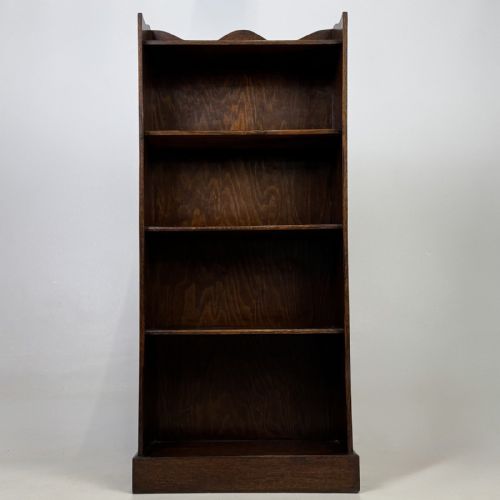
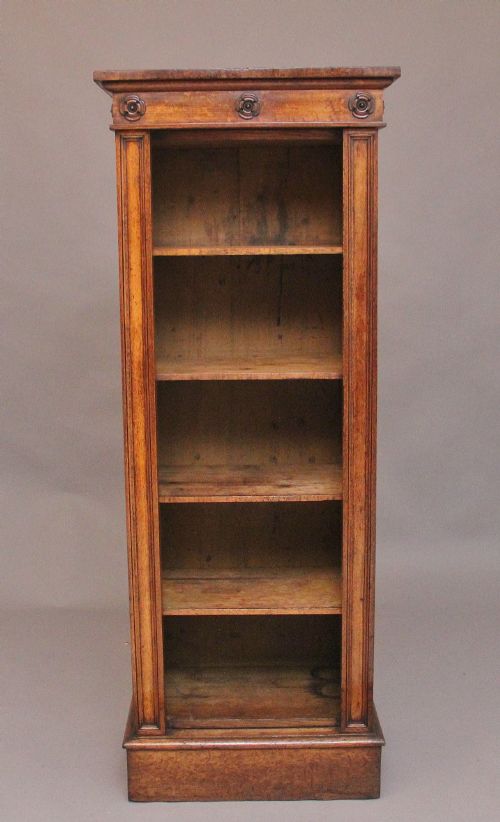
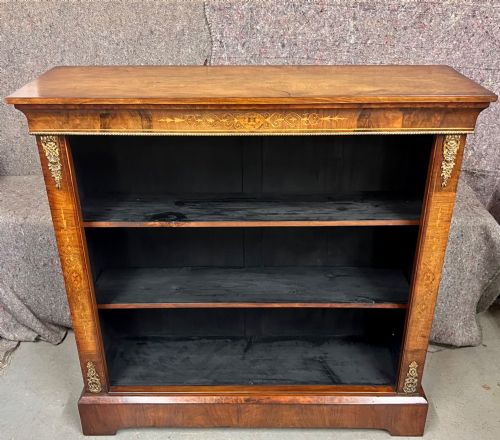
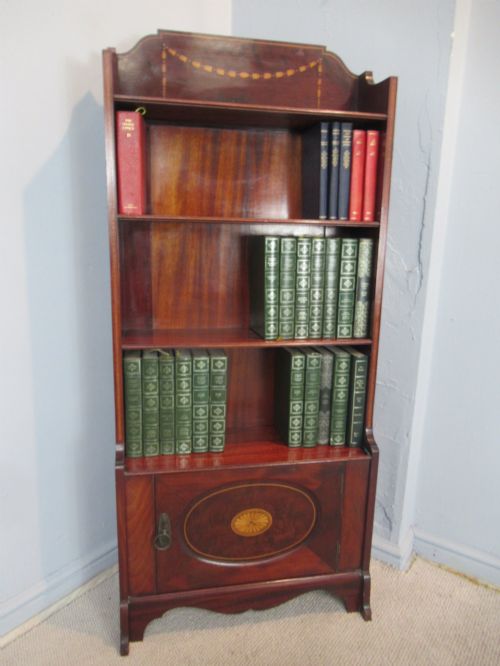
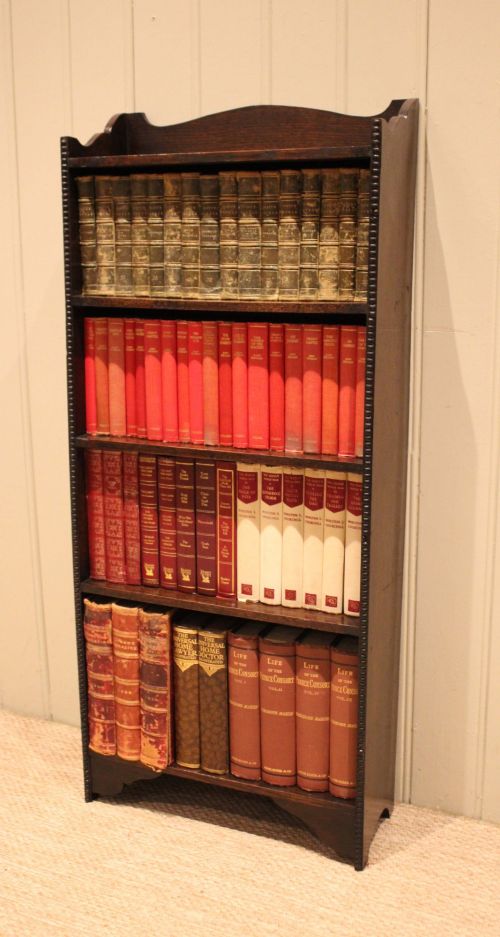
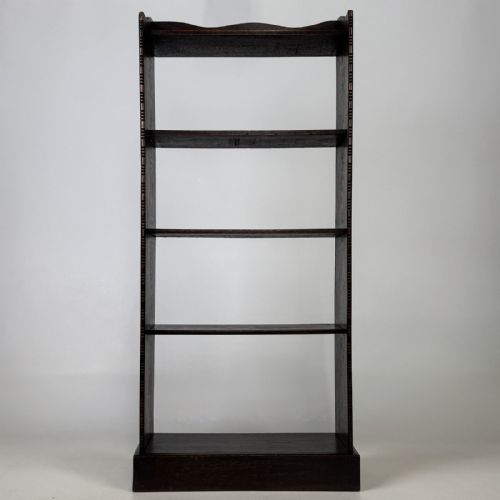
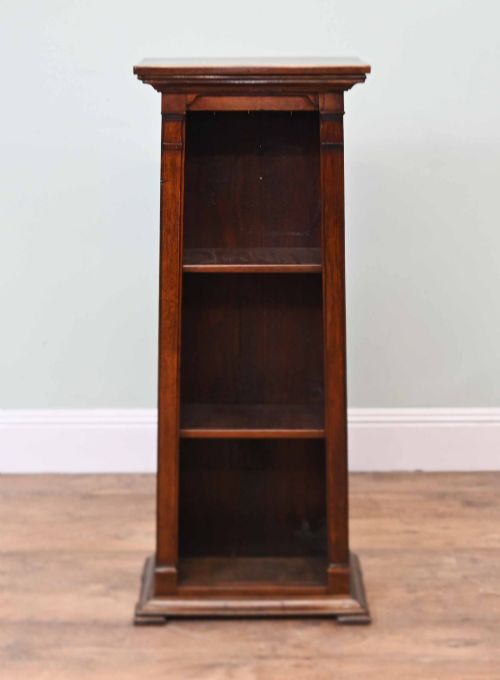
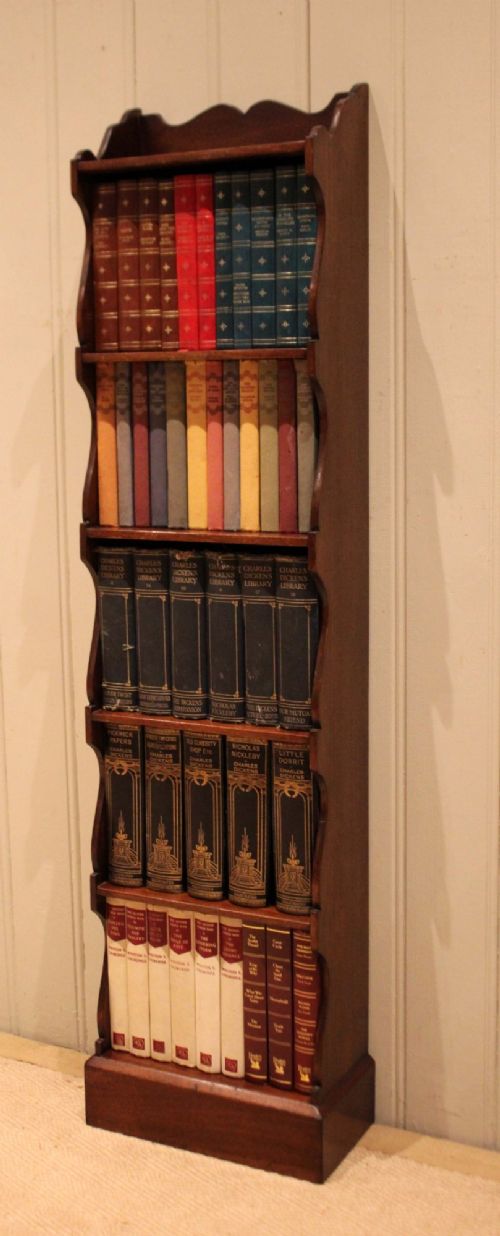
A narrow book unit provides vertical shelving designed to fit tight spaces without dominating a room. These pieces appear in forms such as open bookcases, shelf units, and whatnots.
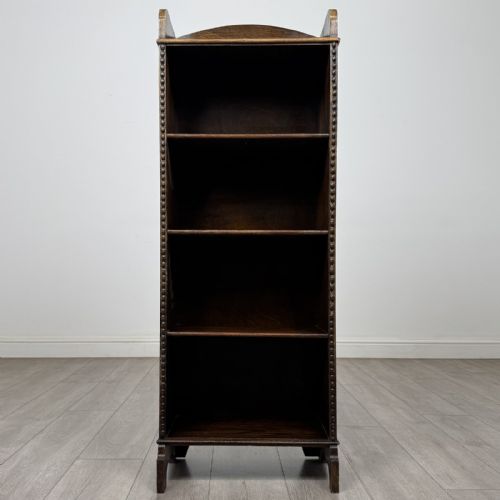
Most examples found here date from the nineteenth and early twentieth centuries, spanning Victorian, Edwardian, and Arts and Crafts periods. Oak and mahogany predominate, often featuring adjustable shelves or decorative galleries.
Makers from major firms like Waring and Gillows and Wylie and Lochhead sit alongside simpler country workshop productions in dark oak, stained pine, and satinwood inlay.
How they were made
Carpenters constructed these units using solid timbers like oak and mahogany, supplemented by pine for internal structure and backing. Timber selection dictated whether the piece received a dark finish or retained a natural grain.
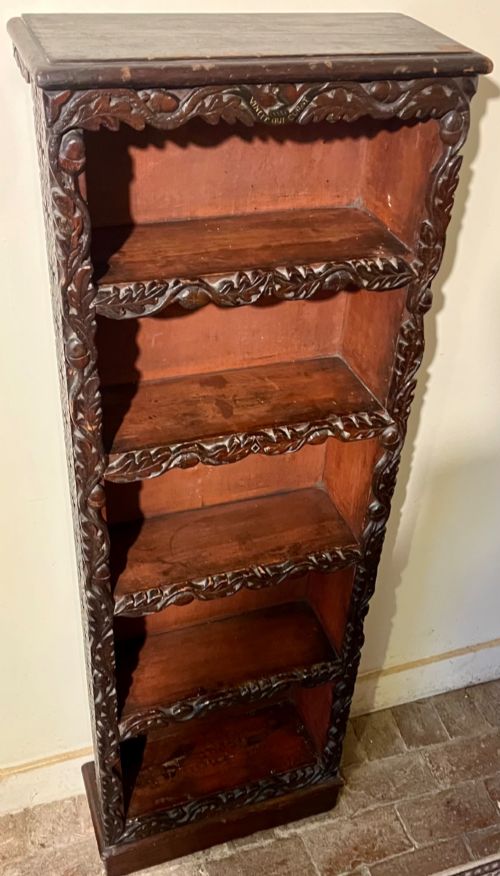
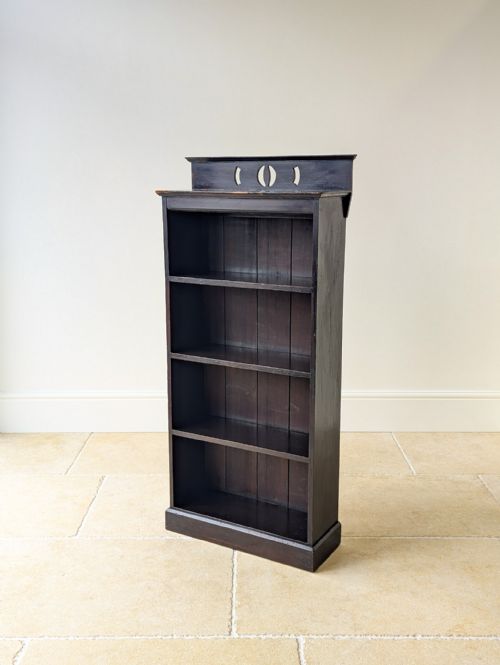
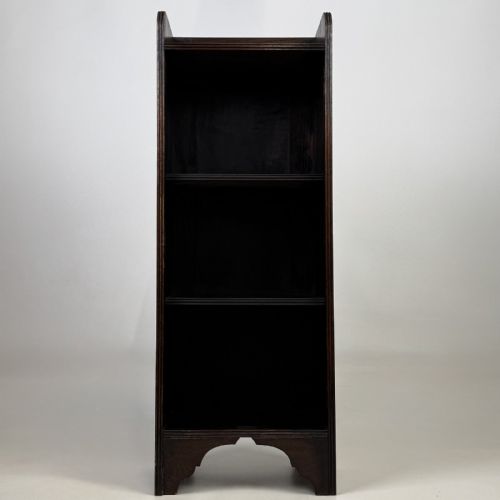
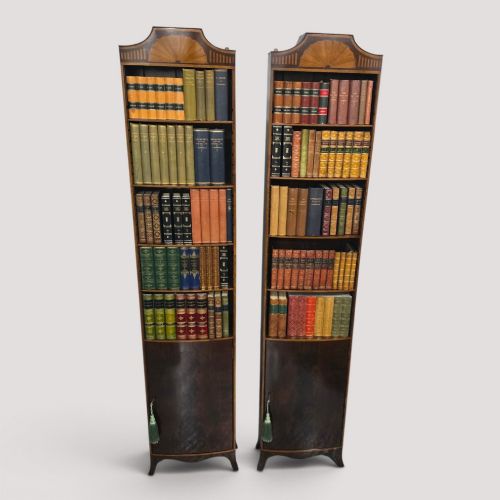
Decorative touches included satinwood inlay, ebonised detailing, and carved beaded edges along the uprights. Workshops also applied arched galleries and decorative cut-outs, particularly on Arts and Crafts examples.
Narrow Book Unit Retail Price Guide 2026
Typical asking prices for narrow book unit among the pieces listed under this phrase on Sellingantiques today, from the lower quarter to the upper quarter. They describe what is for sale here now, not the wider market.
One piece includes a built-in magazine rack for keeping periodicals close at hand.
What varies in quality
The standard of timber selection and joinery separates standard utility furniture from finer commissions. Workshops like Wylie and Lochhead utilised superior cabinetmaking techniques and refined proportions.
Subtleties of detail, such as the inclusion of adjustable shelf brackets, shaped galleries, and precise inlay work, distinguish standard production pieces from workshop design items.
Waring and Gillows·Wylie Lochhead of Glasgow·E.A. Taylor
The Narrow Book Unit Glossary
- Open bookcase
- A piece of furniture consisting of upright sides fitted with horizontal shelves and lacking doors. This form allows immediate access to volumes.
- Whatnot
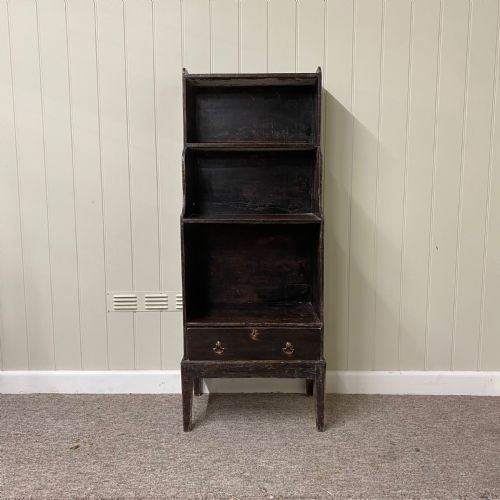
- A set of open shelves standing on legs, traditionally used for displaying small objects or books. They appear frequently in nineteenth-century interiors.
- Gallery
- A raised ornamental border running along the top edge of a shelf or piece of furniture. It prevents items from sliding off the surface.
- Satinwood inlay
- A decorative technique where contrasting light-coloured wood is inserted into recesses cut into the primary timber. It creates geometric or floral patterns.
- Adjustable shelves
- Shelves supported on movable pins or rack tracks, allowing the vertical spacing to alter. This system accommodates books of varying heights.
Narrow Book Unit: Frequently Asked Questions
Where should I place a narrow book unit?
These compact dimensions suit alcoves, narrow hallways, or beside a fireplace where standard shelving would protrude too far into the room.
Because they take up minimal floor area, they work effectively in home offices or bedrooms with restricted space.
Are the shelves adjustable?
Many period examples feature adjustable shelving supported by rack systems or brass pins. This allows you to alter the internal height to fit different book sizes.
Some simpler models feature fixed shelves secured directly into the side panels during initial construction.
How do I identify an Edwardian bookcase?
Edwardian units frequently employ lighter timbers such as mahogany and satinwood inlay, reflecting a shift away from heavier Victorian dark oak.
They often incorporate refined details like waterfall tiers or subtle ebonised highlights while maintaining slender proportions.