

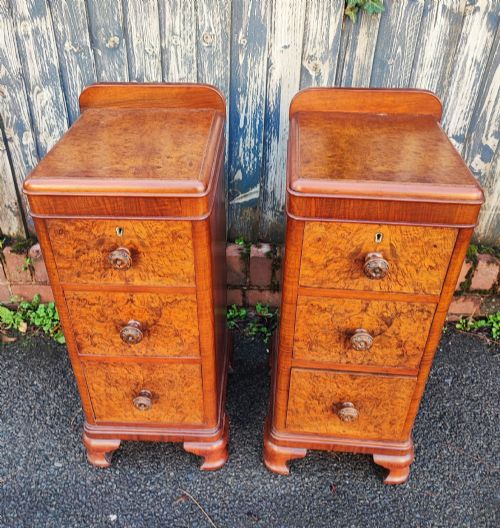
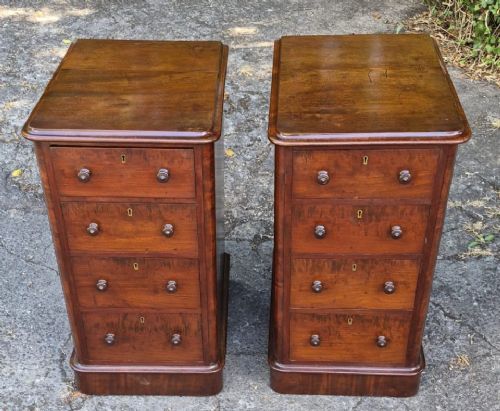
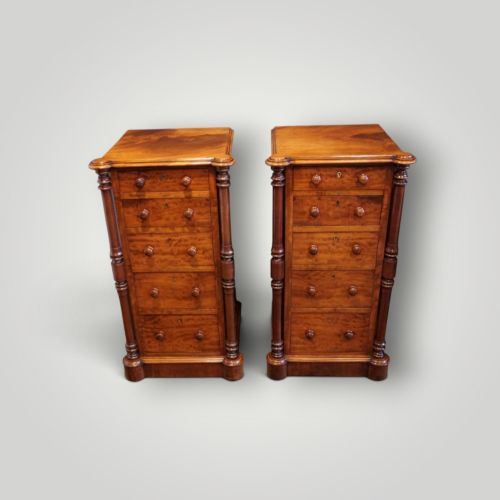
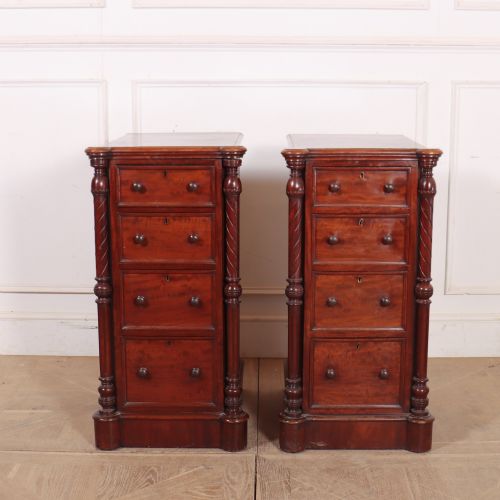
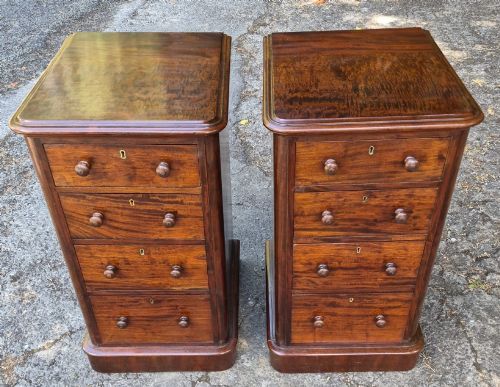
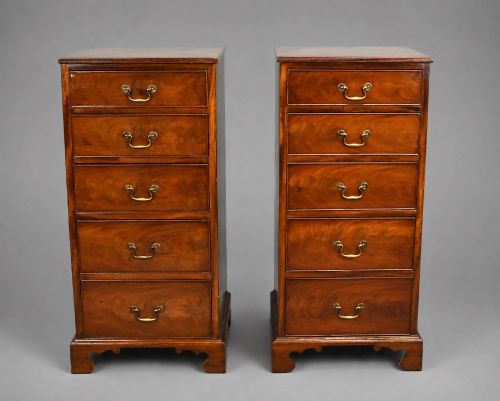

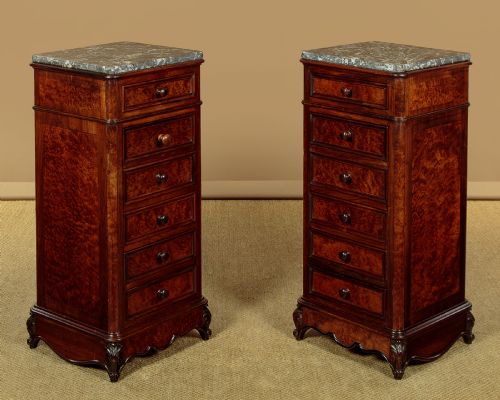

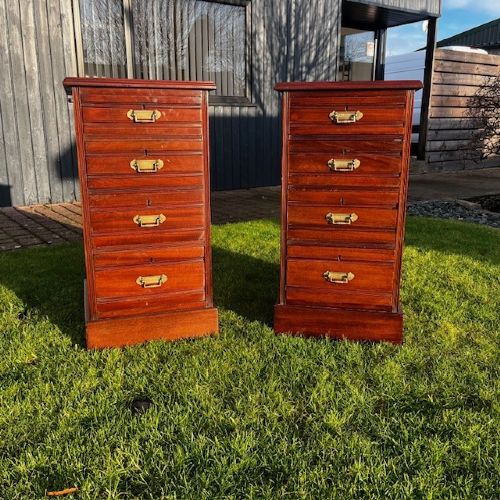


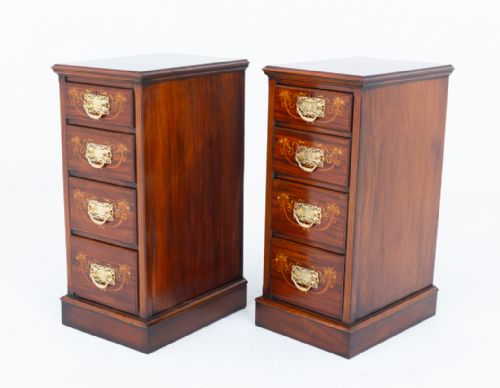


Narrow Bedside Cupboard
A narrow bedside cupboard solves the perennial bedroom problem of bedside storage without dominating the floor space.
Narrow Bedside Cupboard
A narrow bedside cupboard offers compact storage next to the bed, frequently appearing as a diminutive chest of drawers, a small cabinet or a dedicated nightstand. These pieces emerge predominantly from the Victorian and Edwardian eras, alongside later Art Deco examples.
The form often manifests as pairs, providing symmetrical storage on either side of a bed with minimal footprint. Such items adapt easily to modern bedrooms by offering enclosed space for nighttime essentials within restricted proportions.
Materials and construction
Cabinet makers relied heavily on timber like mahogany, walnut and oak, frequently selecting figured veneers to create visual depth on small drawer fronts and doors. Rosewood, satin birch and amboyna also appear, adding contrasting grain patterns to individual pieces.
Hardware typically consists of cast brass handles and escutcheons, while select cabinets incorporate marble tops or tambour fronts for functional durability. Construction techniques reflect the period of origin, from robust Victorian joinery to lighter Edwardian framing.
Narrow Bedside Cupboard Retail Price Guide 2026
Typical asking prices for narrow bedside cupboard among the pieces listed under this phrase on Sellingantiques today, from the lower quarter to the upper quarter. They describe what is for sale here now, not the wider market.
Some Victorian bedside chests hide their contents behind clever tambour shutters, proving that even nineteenth-century bedrooms enjoyed a secret slide.
Judging quality in compact cabinets
Quality rests on the selection of timber figures and the precision of veneer work, particularly on parquetry or inlaid surfaces. Finer pieces demonstrate careful attention to internal drawer construction and the seamless movement of doors or tambour panels.
Proportion and execution distinguish standard utilitarian furniture from finer cabinet work, such as Wellington chests or pieces bearing maker stamps. The integration of high-grade brass hardware and stone tops further separates exceptional examples from ordinary production.
Warings Liverpool·James Shoolbred
The Narrow Bedside Cupboard Glossary
- Wellington chest
- A tall, narrow chest of drawers secured by a hinged locking stile on one vertical edge. This design originated in the nineteenth century and suits compact bedroom spaces.
- Tambour front
- A flexible shutter made of narrow wooden strips glued to canvas, allowing a cabinet door to slide around a curve. It provides smooth access in confined spaces.
- Aesthetic movement
- A late nineteenth-century design style focusing on visual beauty rather than narrative meaning. Furniture from this period often uses ebonised wood and subtle inlay.
- Parquetry
- A geometric mosaic of wood pieces used for decorative veneer on tabletops and cabinet fronts. It requires high precision from the maker.
- Satin birch
- A pale, lustrous hardwood used for drawer interiors and decorative surfaces during the Victorian period. It offers a golden sheen when polished.
Narrow Bedside Cupboard: Frequently Asked Questions
How do I style a narrow bedside cupboard?
Pair the compact cabinet with a simple reading lamp that leaves enough surface area for a book and a glass of water. Keep surrounding objects minimal to maintain the visual balance of the small footprint.
Allow the timber grain or inlay to serve as the focal point by avoiding clutter on the top surface. A single framed photograph or a small dish for jewellery usually suffices.
Are these cupboards sold as pairs?
Many narrow bedside cupboards appear as matched pairs, designed to sit symmetrically on either side of a larger bed frame. Single cabinets also feature frequently for bedrooms with space for only one nightstand.
Pairs often command higher interest among collectors who wish to achieve a balanced bedroom layout. Individual pieces function well as accent storage in hallways or tight corners.
What periods do these cabinets come from?
The selection spans the nineteenth and twentieth centuries, with a strong concentration of Victorian and Edwardian examples. Art Deco designs from the nineteen-thirties also appear regularly.
Earlier pieces generally feature solid mahogany or walnut, while later twentieth-century versions incorporate veneered surfaces and geometric parquetry. Each era brings distinct proportions and handle styles.
Can these fit in modern bedrooms?
Their restricted width makes narrow bedside cupboards ideal for contemporary bedrooms where floor space around the bed is limited. They provide enclosed storage without overpowering the room.
Measure the height of your mattress before choosing a cabinet to ensure the surface sits at a comfortable level for reaching your items during the night.