



Narrow Accent Table
A narrow accent table gives a room a surface without stealing the floor, moving easily from hallway to corner.
Narrow Accent Table
A narrow accent table appears in forms such as side tables, console tables, occasional tables, and tea tables, designed to fit compact spaces. The listings here bring together pieces from the Victorian and Edwardian eras, alongside items from 1860, 1890, 1900, 1910, and 1920.
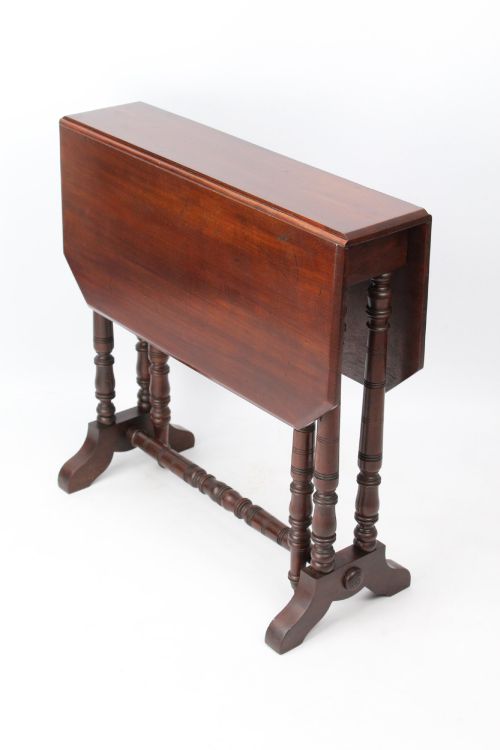
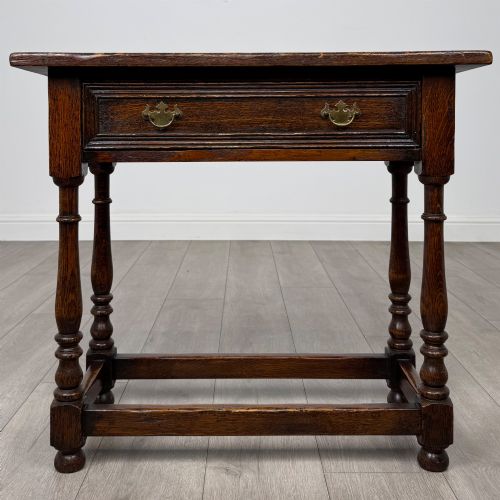
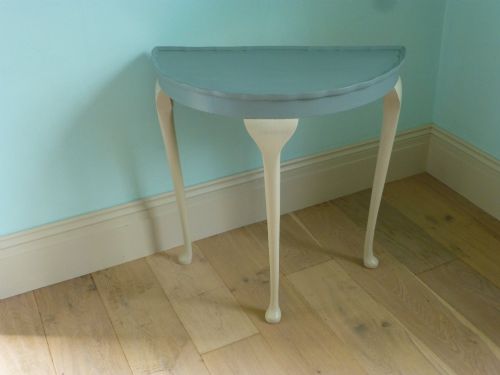
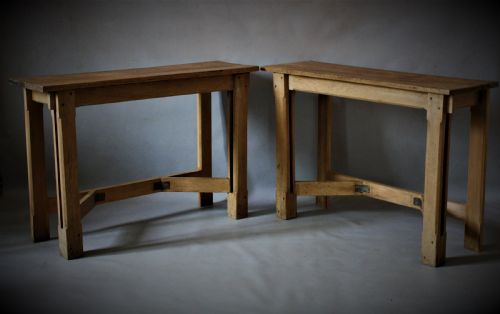
Buyers are most likely to meet drop-leaf sutherland tables in mahogany or walnut, alongside oak side tables and painted demi-lune console tables. Styles span Victorian, Edwardian, Jacobean Revival, Queen Anne style, English Country, Art Deco, Scandinavian Country, and Arts & Crafts manner.
Origin points across these examples include English and Swedish workshops, spanning the nineteenth and early twentieth centuries. Each form serves a domestic function, from holding a lamp to folding down when space demands it.
How they were made
Timbers such as mahogany, oak, walnut, pine, birch, and ebonised hardwood form the primary construction of these tables, often enhanced by painted surfaces or brass fittings. Woods are selected for grain pattern and structural suitability, particularly in drop-leaf mechanisms.
Craftsmen employ traditional joinery methods suited to the period, shaping timber into slender legs and supporting hinges for folding leaves. Inlaid details and painted finishes add decorative surface work without compromising the underlying utility of the frame.
Narrow Accent Table Retail Price Guide 2026
Typical asking prices for narrow accent table among the pieces listed under this phrase on Sellingantiques today, from the lower quarter to the upper quarter. They describe what is for sale here now, not the wider market.
Materials recorded across these tables include mahogany, walnut, oak, birch, pine, ebonised hardwood, and brass.
What varies in quality
The standard of a narrow accent table rests on the selection of timber and the precision of its construction, particularly in moving parts like drop leaves. Higher grade examples show finer grain matching in mahogany or walnut and tighter joints in the underframe.
Decorative restraint and proportion distinguish the finer pieces from simpler utility items. Surface treatments, whether polished wood, inlay, or paint, demonstrate greater care in execution on pieces intended for principal rooms rather than back hallways.
The Narrow Accent Table Glossary
- Sutherland table
- A narrow drop-leaf table with hinged flaps that fold down steeply, supported by swinging gate legs. It stands as a space-saving design popular in the Victorian and Edwardian periods.
- Demi-lune
- A half-moon shape used for console tables that sit flat against a wall. This profile minimises floor protrusion in narrow hallways.
- Console table
- A table designed to be fixed or placed flat against a wall, frequently supported by brackets or slender legs. It provides a narrow surface for display.
- Ebonised hardwood
- Timber treated with a chemical stain or finish to imitate ebony. This process achieves a deep black surface often seen in nineteenth-century decorative pieces.
Narrow Accent Table: Frequently Asked Questions
Where should I place a narrow accent table?
These pieces suit transitional spaces such as hallways, landings, or tight corners where standard furniture blocks movement. Their shallow depth allows them to sit against walls without obstructing pathways.
They function well behind sofas or beside armchairs to hold lamps and small objects. Drop-leaf versions offer flexibility, expanding when extra surface area is needed and folding back down afterward.
How do I care for antique wood tables?
Protect wooden surfaces from direct sunlight and steady heat sources to prevent the timber from drying out or splitting. Routine dusting with a dry cloth keeps the finish clear.
Apply traditional wax polish sparingly when the wood appears dry, buffing it gently to maintain the lustre of the polish. Avoid placing wet items directly on antique surfaces to prevent water rings.
How do I tell Victorian tables from Edwardian ones?
Victorian pieces tend to feature darker, heavier timbers with richer carving and more complex turnings, reflecting mid-to-late nineteenth-century tastes. Mahogany and walnut dominate this earlier period.
Edwardian furniture generally adopts lighter proportions, simpler lines, and brighter woods or inlaid decoration. The influence of Arts & Crafts and Edwardian lightness moves away from heavy Victorian ornamentation.
What is a sutherland table used for?
A sutherland table serves as an adaptable tea table or occasional table that folds flat for storage against a wall. Its narrow profile when closed makes it easy to move around a room.
Opening the drop leaves creates a wider surface for serving tea or holding books. The hinged gate legs swing out to support the extended leaves securely.