





Napoleon Clock
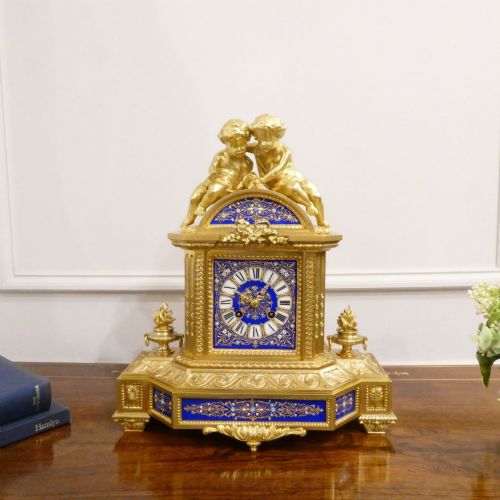
A napoleon clock brings heavy gilt bronze, porcelain panels and intricate marquetry into a room, anchoring a mantelpiece with nineteenth-century French weight.
Napoleon Clock
A napoleon clock search brings up mantel clocks, wall clocks and larger garniture sets from the nineteenth century. Most examples date from the Victorian era and the Napoleon III period, originating from French workshops and makers.
The dominant forms are mantel clocks housed in ormolu, marble, ebonised wood or tortoiseshell cases, often accompanied by matching side pieces or glass domes. Buyers find everything from simple brass drum head clocks to elaborate portico and bracket clocks.
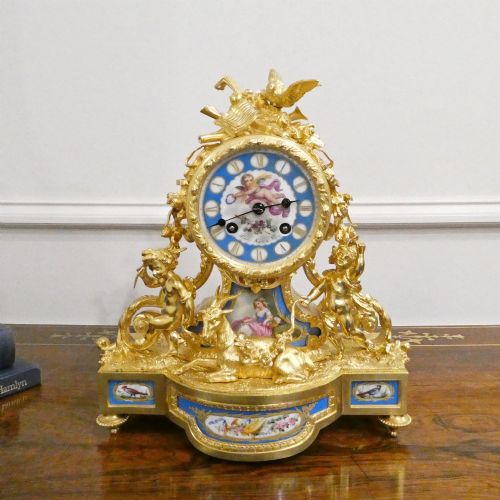
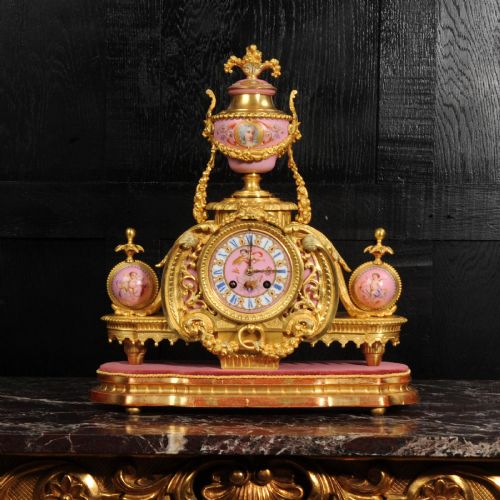
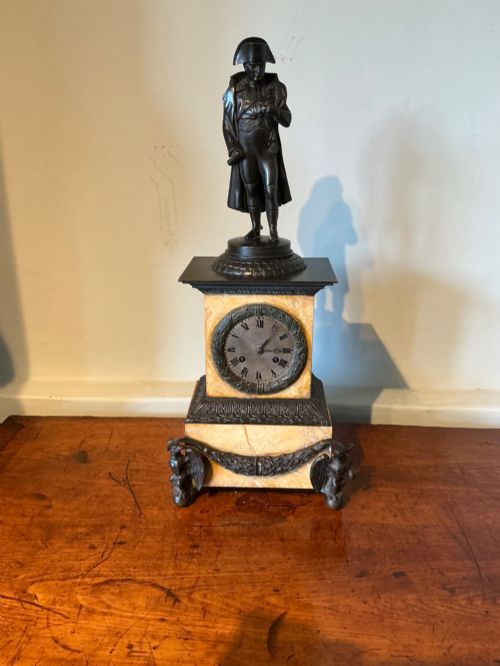
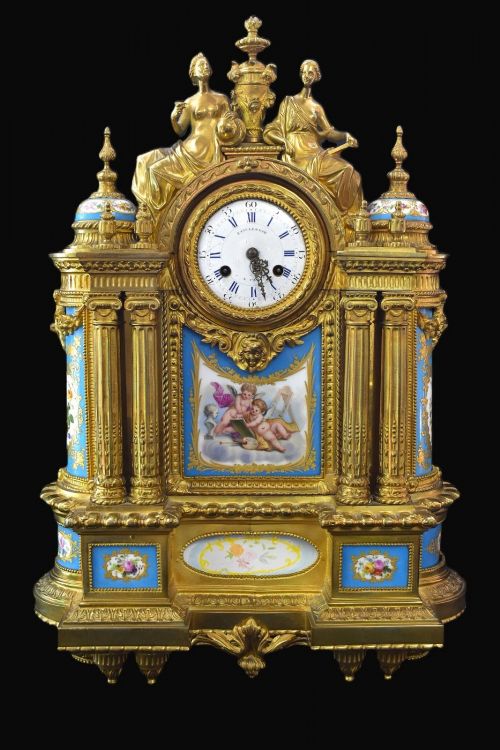
Some pieces feature specific historical figures or scenes, such as depictions of Napoleon, while others rely on Sèvres porcelain panels, champlevé enamel and intricate mother of pearl inlay to catch the eye.
How they were made
Maker workshops combined cast ormolu and gilt bronze with polished marble, onyx and solid brass to form the structural cases. Dial faces frequently incorporated hand-painted porcelain panels and visible enamel work.
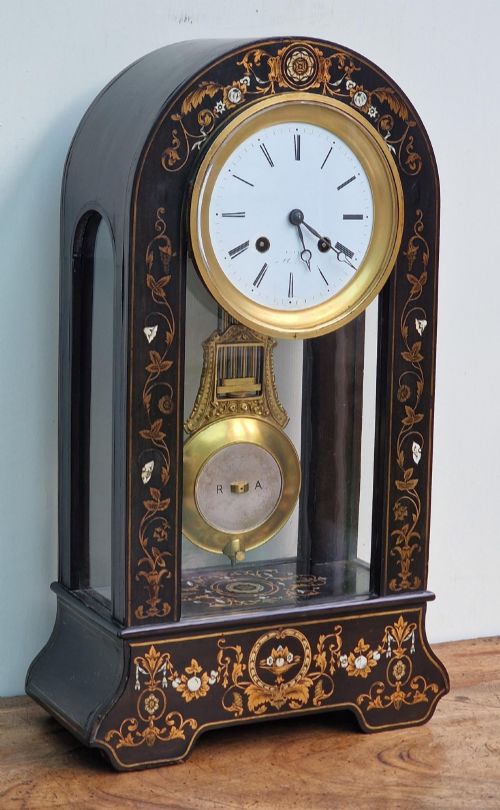
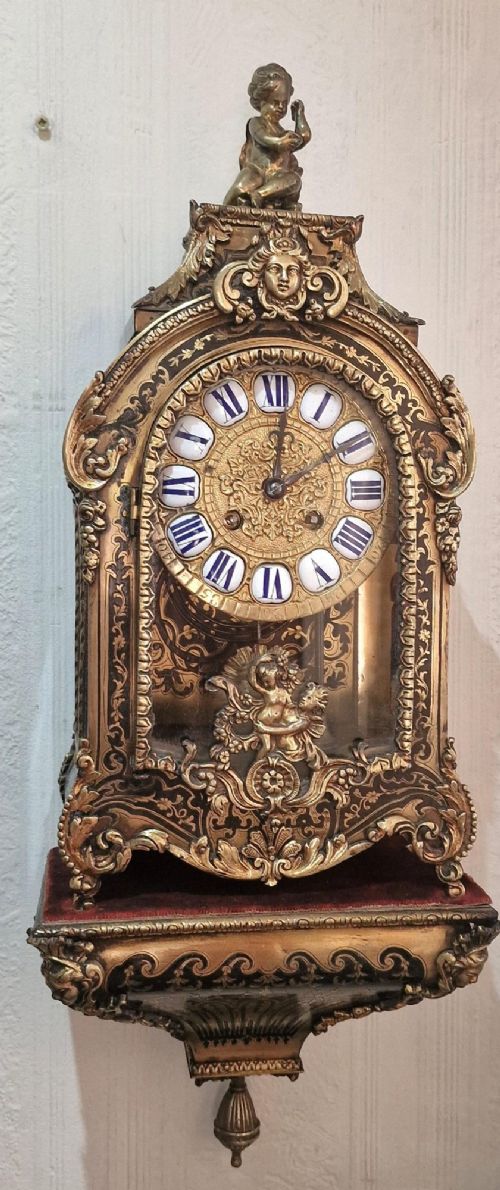
Woodwork relied on ebonised finishes, figured walnut and complex Boulle marquetry using tortoiseshell inlaid with brass wire and mother of pearl. Glass domes protected delicate garniture sets and intricate dial assemblies from dust.
Napoleon Clock Retail Price Guide 2026
Typical asking prices for napoleon clock among the pieces listed under this phrase on Sellingantiques today, from the lower quarter to the upper quarter. They describe what is for sale here now, not the wider market.
Listings feature periods spanning the Victorian era, the 1850s through to 1900, alongside specific Napoleon III and Second Empire styles.
What varies in quality
The standard of a napoleon clock rests on the crispness of the gilt bronze casting and the depth of the chasing on the ormolu mounts. Finer pieces display sharper relief and more refined detailing in the figures and foliage.
Porcelain plaques and enamel dials show variance in hand-painted detail and colour preservation. Marquetry execution on Boulle cases and the weight of the marble or onyx housing also divide standard production from exceptional workshop output.
Achille Brocot·Henry Marc·Etienne Lenoir·Japy Freres·Achille Brocot and Delettrez·Moser
The Napoleon Clock Glossary
- Ormolu
- Gilded bronze used extensively for decorative mounts on nineteenth-century French clock cases. The technique involves applying a gold amalgam to a bronze base.
- Boulle
- A form of marquetry using tortoiseshell inlaid with brass and other metals. It is named after the French cabinetmaker André-Charles Boulle.
- Garniture
- A set of matching decorative objects, typically a clock flanked by matching urns or candelabra. These sets were designed to sit together on a mantelpiece.
- Champlevé
- An enamel technique where troughs or cells are hollowed out of a metal surface and filled with vitreous enamel before firing. It appears frequently on Victorian clock dials and bezels.
- Portico clock
- A mantel clock designed with architectural pillars supporting the clock movement housing. They often feature prominent pendulums swinging between the columns.
Napoleon Clock: Frequently Asked Questions
What is a napoleon clock?
A napoleon clock typically refers to nineteenth-century French mantel clocks dating from the Napoleon III period or Victorian era. These pieces are characterised by ornate ormolu mounts, marble cases and porcelain dial panels.
They encompass various styles including French Empire, Louis XVI Revival and French Rococo Revival. Many are part of larger garniture sets featuring matching side pieces.
How do I wind an eight day clock?
Most nineteenth-century French clocks utilise an eight day movement requiring a key to wind the springs through the dial face. Care must be taken not to overwind the movement.
Keeping the clock on a level surface ensures the pendulum swings evenly and the striking mechanism functions correctly.
Where should I place a clock garniture?
A clock garniture set is traditionally displayed across a mantelpiece or a dedicated pedestal. The central clock sits between matching urns or sidepieces to create a balanced focal point.
Due to their weight and delicate glass domes, they require a stable, sturdy surface away from direct sunlight and moisture.
How do I identify a Napoleon III clock?
Napoleon III pieces often combine eclectic revivals of earlier French court styles with heavy gilt bronze, tortoiseshell Boulle work and Sèvres porcelain. The era favoured rich materials and decorative excess.
Signatures on the movement backplate or dial often attribute the work to specific nineteenth-century French makers and bronze founders.