
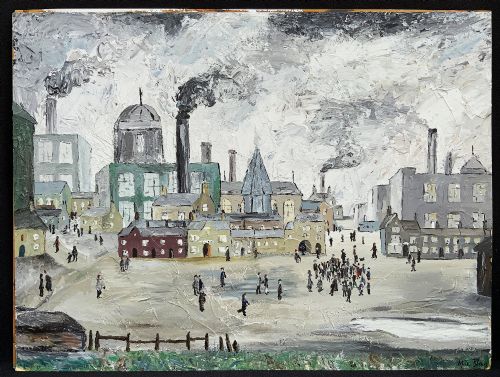


Naive Landscape Painting
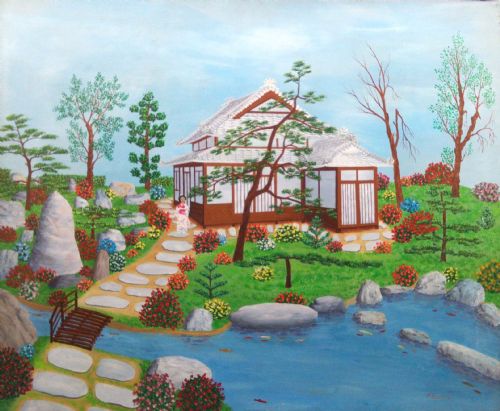
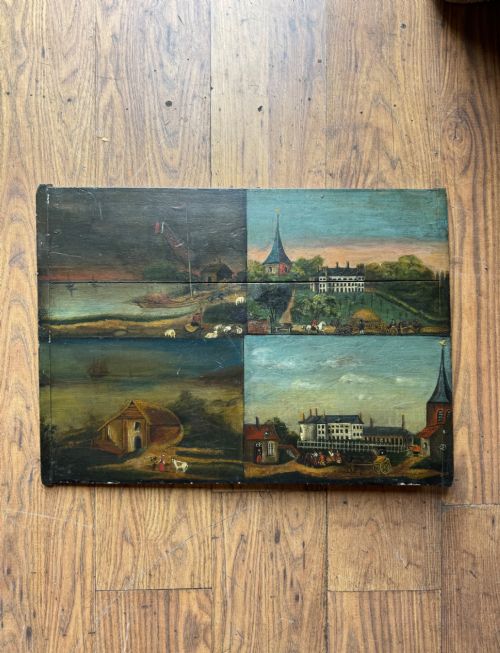
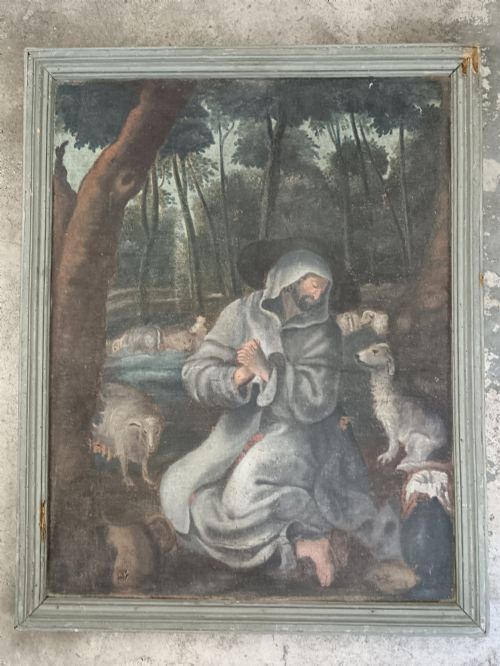
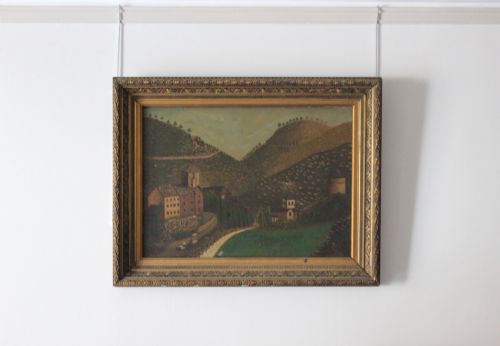
These naive landscape painting examples offer direct, unacademic visions of estates, towns and rural scenes painted outside the formal academies.
Naive Landscape Painting
A naive landscape painting captures topographical views, country estates and townscapes through an untrained or deliberately unsophisticated hand. These works focus on charm and immediate visual storytelling rather than strict adherence to classical perspective or academic rules.
The selections span centuries, reaching from eighteenth-century topographical views through nineteenth-century provincial scenes to mid-twentieth-century outsider expressions. Buyers encounter rural street scenes, coastal harbours, and riverside estates created with honest simplicity.
Most entries belong to the nineteenth century, though eighteenth-century examples and twentieth-century French and Japanese interpretations appear frequently. The format ranges from standard canvas and board supports to decorative papier-mâché trays.
Materials and construction
Artists painted primarily in oil on canvas or oil on board, building compositions with thick pigment and visible brushwork. Wooden supports and framed gilt elements also provide the structural foundation for many surviving pieces.
Mixed media works incorporate watercolour and coloured pencil on paper or board, while larger decorative objects utilise papier-mâché. Gilt framing and gold leaf often complete the presentation of these historic works.
Materials across these listings include oil paint, canvas, wood, board, gilt, gold leaf, and papier-mâché.
Judgements of quality
Quality rests in the conviction of the brushwork and the strength of the composition rather than academic correctness. The most successful pieces achieve a compelling atmospheric presence despite flat perspective or unconventional proportions.
Condition of the painted surface and originality of the support dictate the standing of a piece. Works retaining their early or original frames and untouched surfaces command greater interest among collectors.
Irene Lagut
The Naive Landscape Painting Glossary
- Naive Art
- Visual art created by a person without formal training in the traditional fine arts. It often displays a flat perspective and vivid use of colour.
- Pentimento
- A visible trace of earlier painting beneath a layer or layers of paint, showing a change of design by the artist. This occurrence often confirms the age and authenticity of an older canvas.
- Topographical Painting
- A work depicting a specific real-world location with an emphasis on accurate local geography and landmarks. Eighteenth-century examples frequently document particular towns and estates.
- Outsider Artist
- A creator operating outside the mainstream art world, often producing work entirely independently of stylistic trends. Mid-century examples in this category bring a distinct personal vision to landscape subjects.
Naive Landscape Painting: Frequently Asked Questions
What is a naive landscape painting?
A naive landscape painting is an artwork depicting scenery created by an artist lacking formal academic training. These pieces prioritize direct expression over strict rules of proportion and perspective.
Such works often document towns, rural streets, and estates with an honest, charming simplicity that appeals to folk art collectors.
How old are these paintings?
The available selection spans from the eighteenth century through the nineteenth century and into the mid-twentieth century. Eighteenth-century examples include topographical views and large painted trays.
Nineteenth-century works form the largest group, featuring provincial scenes and country estates, while mid-century pieces include outsider art from France and Japan.
What materials were used?
Artists typically employed oil paint on canvas or board, supported by wooden stretchers or frames. Gilt embellishments and gold leaf frequently appear on the surrounding frames.
Alternative supports include papier-mâché for decorative trays, alongside mixed media works incorporating watercolour and coloured pencil on paper.
How do I display them at home?
These paintings suit various interior settings, hanging easily in sitting rooms, hallways, or studies alongside period or modern furnishings. Their direct visual impact allows them to function well as focal points.
Ensure they hang away from direct sunlight and excessive moisture to protect the oil paint and wooden or papier-mâché supports.
What does pentimento mean on a painting?
Pentimento describes an alteration in a painting where an earlier layer of brushwork shows through the upper paint surface. This reveals the artist changing their mind about an element during the creative process.
Finding a pentimento serves as a useful indicator of age and hand-painted authenticity in older canvases.