


Naive Art Landscape
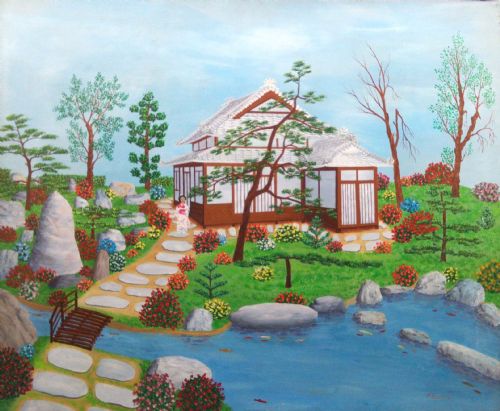
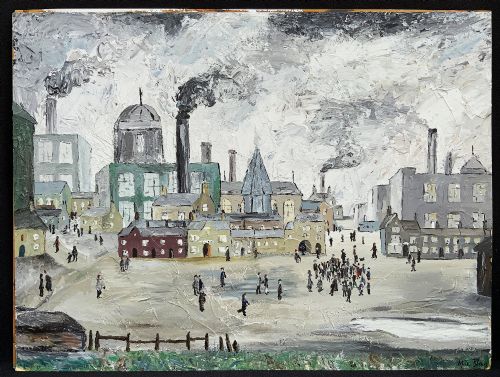
A naive art landscape captures the direct, unschooled charm of artists who paint without formal academic training.
Naive Art Landscape
When you search for a naive art landscape, you encounter original paintings that bypass academic perspective in favour of honest, immediate observation. These works span the eighteenth, nineteenth, and twentieth centuries, recorded on canvas, board, and wood.
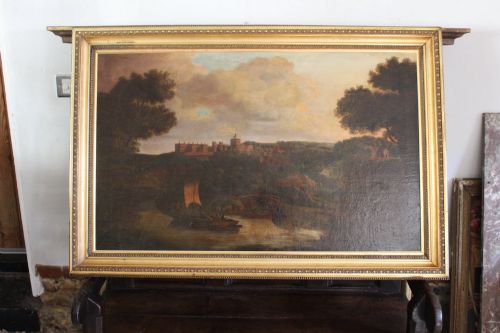
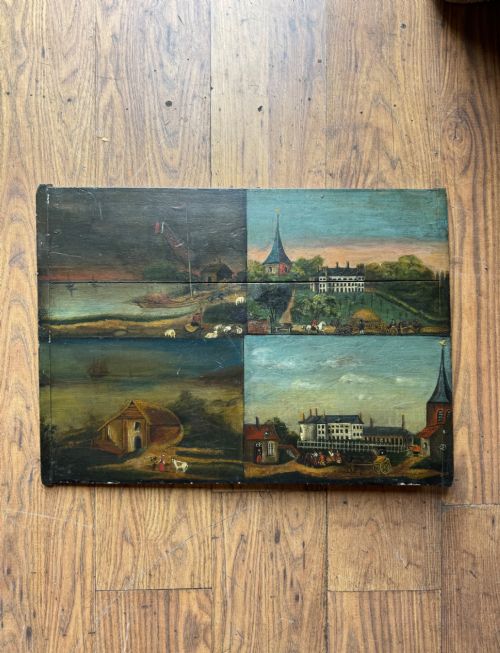
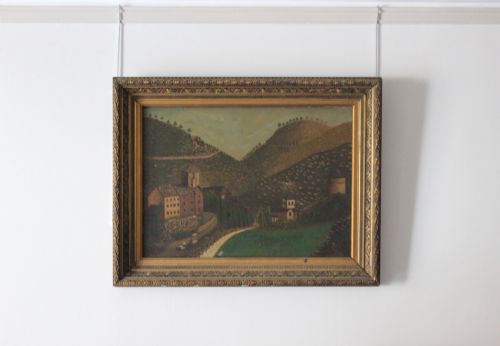
The version you are most likely to meet on this page is a nineteenth-century oil painting depicting provincial estates, rural street scenes, or local architecture. Such pieces often emerge from regional British or European schools, rendered by makers who relied on intuition rather than classical training.
What varies in quality
The distinction between ordinary and exceptional works rests on the strength of the composition and the clarity of the maker's vision. Stronger examples hold the viewer's attention through confident brushwork and an engaging arrangement of space, rather than technical correctness.
Condition also plays a part, distinguishing pieces with intact pigment and original support from those burdened by heavy restoration. The most compelling works possess an unmistakable urgency that transcends their lack of formal training.
Border collies and church weather vanes occasionally sneak into the background of nineteenth-century estates, keeping watch over the rural calm.
The Naive Art Landscape Glossary
- Naive Art
- Painting characterised by a childlike simplicity of perspective and line, created by artists without formal academic instruction. This style values direct emotional expression over strict anatomical or spatial accuracy.
- Pentimento
- An alteration in a painting, evidenced by previous strokes or shapes showing through the topmost layer of paint. It reveals the artist's changing mind during the creative process.
- Giltwood
- Wood carved and coated with gold leaf or a gold-coloured finish, commonly used for traditional picture frames. It adds a decorative border that contrasts with the rustic nature of the painting within.
- Outsider Art
- Art produced by self-taught individuals who operate outside the traditional cultural mainstream and art establishment. These makers often develop entirely personal vocabularies of form and colour.
- Topographical
- Representing specific physical locations, towns, or estates with a focus on identifiable landmarks. In folk art, such views combine geographical record with personal interpretation.
Naive Art Landscape: Frequently Asked Questions
What is a naive art landscape?
It is an original painting created by a self-taught or provincial artist who depicts scenery without adhering to the rules of academic perspective. These works rely on direct observation and unrefined mark-making.
You find subjects ranging from rural estates and townscapes to imaginative agricultural scenes, created across various centuries using oil on canvas or board.
How do I date a naive landscape?
Dating relies on examining the materials, such as the type of canvas, stretcher construction, and the formulation of the pigments. Costume and architectural details depicted within the scene also provide reliable clues.
Provincial paintings often carry inscriptions on the reverse or retain period frames that help narrow down the decade of creation.
Where were these paintings made?
These works originate from various European and international regions, reflecting local rural and provincial life. Many stem from regional British and French schools operating outside major metropolitan centres.
Artists worked independently in towns and countryside settings, recording the immediate environment around their homes and travels.
How should I display them?
Display these paintings on neutral walls where their unconventional perspective and direct use of colour can stand out. They suit both traditional interiors and modern spaces that benefit from a touch of rustic character.
Keep them away from direct sunlight and excessive moisture to protect the oil paint and wooden supports.