



Muted Turkish Rug
A muted turkish rug brings warmth and quiet elegance to a room through faded palettes and traditional Anatolian knotting.
Muted Turkish Rug
A muted turkish rug represents centuries of weaving tradition originating from regions such as Anatolia and Oushak. These floor coverings bridge historical craftsmanship and interior decoration by offering subdued tones that complement modern spaces.
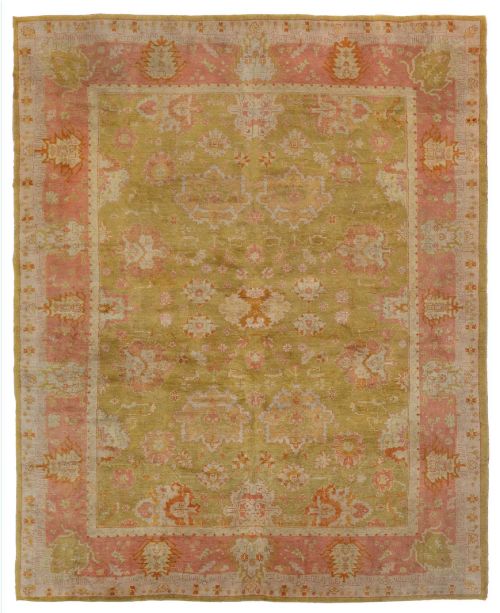
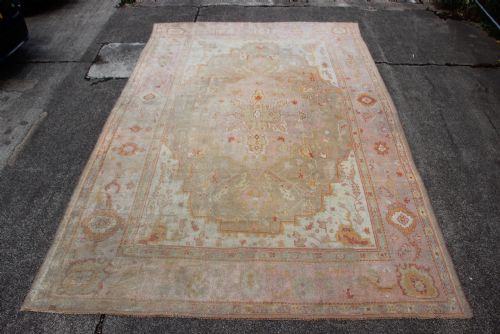
The pieces seen on this page span from the early nineteenth century through to the early twentieth century, encompassing various styles from Ottoman court designs to traditional village rugs. Buyers most commonly encounter large carpets and smaller area rugs featuring pale pinks, beiges, and soft pastel colours.
Object types vary from expansive carpets measuring several metres across to narrow prayer rugs inscribed in Ottoman script. Each specimen carries distinct patterns shaped by the particular weaving centre of its origin.
How they were made
Muted turkish rug examples are constructed using natural materials, predominantly wool and cotton foundations interwoven with hand-knotted pile. Certain specialised pieces incorporate finer angora wool to achieve a softer texture and a more lustrous finish.
Weavers utilised traditional hand-knotting techniques on vertical looms, building up dense piles that withstand decades of use. The characteristic faded appearance often results from natural vegetable dyes softening over time or gentle sun-bleaching of the wool.
Muted Turkish Rug Retail Price Guide 2026
Typical asking prices for muted turkish rug among the pieces listed under this phrase on Sellingantiques today, from the lower quarter to the upper quarter. They describe what is for sale here now, not the wider market.
Certain prayer rugs secretly carry the weaver's thoughts into the weave via handwritten Ottoman script inscribed right into the pile.
What varies in quality
Quality in a muted turkish rug rests upon the fineness of the knotting density and the integrity of the wool foundation. Tightly knotted examples display crisper pattern definition and greater structural resilience across the field and borders.
The visual harmony of the faded palette and the balance of the original design proportions separate standard village pieces from finer workshops creations. Preservation of the original edge bindings and corner integrity further distinguishes superior specimens.
The Muted Turkish Rug Glossary
- Oushak
- A traditional style originating from the town of Ushak in western Anatolia, known for large-scale floral motifs and soft pastel colourways. These carpets often feature relaxed medallion layouts.
- Prayer rug
- A small rug format featuring a mihrab or niche design at one end, historically oriented towards Mecca during daily prayers. Many include inscribed script within the border panels.
- Pile
- The vertical or diagonal loops of yarn that form the usable surface of the rug, distinct from the flat foundation threads. Wool pile provides both cushioning and insulation.
- Anatolian
- Pertaining to the geographic region of Asia Minor encompassing modern-day Turkey, where centuries of distinct tribal and town weaving traditions developed. This term covers diverse regional aesthetics.
- Angora wool
- A soft fibre gathered from angora goats or rabbits, sometimes utilised in specific antique rugs to impart a delicate sheen and tactile softness to the pile.
Muted Turkish Rug: Frequently Asked Questions
How do I clean an old rug?
Maintenance requires gentle vacuuming without a rotating brush bar to protect the delicate wool pile and aged foundation threads.
Professional specialist washing is recommended for deeper cleaning, avoiding harsh chemical treatments that strip natural dyes.
Where were these rugs woven?
Production took place across various Anatolian towns and villages, with specific weaving centres like Ushak and Sivas developing distinct local patterns.
Workshop weavers and nomadic groups alike contributed to the regional diversity found within these historical floor coverings.
What causes the faded colours?
Subdued tones typically develop through decades of natural light exposure acting upon traditional vegetable and insect dyes used in the wool.
Some pieces were woven with inherently softer pastel wools, creating gentle colorways from the outset of their creation.
How do I date a carpet?
Dating relies on examining structural characteristics, material preparation, dye technology, and stylistic motifs traditional to specific decades or reigns.
Comparison with documented examples from nineteenth and early twentieth century production helps narrow down the probable period of manufacture.