

Music Stand Rack
These pieces answering to music stand rack combine holding music and reading matter with furniture of station and utility.
Music Stand Rack
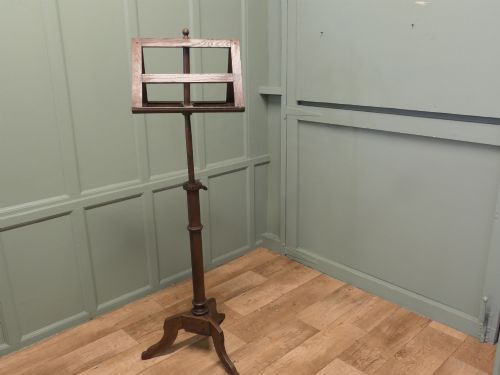
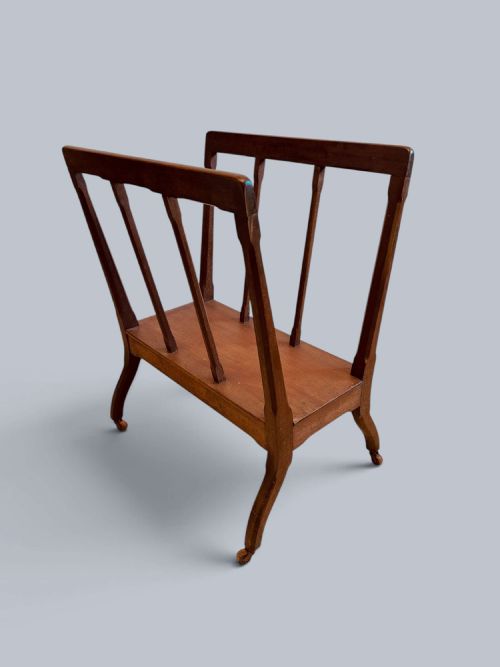
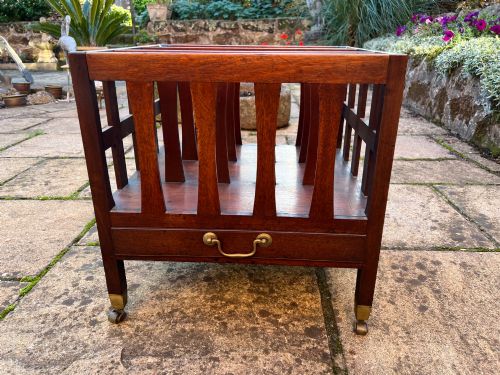
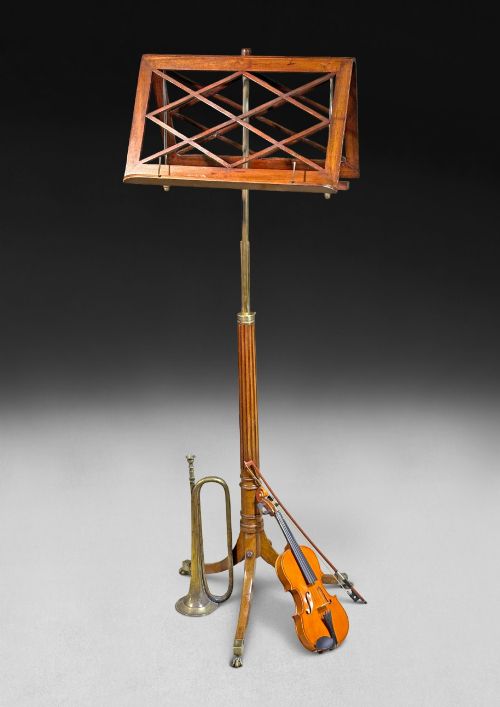
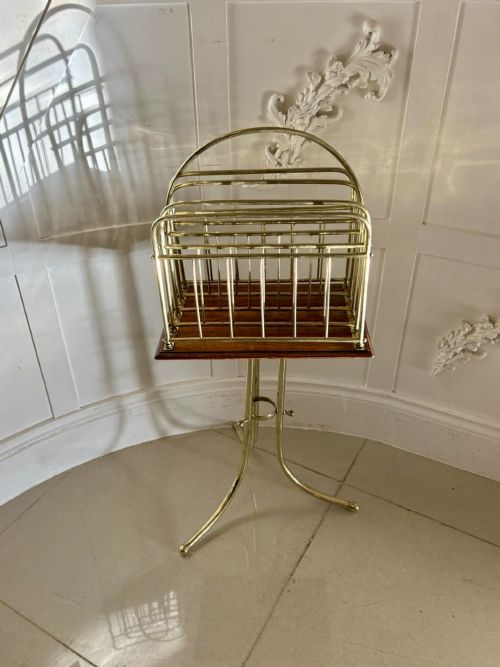
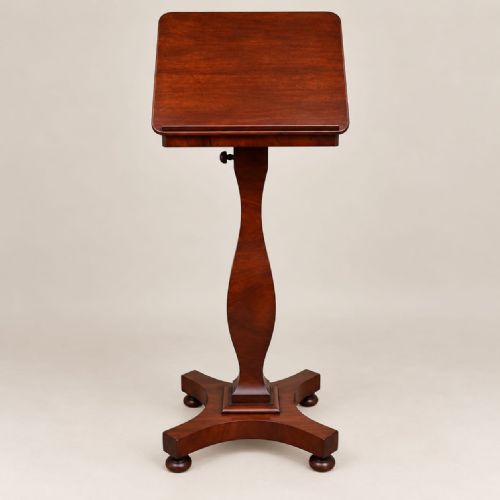
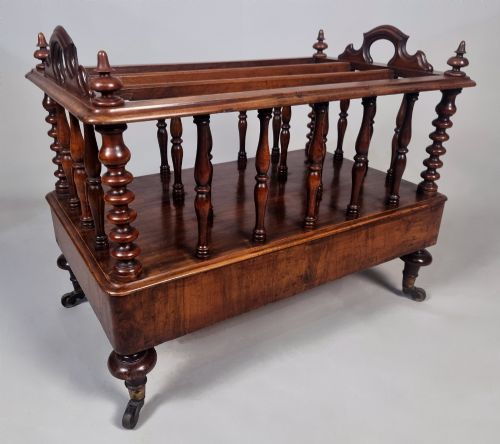
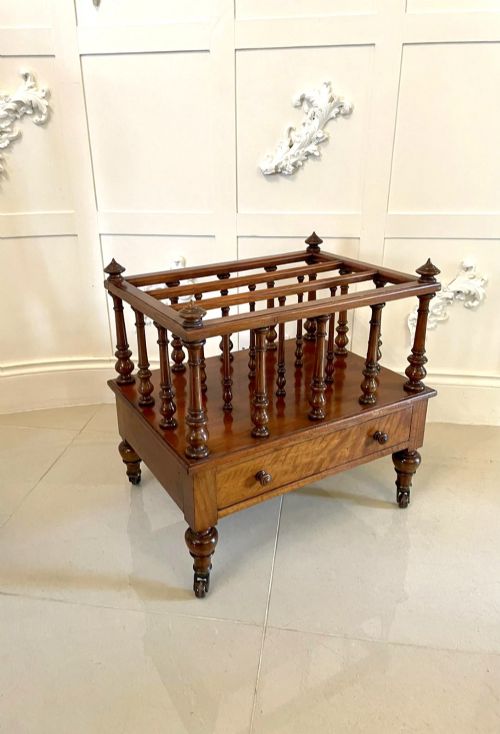
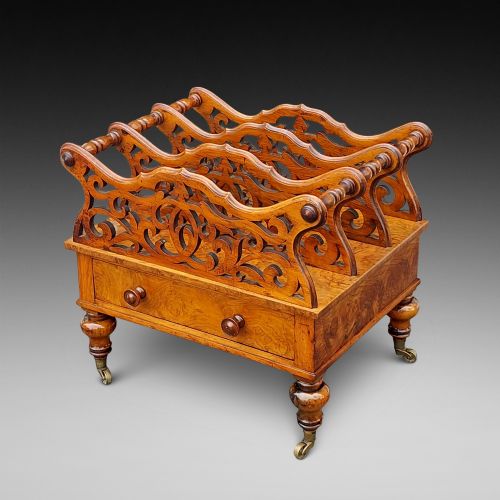
A music stand rack typically appears as a Canterbury, magazine rack, or music stand, designed for domestic use in the parlour or drawing room. You will most frequently meet Victorian and Regency examples shaped from mahogany, burr walnut, rosewood, and oak.
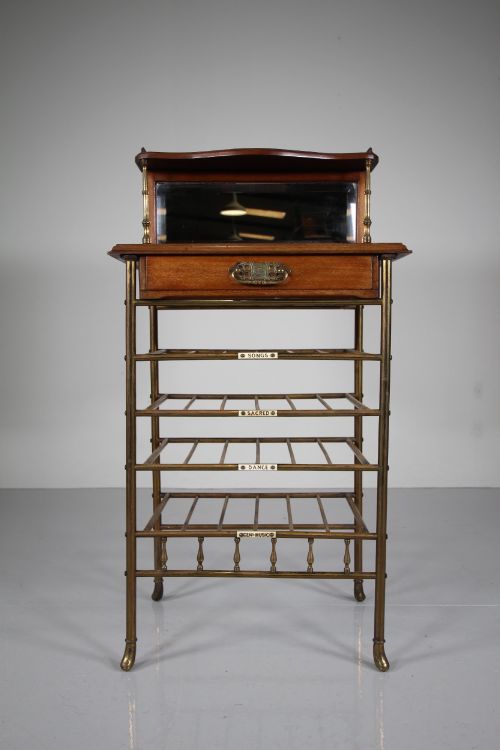
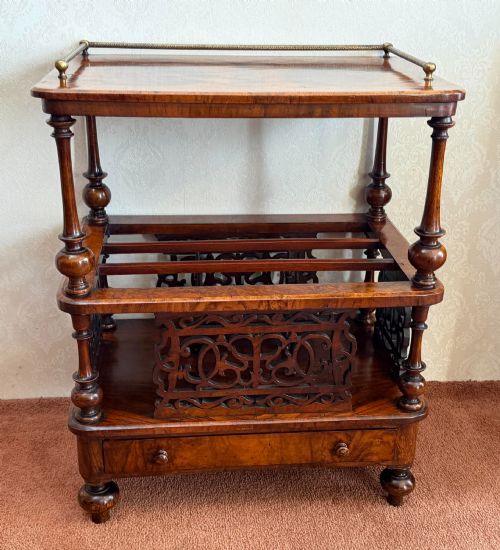
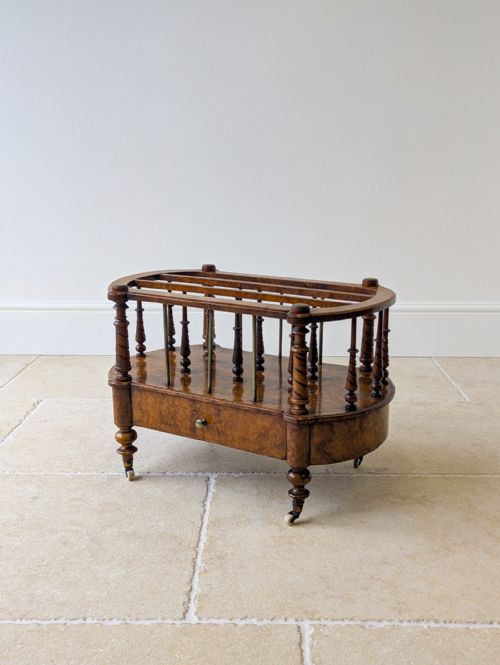
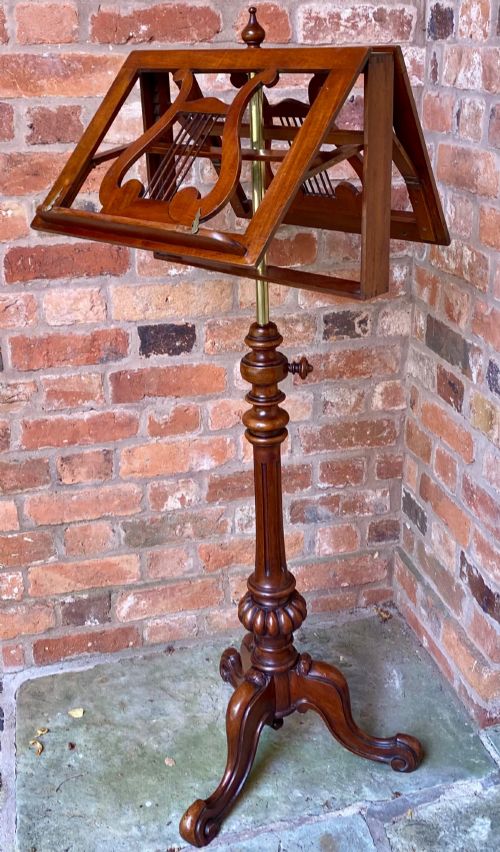
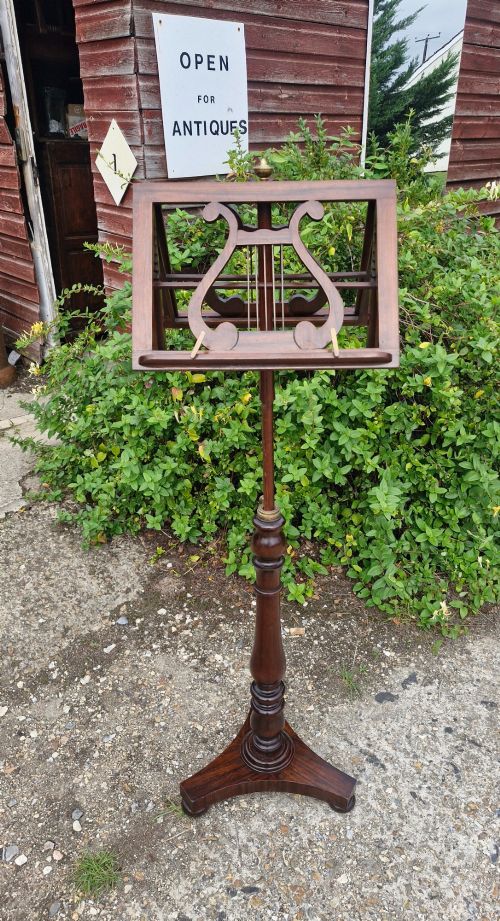
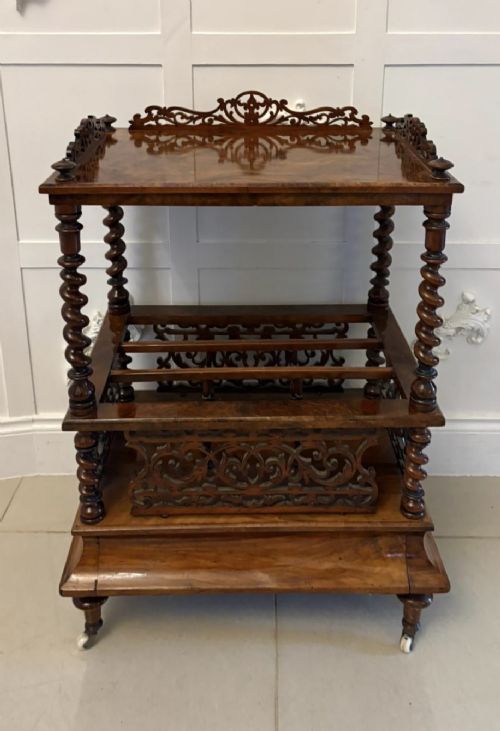
The form developed from late Georgian times through the Edwardian era to hold sheet music, folios, and periodicals near the piano or seating area. Pieces include boat-shaped designs, lyre-form music stands, and tiered whatnots with drawers below.
Makers utilised rich timbers such as burr walnut and rosewood, sometimes incorporating brass mounts, ceramic castors, or bamboo frames to suit changing interior fashions. The function bridges upright music storage and occasional table surfaces.
Materials and construction
Cabinetmakers constructed these stands predominantly in solid mahogany, walnut, and rosewood, frequently applying burr walnut veneers to display intricate grain figures. Brass detailing appears on gallery rails, carrying handles, and castors.
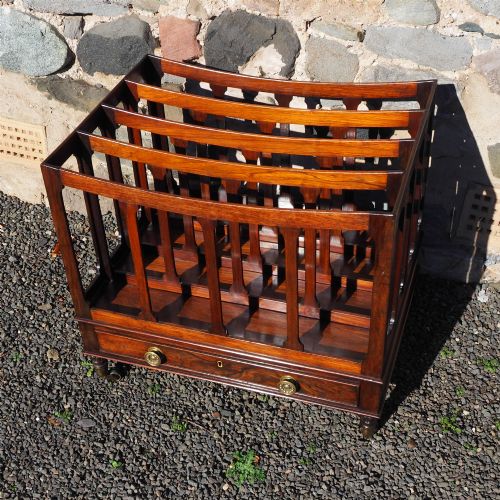
Slatted dividers form the upright partitions of the Canterbury sections, joined to lower drawers and plinth bases with traditional cabinet joints. Bamboo and ceramic elements feature in specific nineteenth-century iterations.
Music Stand Rack Retail Price Guide 2026
Typical asking prices for music stand rack among the pieces listed under this phrase on Sellingantiques today, from the lower quarter to the upper quarter. They describe what is for sale here now, not the wider market.
Object forms span music stands, magazine racks, canterburys, and combined whatnot tables.
Judging quality in stands
Quality rests upon the selection of timber veneers, such as richly figured burr walnut or dense mahogany, and the crispness of turned columns or carved lyre supports. Finer pieces demonstrate careful attention to internal drawer construction and the integration of brass fittings.
Proportion and scale distinguish standard production from exceptional examples, particularly in Regency boat-shaped models and George III designs. The harmony between the compartmentalised rack and lower storage drawer dictates the visual balance of the piece.
Edwards & Roberts
The Music Stand Rack Glossary
- Canterbury
- A low stand with partitioned vertical sections for holding sheet music, books, or periodicals, often fitted with a drawer beneath. The form dates from the late eighteenth century and continued in popularity through the Victorian period.
- Lyre-form
- A design motif shaped like an ancient Greek lyre, frequently utilised for the central supports of music stands and reading desks. This style is prominent in Regency and William IV pieces.
- Whatnot
- An open set of freestanding shelves used for displaying or holding ornaments and books, sometimes combined with a Canterbury base. These items appear in walnut and mahogany during the nineteenth century.
- Boat-shaped
- A curved hull-like contour characteristic of certain Regency Canterbury frames. This profile provides smooth lines to the exterior partitions.
Music Stand Rack: Frequently Asked Questions
What is a music stand rack used for?
These items were designed to hold sheet music, folios, and periodicals close to a piano or in a formal sitting room. The partitioned upper sections keep paper upright and sorted for easy access during musical performances.
Later Victorian adaptations also served as magazine stands and occasional tables alongside seating furniture.
How do I identify a Regency music stand?
Regency pieces often display boat-shaped partitions, brass carrying handles, and classical motifs such as lyre supports in mahogany or rosewood. They tend to have clean lines and specific structural proportions typical of the early nineteenth century.
Turned brass castors and delicate upright pillars further indicate this period.
Where should I place a Canterbury in a room?
A Canterbury sits well beside an armchair, sofa, or piano where its compartments remain accessible for reading materials and scores. Freestanding models with flat tops or work surfaces also function as small side tables.
Their compact scale allows them to fit neatly into corners or beside fireplace surrounds.
What is the difference between a Canterbury and a whatnot?
A Canterbury focuses primarily on vertical partitioned storage for music and papers, usually with a low drawer underneath. A whatnot consists principally of open display shelves for decorative objects.
Cabinetmakers sometimes combined both forms into a single piece featuring upper shelves above a compartmentalised base.