


Mushroom Glass Table Lamp
A mushroom glass table lamp brings sculptural form and warm illumination to a room, offering a distinct mid-century or earlier profile.
Mushroom Glass Table Lamp
A mushroom glass table lamp presents a characteristic domed shade resembling a mushroom cap, often paired with a matching glass or metal base. These pieces function as both task lighting and decorative objects, diffusing light softly through heavy material.
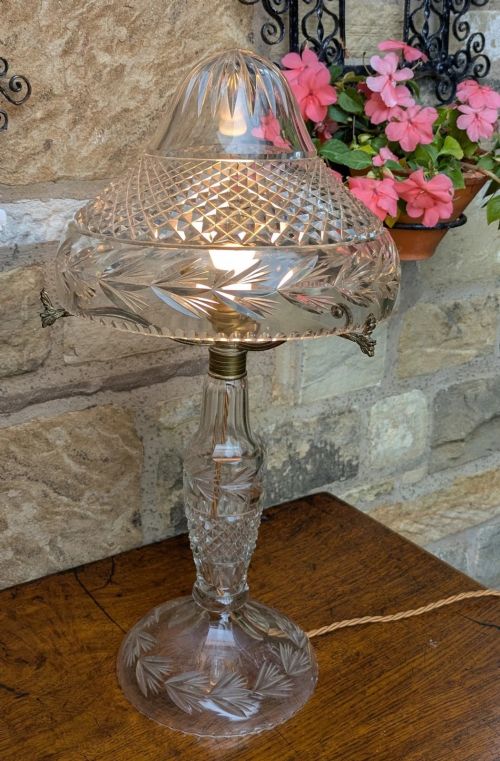
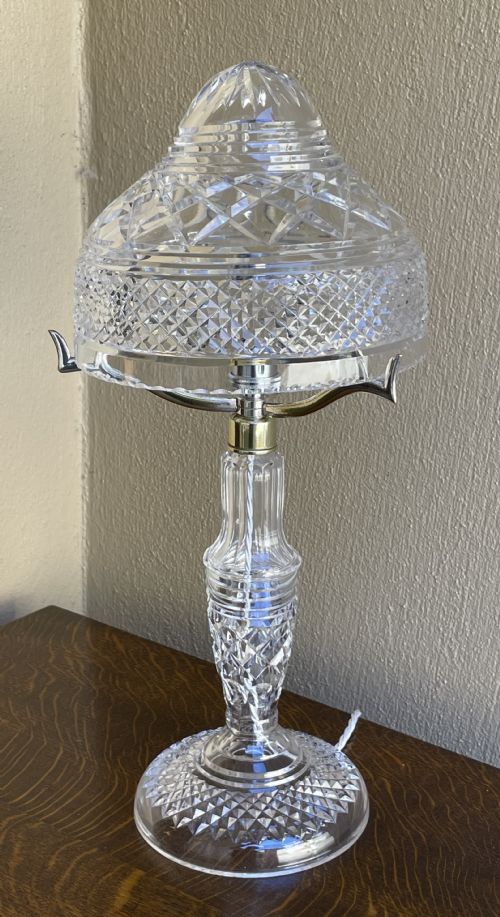
The version most commonly met on this page is the cut glass or crystal mushroom table lamp, frequently dating from the 1920s and 1930s. These examples range from smaller desk models to large twin-bulb statement lamps.
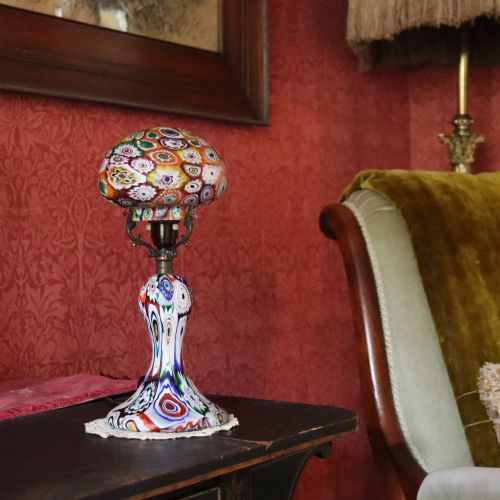
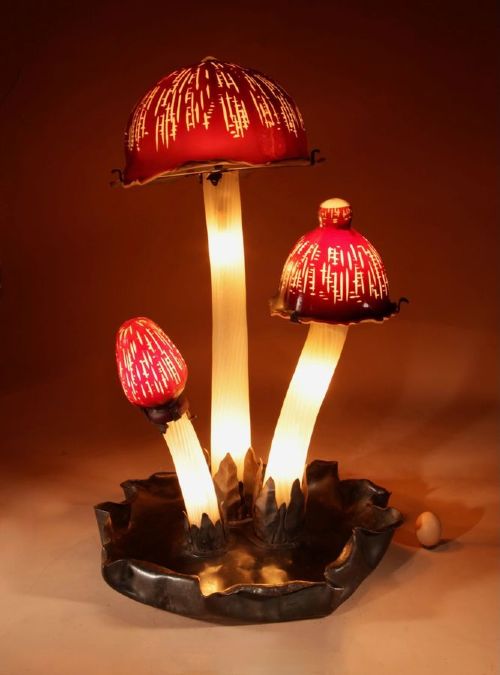
Earlier Edwardian and Art Nouveau variations also appear, occasionally incorporating bronze or wrought iron alongside glass cabochons and specialised art glass techniques such as millefiori.
Materials and Techniques
Makers utilised heavy lead crystal, cut glass, and standard glass, often moulding and hand-cutting geometric or floral facets to refract light. This glass is frequently thick and substantial to support the domed cap structure.
Supporting structures combine glass with brass, wrought iron, bronze, and occasionally bakelite, depending on the period. Lamp bodies integrate metal fitments, twin bulb holders, and weighted bases to balance the top-heavy shade.
The listings span four distinct decades, featuring periods from 1900 to 1930 alongside Edwardian, Art Nouveau, and Art Deco styles.
Assessing Quality
Quality rests upon the depth, crispness, and precision of the glass cutting and the purity of the crystal. Superior examples display sharp facets that catch and scatter light cleanly, whilst simpler pieces utilise plain or light mould-blown glass.
The integration of materials dictates the overall calibre, such as substantial bronze or brass mounts and signed glass from notable makers. The weight of the lead crystal and the complexity of multi-bulb internal wiring configurations further separate standard production from finer output.
Fratelli Toso·Eileen Grey·Stuart Crystal
The Mushroom Glass Table Lamp Glossary
- Cut Glass
- Glass decorated by grinding and polishing facets onto the surface. This technique creates sharp geometric patterns that increase light refraction.
- Lead Crystal
- Glass containing metallic lead oxide, which increases weight, clarity, and brilliance. It allows for deeper and sharper cutting than standard soda-lime glass.
- Millefiori
- A glasswork technique producing distinctive patterned mosaic canes. The term translates from Italian as a thousand flowers.
- Art Deco
- A design style prevalent in the 1920s and 1930s characterised by sleek geometric symmetry and stylised motifs. It heavily influences the profile of many mushroom lamps from this era.
- Art Nouveau
- An international style prominent around 1900 inspired by natural forms and flowing organic lines. Pieces from this period often use bronze and glass cabochons.
Mushroom Glass Table Lamp: Frequently Asked Questions
How do I date a mushroom glass table lamp?
Dating relies upon stylistic markers such as Art Deco geometric cuts or Art Nouveau organic bronze mounts, alongside materials like bakelite or lead crystal. Periods represented typically span from 1900 through the 1930s.
Construction methods and wiring components also offer clues, though many surviving examples have been updated with modern internal fittings for safety.
Were these lamps used as desk lamps or ambient lighting?
These pieces served multiple functions across domestic spaces, appearing as both task lighting on desks and decorative accent lighting on tables. Their enclosed domed caps direct light downward whilst casting a soft glow outward through the glass.
Larger twin-bulb variants provided more substantial illumination for living rooms and studies.
What is the difference between cut crystal and standard glass?
Cut crystal contains lead oxide, which gives the material greater weight, density, and refractive index compared to standard glass. This allows artisans to cut deeper, sharper facets that produce a brighter sparkle.
Standard glass lamps are typically lighter and rely on mould-blown shapes rather than hand-cut detailing.
How do I care for antique glass lamps?
Cleaning requires gentle dusting with a soft cloth and occasional washing of glass components in lukewarm water with mild soap. Harsh chemical cleaners should be avoided to protect aged metal mounts and brass fitments.
Care must be taken when handling heavy lead crystal shades during maintenance to prevent chipping.