


Murano Glass Mirror
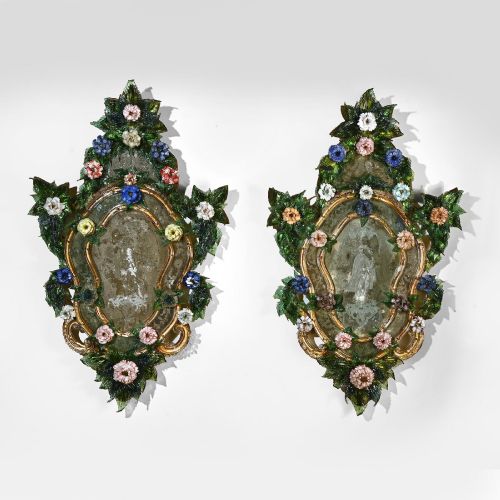
These murano glass mirror examples bring Venetian craftsmanship into a room, offering the reflective depth and colour that collectors prize.
Murano Glass Mirror
When you search for a murano glass mirror, you encounter decorative wall mirrors, trays, and table mirrors that originate from Venetian workshops. The examples found here span the eighteenth century, the nineteenth century, and the early twentieth century, showing periods such as 1850, 1900, 1910, and 1920.
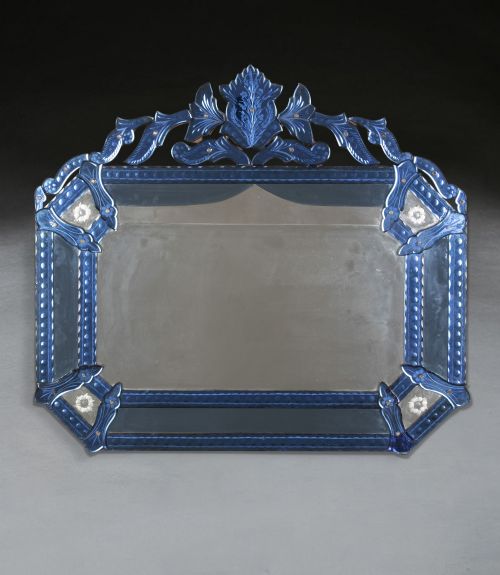
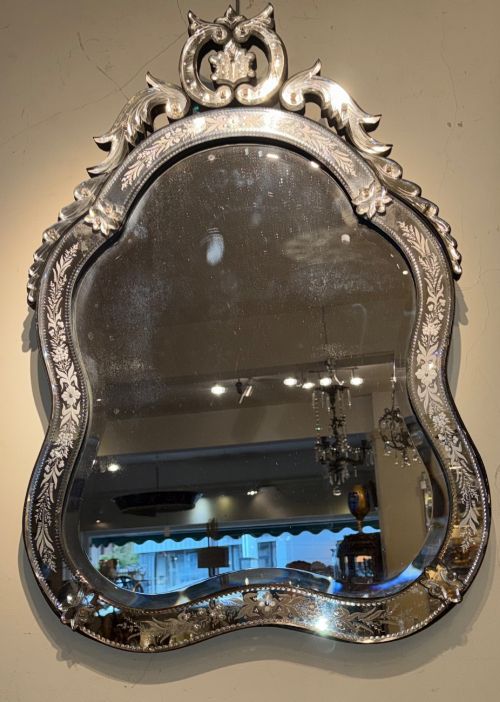
You are most likely to meet wall mirrors framed in glass or wood, alongside variations like blue glass panels and cushion mirrors. These objects reflect a distinct tradition of Italian glassmaking that prioritises ornate silhouettes.
The assortment includes large wall pieces and smaller dressing mirrors, showing how Venetian artisans adapted their craft for different domestic settings across multiple eras.
How they were made
Makers constructed these pieces using glass, mirrored glass, and wood, frequently incorporating gilt wood and brass supports. Artisans shaped glass elements by hand to form intricate frames and decorative borders.
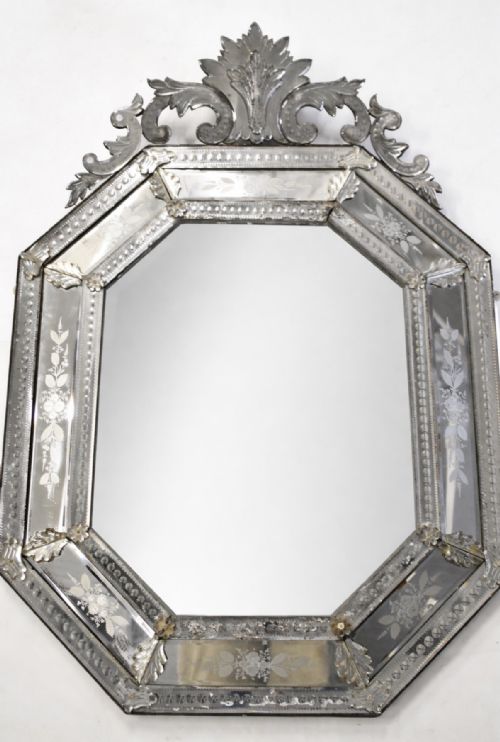
Techniques involved etching the glass surface and assembling separate glass sections over wooden backings to create dimensional wall mirrors and trays.
The inventory records pieces spanning the eighteenth century, nineteenth century, 1900, 1910, 1920, and 1940s.
What varies in quality
The distinction between standard examples and superior ones rests on the complexity of the glass manipulation and the depth of the etching. Pieces featuring elaborate cushion frames or gilt wood detailing demand greater skill from the maker.
Quality also shows in the clarity of the mirrored glass and the preservation of the original glass elements across the frame. Better examples maintain integrated components that align with their specific period of origin.
Venini Murano
The Murano Glass Mirror Glossary
- Venetian
- Pertaining to Venice, the Italian city renowned for glass production. This style governs the decorative vocabulary of these mirrors.
- Cushion mirror
- A mirror featuring a convex, outward-curving central frame built from angled glass panels. This design maximises light reflection in a room.
- Gilt wood
- Wood coated with a thin layer of gold leaf or gilt paint. It frequently forms the supportive backing and decorative trim for Venetian glass plates.
- Murano glass
- Glass produced on the island of Murano near Venice. It is defined by specific regional techniques passed down through generations of artisans.
- Bevelled glass
- Glass with an angled edge polished along the perimeter. This treatment adds a dimensional border to the reflective surface.
Murano Glass Mirror: Frequently Asked Questions
How do I date a murano glass mirror?
Dating relies on examining the construction of the wooden backing, the characteristics of the mirrored glass, and the specific style of the etching. Eighteenth-century pieces differ noticeably in assembly from those produced around 1920.
Changes in glass production techniques over the nineteenth century also help establish the correct period for each mirror.
Where should I hang a Venetian wall mirror?
These mirrors suit rooms that benefit from additional reflected light, such as hallways, living rooms, or above mantelpieces. Their decorative frames function effectively as focal points on plain walls.
Ensure the wall structure can support the weight of mirrors framed in heavy wood and glass panels.
Are all these mirrors made in Murano?
The listings include pieces specifically attributed to Murano alongside broader Venetian and Italian items. The tradition of glassmaking links Venice and the island of Murano closely together.
Each piece demonstrates regional techniques associated with Italian glass production.
How do I care for antique glass mirrors?
Maintenance involves dusting the glass and gilt wood gently with a dry, soft cloth. Avoid using harsh chemical cleaners that might damage the silvering on the glass or the gilt finish.
Keep the mirrors away from direct moisture to protect the wooden backing and metal fixings.