


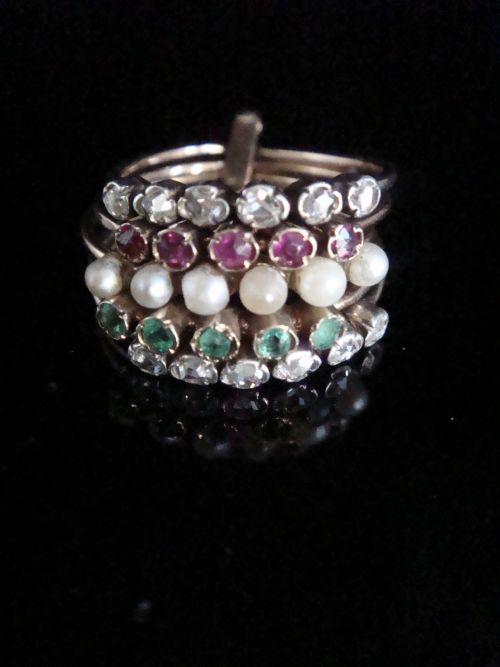
Multi Band Gold Ring
These multi band gold ring examples span Victorian, Edwardian, Art Deco and mid-century periods, bringing together clustered gemstones and interlocking rows.
Multi Band Gold Ring
The selections span Victorian, Edwardian and Art Deco periods alongside mid-century and contemporary forms, featuring multi gem arrangements and cluster formations.
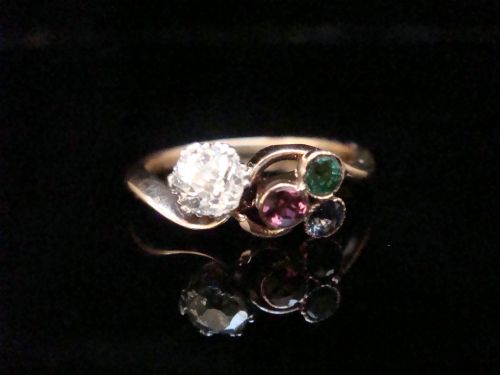
Buyers encounter Victorian rose gold turquoise buckle pearl pieces, Edwardian multi-row gemstone bands with emeralds, rubies and diamonds, and 1960s diamond cocktail rings.
Materials and construction methods
Construction relies upon yellow gold, rose gold, white gold, and silver-topped gold settings, paired with stones including diamonds, sapphires, emeralds, rubies, pearls, tourmalines, turquoise, and amethysts.
Intricate multi-row joining and cluster formations require precise goldsmithing techniques, whether mounting old cut diamonds into Edwardian trilogy frameworks or assembling multi-gem panther leopard and dolphin motifs.
Among the multi-row gemstone configurations, a carved gold panther leopard ring stands ready to pounce from the finger.
Distinctions in construction and gemstone selection
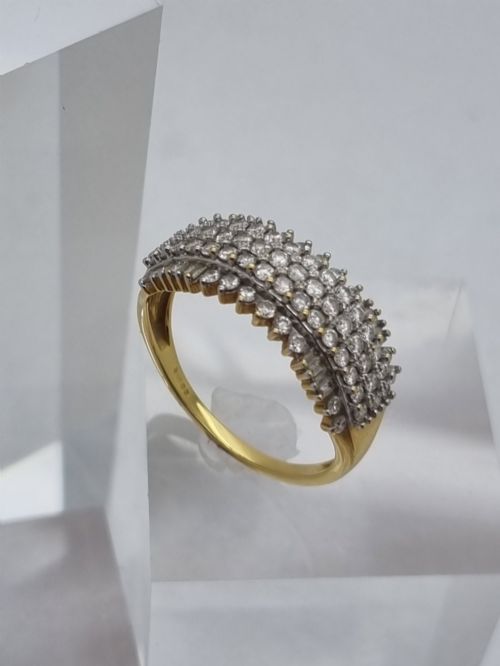
Quality rests in the precision of the multi-row assembly and the security of the settings, distinguishing integrated stacking bands from simpler manufactured multi-stone bands.
The choice and matching of gemstones, from uniform diamond clusters to varied multi-gemstone selections including sapphires, emeralds and pearls, dictate the refinement of the piece.
Asprey
The Multi Band Gold Ring Glossary
- Harem ring
- A multi band ring composed of several individual bands that fit together on the finger, often linked or worn as a unified stack. These designs frequently incorporate mixed gemstones across the rows.
- Trilogy ring
- A ring featuring three primary gemstones set in a row, often symbolizing past, present and future. Edwardian examples frequently pair diamonds with pearls or coloured stones.
- Cluster ring
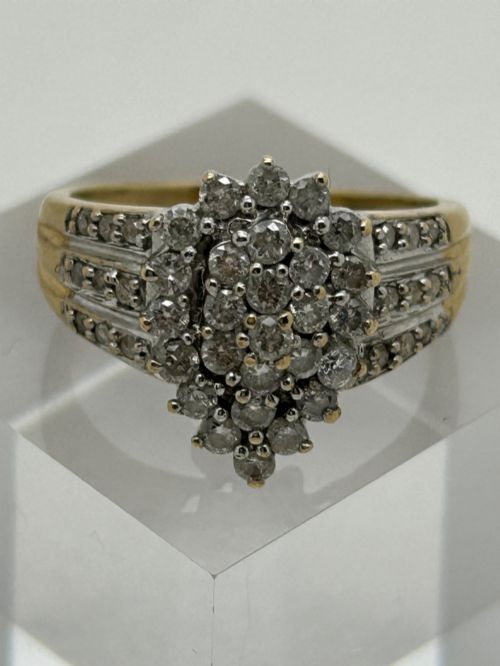
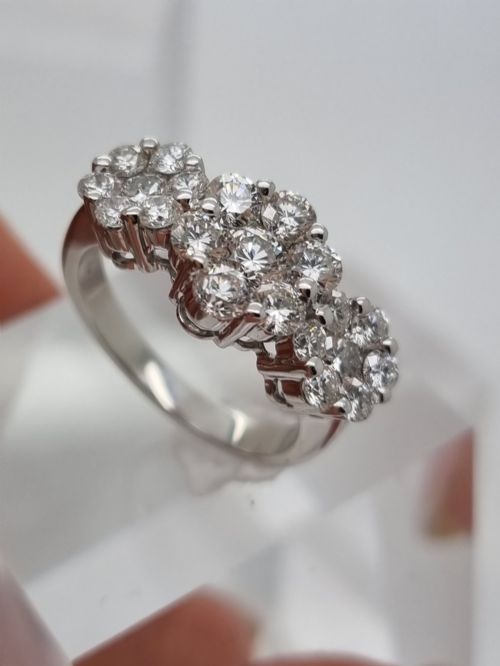
- A setting style where a central stone is surrounded by a cluster of smaller stones, maximising visual impact. Art Deco and mid-century examples utilise this method for dense multi-gem arrangements.
- Old cut
- A diamond cutting style prevalent in antique jewellery, characterised by a smaller table, higher crown and larger culet. These cuts catch candle and ambient light distinctively compared to modern brilliants.
Multi Band Gold Ring: Frequently Asked Questions
How do I identify an Edwardian multi band ring?
Edwardian rings often showcase intricate openwork settings in yellow or rose gold, frequently pairing diamonds with pearls, sapphires or emeralds. Look for delicate craftsmanship typical of the early twentieth century.
Multi-row configurations from this era combine milgrain detailing with old cut diamonds and diverse coloured gemstones.
What materials are common in these rings?
Gold forms the structural base, appearing in 9ct, 15ct, 18ct yellow, rose and white variations, occasionally complemented by silver settings. Gemstone selections include diamonds, sapphires, emeralds, rubies, pearls, turquoise, amethysts and tourmalines.
Some designs incorporate single gemstone families while others mix multiple coloured stones across distinct rows.
How should I care for antique multi gem rings?
Antique multi-row and cluster rings require gentle handling due to their age and complex settings. Professional cleaning ensures the security of smaller stones in multi-stone configurations.
Avoid harsh chemical cleaners, especially with softer organic gems like pearls and turquoise frequently found in Victorian and Edwardian multi band designs.