





Mounted Stag Head
These mounted stag head pieces bring the character of the traditional shooting lodge and the Victorian country house into modern rooms.
Mounted Stag Head
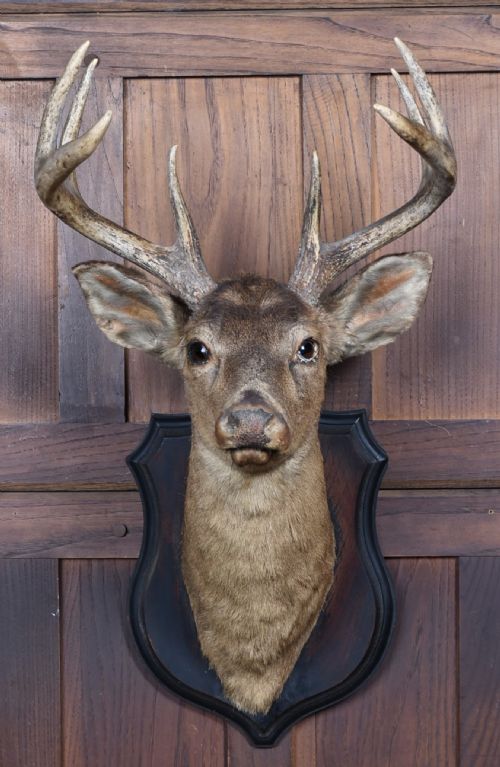
A mounted stag head serves as a striking wall sculpture, combining natural antlers with taxidermy mounts, deer hide, or carved wood. These pieces emerge from periods spanning the Victorian era through the Edwardian years and into the 1930s, reflecting British country house and Highland traditional aesthetics.
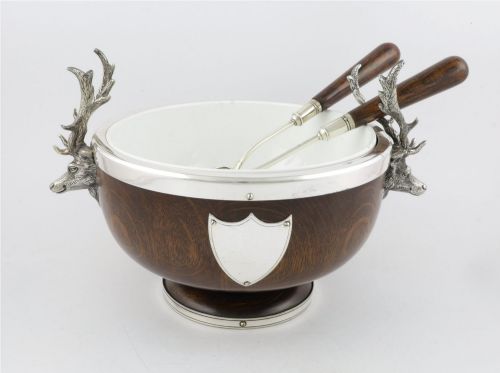
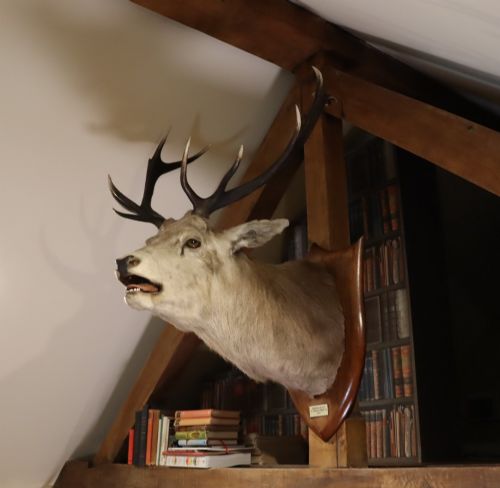
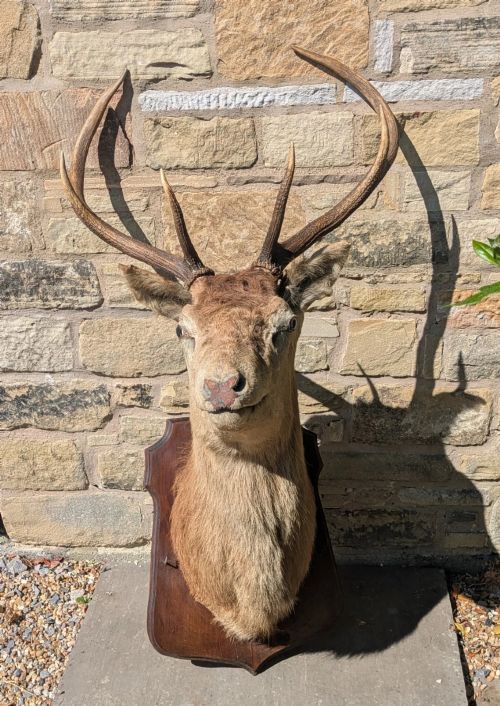
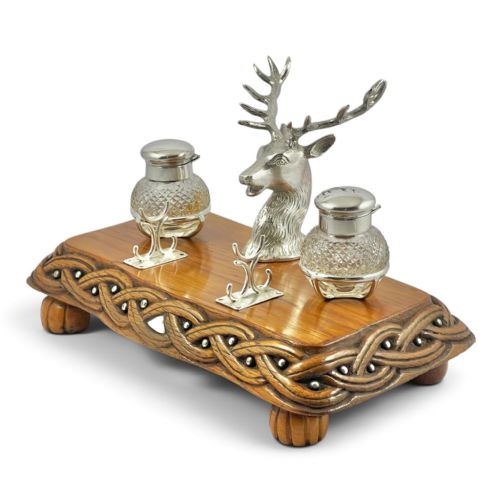
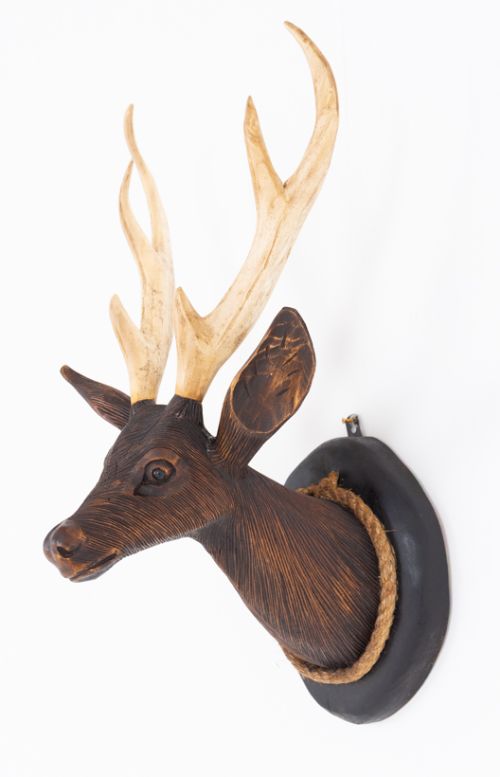
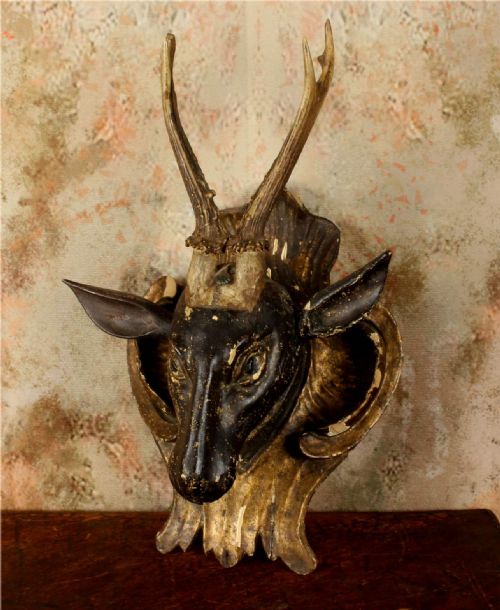
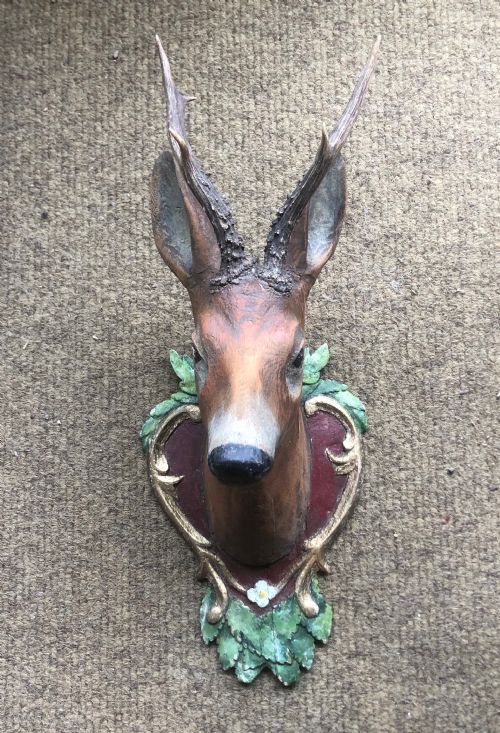
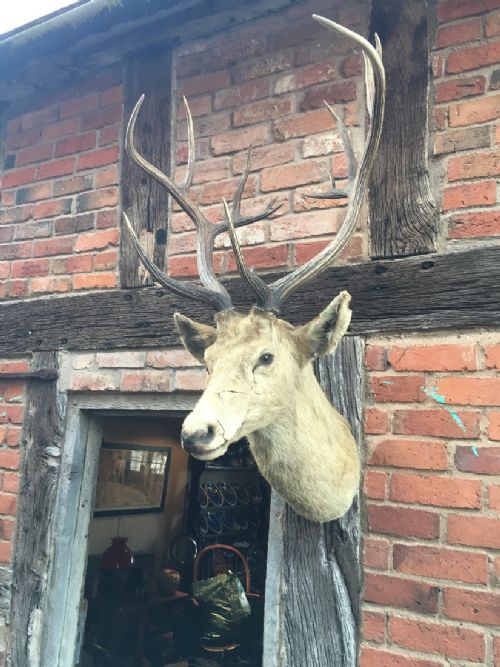
The selections available on this page encompass various forms, from complete taxidermy red deer and roebuck specimens mounted on wooden shields to carved Black Forest style representations and folk art interpretations. Collectors will also find related desk accessories such as oak inkstands incorporating antlers and silver elements.
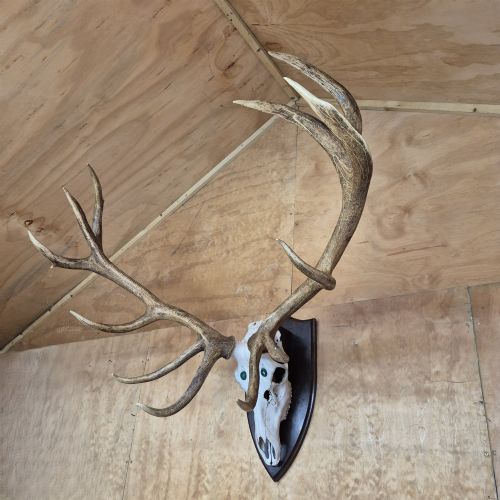
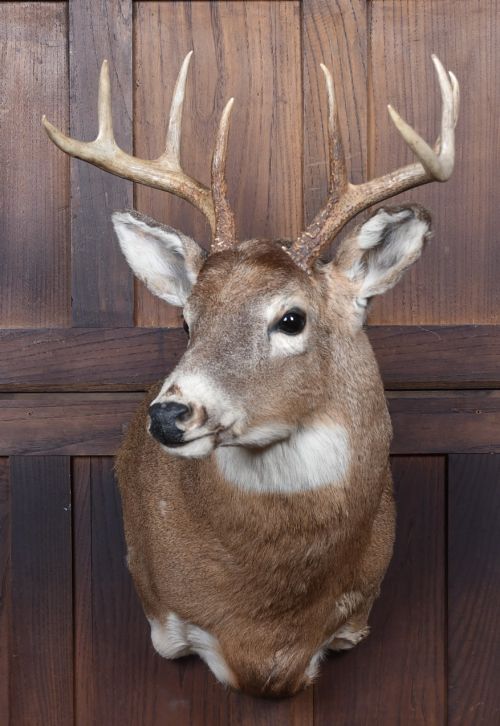
The domestic interior tradition of displaying hunting trophies found particular favour during the nineteenth and early twentieth centuries. Pieces range from substantial twelve-point royal sets of antlers to smaller white-tailed deer and roebuck mounts suited for more modest spaces.
Materials and construction
The taxidermy mounts combine genuine deer hide and natural antlers prepared by specialists, often fixed to carved oak shields or wooden backing boards. Paint finishes sometimes highlight the carved wooden and folk art examples originating from continental workshops.
Woodworking craftsmanship is evident in the carved oak shields and folk art deer heads, utilising traditional hand-carving techniques. Glass elements occasionally appear in the composition of eyes or associated desk accessories like inkwells.
Mounted Stag Head Retail Price Guide 2026
Typical asking prices for mounted stag head among the pieces listed under this phrase on Sellingantiques today, from the lower quarter to the upper quarter. They describe what is for sale here now, not the wider market.
Some nineteenth-century makers extended their craft to the desk, turning antlers and silver into formidable inkstands that meant business.
Distinguishing quality in mounted specimens
Taxidermy quality rests upon the naturalism of the pose and the preservation of the hide and antlers. Superior specimens exhibit careful anatomical proportion and robust mounting work that has withstood decades without deterioration.
Carved wooden examples rely on the depth and precision of the artisan's hand-tooling. The distinction between standard workshop production and finer folk art or named maker pieces lies in the articulation of the carving and the quality of the supporting oak shield.
Peter Spicer & Sons
The Mounted Stag Head Glossary
- Taxidermy mount
- The preserved skin and antlers of an animal fitted over a sculpted form to create a lifelike representation. These comprise the majority of the wall sculptures found in this category.
- Black Forest style
- A regional style of wood carving originating from central Europe, characterised by realistic animal subjects and deep relief work. Pieces in this tradition often depict deer and forest fauna.
- Folk art
- Items created by self-taught or traditional artisans outside academic traditions, often using accessible materials like carved wood to interpret natural subjects. These pieces display individual character and regional charm.
- Inkstand
- A desk stand designed to hold inkwells, pens, and blotting material, occasionally incorporating antlers or silver fittings into the domestic design.
Mounted Stag Head: Frequently Asked Questions
How do I hang a heavy mounted stag head?
These wall sculptures require secure fixing directly into wall studs or masonry using heavy-duty picture hooks or batten systems. The substantial weight of the oak shields and antlers demands proper structural support.
Professional installation is recommended for larger specimens, particularly twelve-point royal sets or substantial taxidermy heads, to ensure the piece remains safely secured to the wall.
Where were mounted stag heads traditionally displayed?
Historically, these pieces decorated the walls of British country houses, Highland hunting lodges, and Victorian entrance halls. They served as both records of the hunt and decorative architectural elements.
Today, they function well as focal points in studies, living rooms, and hallways, bringing a strong textural element and historical character to interior spaces.
How do I care for taxidermy and carved wood?
Maintenance involves gentle dusting with a soft brush or microfibre cloth to remove particles from the hair and antlers. Keeping the pieces away from direct sunlight and excessive moisture preserves the hide and wood.
Applying a suitable wax to wooden shields helps maintain the finish, while taxidermy elements benefit from stable room temperatures to prevent the material from drying out.
How can I tell the period of a mounted stag head?
Dating relies on examining the construction methods of the wooden backing shield, the taxidermy techniques employed, and any accompanying documentation or maker signatures. Victorian and Edwardian pieces often utilise specific hardware and mounting styles.
Stylistic cues, such as the deep relief carving associated with Black Forest pieces or the specific taxidermy methods of the early twentieth century, also help determine the era of manufacture.