



Mountain Oil Canvas
A mountain oil canvas captures dramatic peaks and highland waters, offering the collector a window into 19th-century wilderness and romantic vistas.
Mountain Oil Canvas
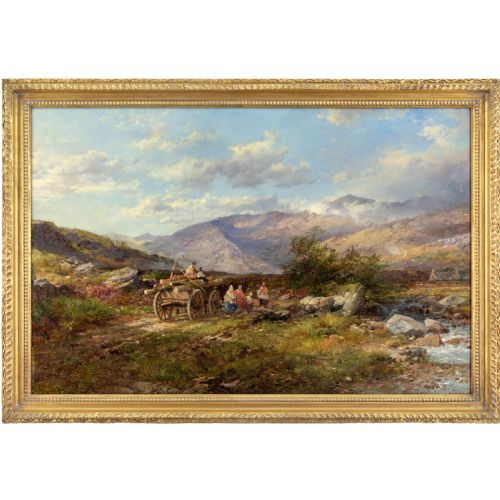
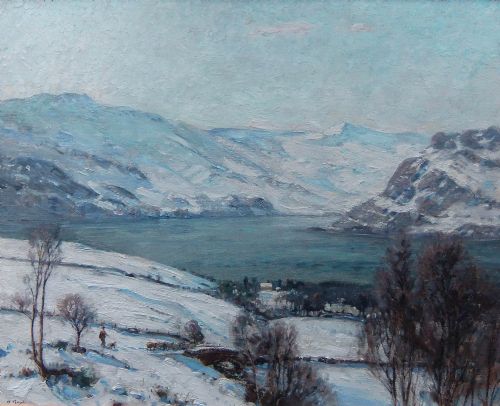
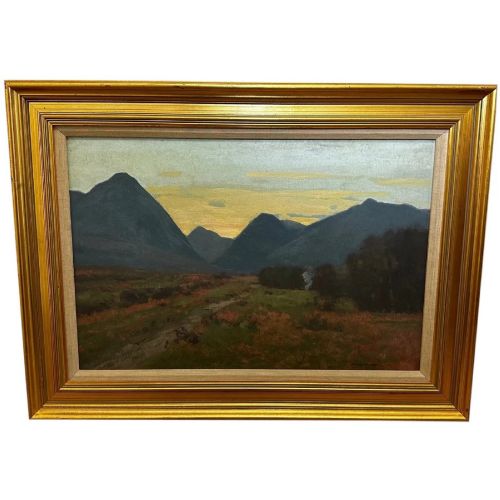
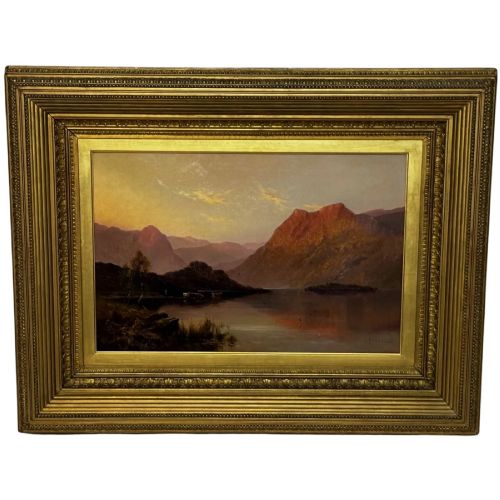
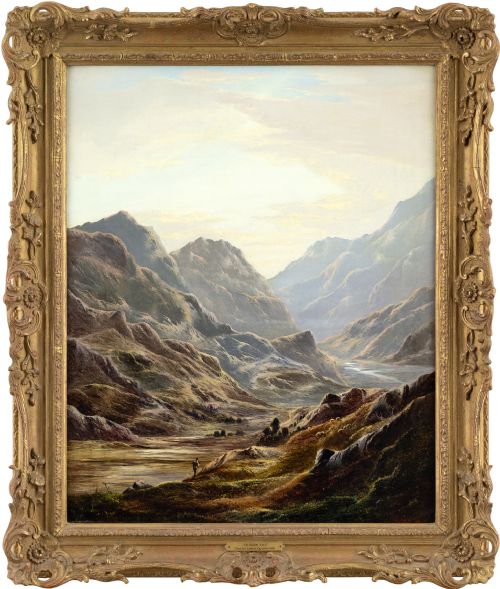
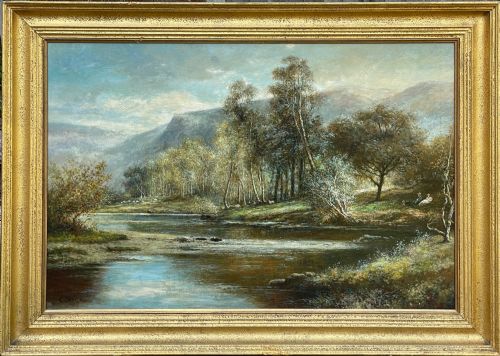
A mountain oil canvas depicts rugged landscapes, serene lakes, and rural valleys painted during the Victorian era and the early twentieth century. These works frequently record specific British and European locations, from Snowdonia and the Lake District to the Swiss Alps and Scottish highlands.
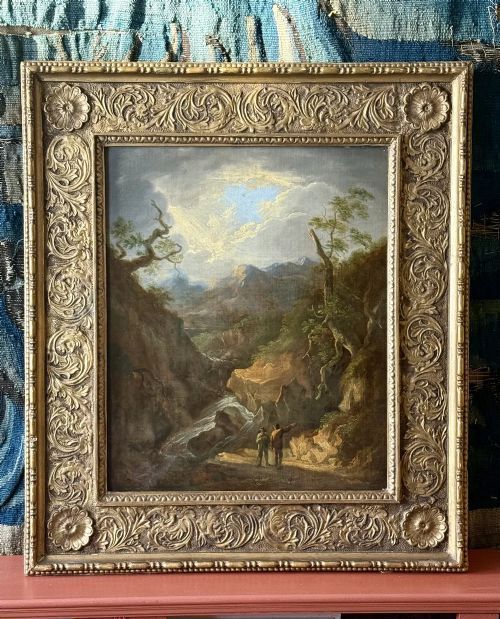
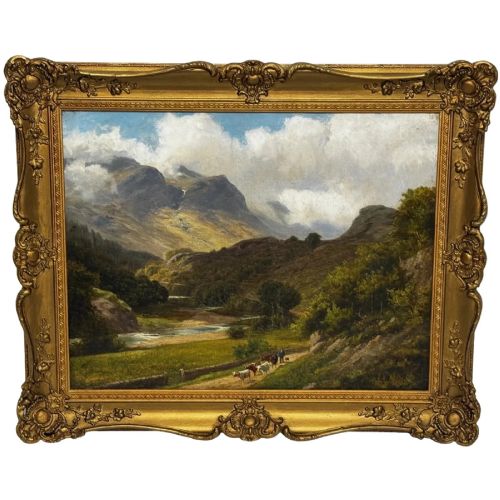
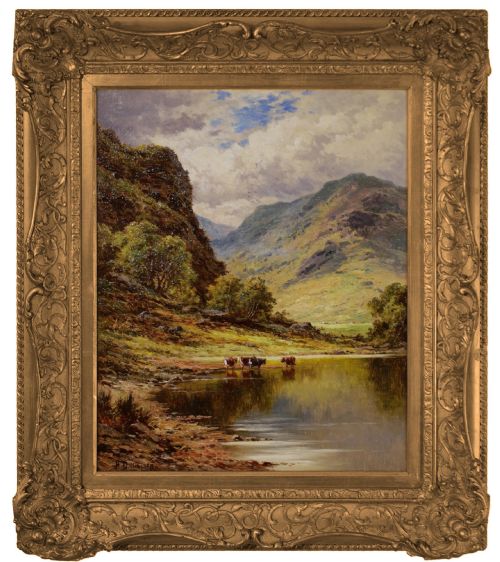
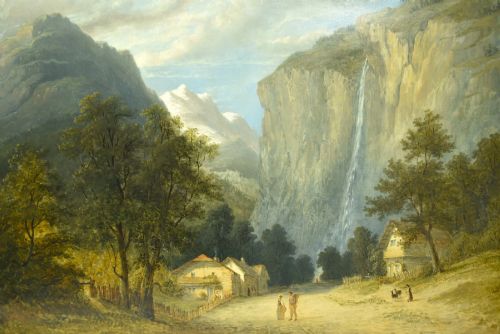
Buyers encounter framed canvases that range from intimate pastoral studies to large-scale topographical views complete with cattle, travellers, or cascading waterfalls. The prevailing styles encompass Romanticism, British Impressionism, and Scottish landscape traditions.
The subjects serve as historical records of nineteenth-century topography while fulfilling a long-standing desire to bring untamed natural scenery into domestic interiors.
Materials and construction
Artists painted oil on canvas stretched over wooden frames, utilising oil paint to build rich textures and subtle atmospheric light effects. The application ranges from thin, transparent glazes in distant skies to thick, impasto brushwork on foreground rocks and foliage.
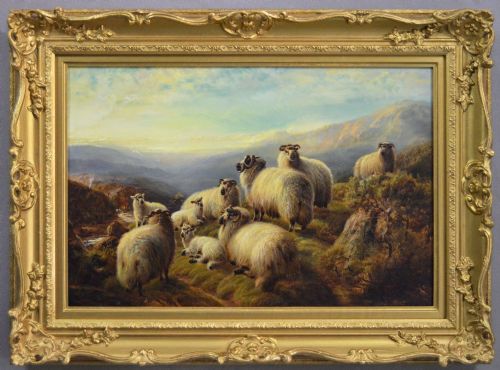
Many surviving examples retain their original giltwood and gesso frames, which provide structural support and complement the warm tones of the pigments.
Mountain Oil Canvas Retail Price Guide 2026
Typical asking prices for mountain oil canvas among the pieces listed under this phrase on Sellingantiques today, from the lower quarter to the upper quarter. They describe what is for sale here now, not the wider market.
Several canvases squeeze grazing highland cattle and wandering sheep into remarkably steep alpine terrain.
Judgement of quality
Quality rests upon the artist's ability to handle scale, light, and atmospheric depth, transforming topographical record into compelling composition. Stronger works demonstrate confident brush control in defining cloud formations, water movement, and geological strata.
The integrity of the original canvas surface and the preservation of the framing elements also distinguish superior examples from heavily restored or later-assembled pieces.
John Syer RI·Herbert Royle·Benjamin Barker of Bath·Alfred Fontville de Breanski Jr·George Houston RSA RSW·Henry H. Parker·Charles Leslie·Robert Watson·John Grenville Fennell·William Henry Mander·Sidney Richard Percy·Thomas Spinks·Frank Hider·Walter J Watson·C Caldwell·William Grant Murray·J Barclay·John Douglas Perrett·George Melvin Rennie·William Miller Frazer·Alfred de Breanski·Karl Herrle·Gustave De Brianski
The Mountain Oil Canvas Glossary
- Impasto
- Paint applied thickly to a canvas, standing out in relief from the surface. This technique allows artists to render the rough texture of stone and foliage with physical presence.
- Giltwood
- Wood that has been covered with a thin layer of gold leaf. It is commonly found on the ornate frames encasing nineteenth-century landscape paintings.
- Gesso
- A plaster-like mixture used as a base for moulding decorative details on wooden frames before gilding. It provides a smooth foundation for the gold leaf.
- Romanticism
- An artistic movement emphasising emotion, individualism, and the awe-inspiring power of nature. Mountain paintings often reflect this aesthetic through dramatic weather and solitary figures.
Mountain Oil Canvas: Frequently Asked Questions
Where were these mountain landscapes painted?
The works record actual terrain across Britain, Europe, and occasionally further afield. Common sites include Welsh valleys, Scottish lochs, the Lake District, and the continental Alps.
Artists travelled directly to these regions to sketch outdoors before completing the final compositions in their studios.
How do I care for an oil painting on canvas?
Keep the canvas away from direct sunlight, damp environments, and sudden temperature fluctuations. Maintaining a stable indoor climate prevents the paint and wooden stretcher from warping.
Dust the surface gently with a soft, dry brush and avoid using water or chemical cleaners on the paint or gilt frame.
Are these paintings signed by the artist?
Many examples feature signatures or initials inscribed by the artist directly into the wet paint, often in a lower corner. Others bear contemporary inscriptions or artist details on the reverse of the canvas or stretcher frame.
Unsigned works remain common, attributed instead through stylistic comparison or period documentation.
How do I distinguish 19th-century canvases from later works?
Nineteenth-century pieces typically exhibit aged canvas texture, oxidized oils, and traditional hand-carved gesso frames. Examining the stretcher bars and nails on the reverse often reveals period manufacturing methods.
Stylistic conventions, such as the palette and handling of romantic light, also align with Victorian and Edwardian painting traditions.