


Mountain Landscape Canvas
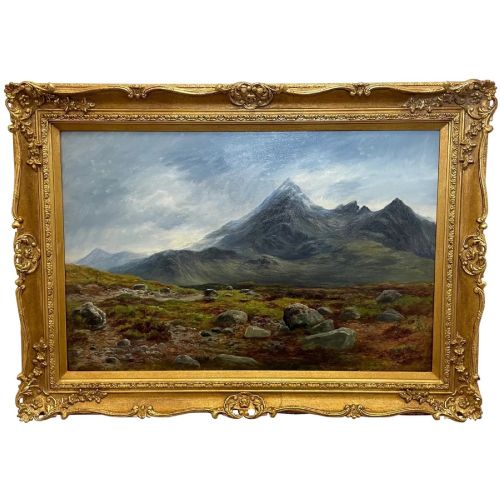
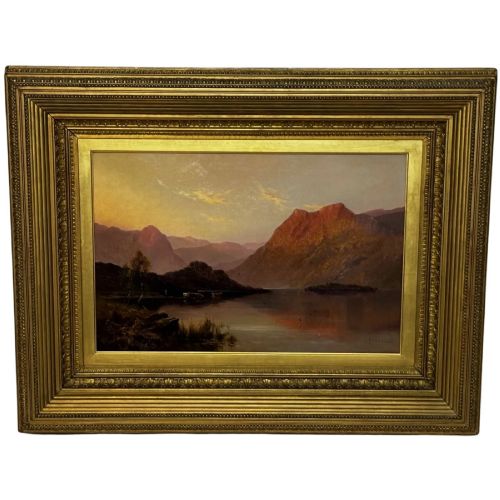
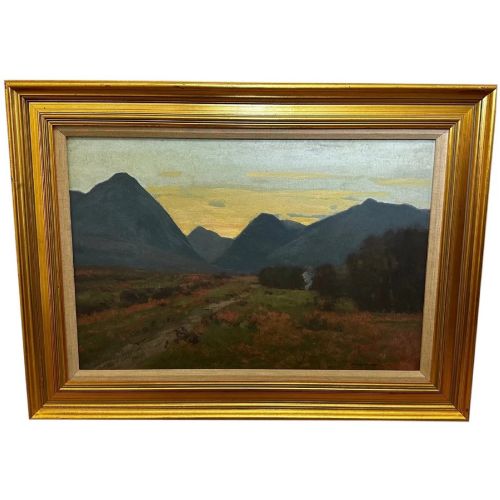
A mountain landscape canvas brings the grandeur of peaks, lochs, and crags directly into an interior.
Mountain Landscape Canvas
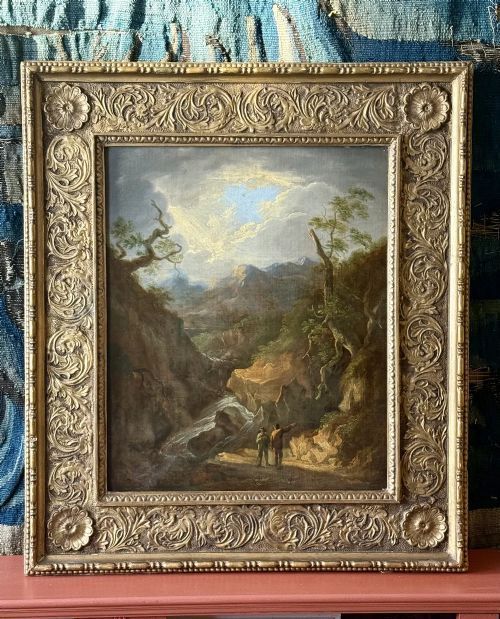
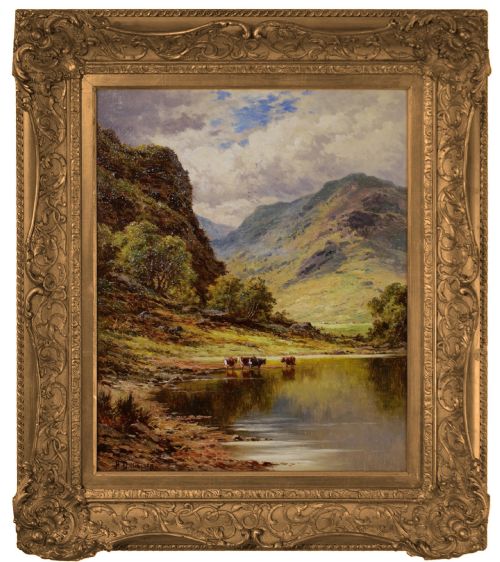
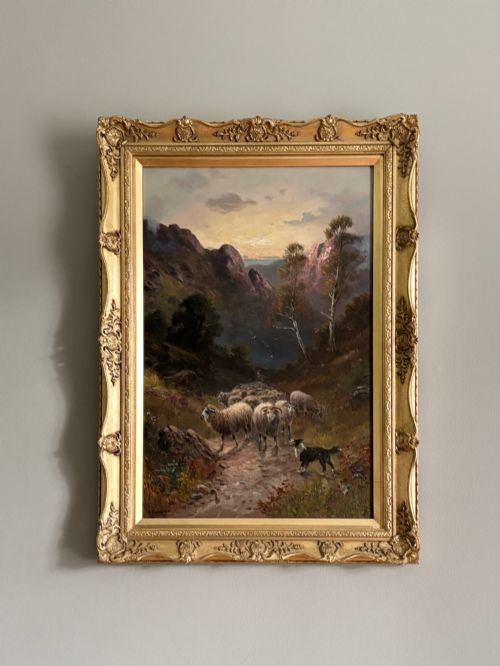
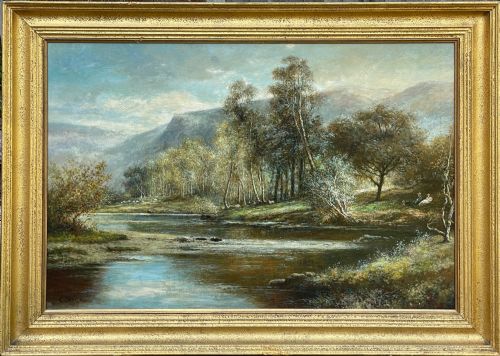
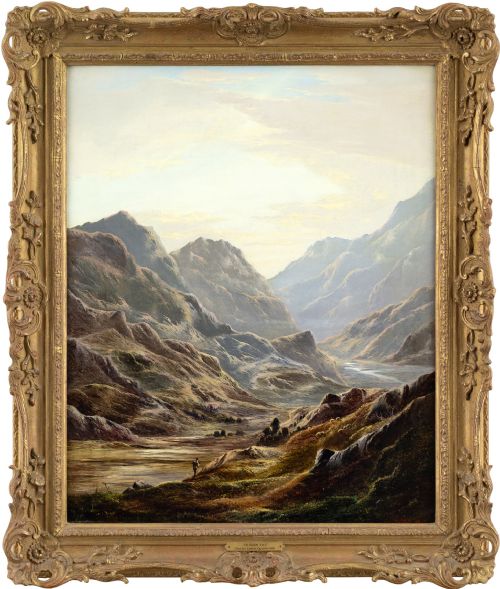
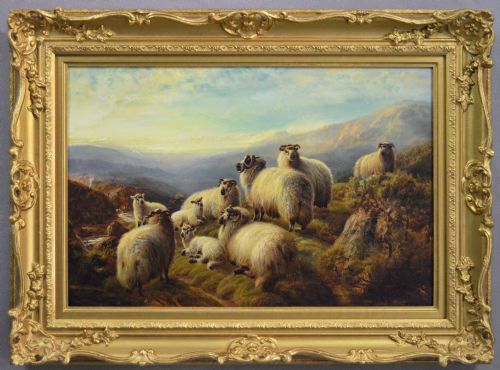
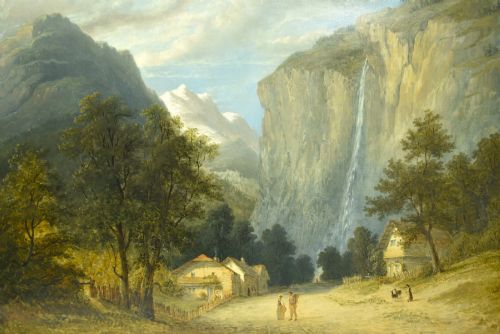
A mountain landscape canvas captures scenic elevations, from Scottish Highlands and Welsh ranges to the Alps, rendered primarily during the nineteenth and early twentieth centuries. These artworks frequently portray lakes, rivers, cattle, and sheep nestled beneath towering summits under changing weather.
Buyers encounter Victorian romanticism and Scottish impressionism alongside continental schools. The predominant formats are traditional oil paintings on stretched canvas, often housed within their original gesso and giltwood frames.
Materials and construction methods
Artists painted primarily with oil on woven canvas, utilising the textured fabric to hold rich layers of pigment and build atmospheric depth in skies and rugged terrain. Wood stretchers provided the internal framework to keep the canvas taut.
Surviving works are frequently framed in moulded wood adorned with gesso and gilt, adding weight and a decorative border that complements the painted mountain vistas.
Subjects range from Highland cattle and cascading waterfalls to serene lakes nestled beneath snow-capped Alpine peaks.
Assessing quality in painted landscapes
Quality rests in the handling of light, brushwork precision, and the balance of the composition. Superior examples convey atmospheric perspective through subtle colour shifts rather than flat washes.
The integrity of the canvas and the preservation of the original giltwood frame heavily influence the standing of a piece.
William Beattie-Brown RSA·Alfred Fontville de Breanski Jr·George Houston RSA RSW·Benjamin Barker of Bath·Henry H. Parker·Sidney Richard Percy·Charles Leslie·William Henry Mander
The Mountain Landscape Canvas Glossary
- Oil on Canvas
- Pigment mixed with drying oil applied to a woven fabric support. This combination allows for rich blending and textured impasto work.
- Giltwood
- Timber carved and coated with gold leaf or a gold-coloured finish. It provides a reflective border for traditional landscape frames.
- Gesso
- A plaster-like mixture applied to wooden frames as a base for gilding. It enables intricate moulded ornamentation.
- Scottish Impressionism
- A regional painting style focusing on light and spontaneous brushwork. It captures the shifting moods of northern terrain.
- Romanticism
- An artistic movement emphasising emotion, awe, and the sublime power of nature. It dominates nineteenth-century depictions of rugged peaks.
Mountain Landscape Canvas: Frequently Asked Questions
How do I date a mountain landscape canvas?
Examine the style of the clothing in any figures, the stretcher construction behind the canvas, and the composition of the pigments. Victorian and nineteenth-century works often feature distinct romantic or impressionistic brushwork.
Makers' signatures, handwritten inscriptions on the reverse, and the profile of the giltwood frame provide further clues to the exact decade of creation.
Where should I hang a large landscape?
Position the canvas on a principal wall with balanced ambient lighting to highlight the details of the peaks and valleys. Avoid direct sunlight to protect the oil pigments from fading over time.
Ensure the wall structure can support the weight of the canvas and its heavy gesso frame securely.
Are these paintings original artworks?
Every piece recorded here is an original hand-painted work on canvas, not a reproduction or print. Artists applied oil paints directly to the fabric surface during the nineteenth and early twentieth centuries.
Brush texture and canvas weave confirm the hand-painted nature of each individual scene.
How do I care for antique canvas art?
Keep the artwork in a stable environment away from extreme temperature fluctuations and dampness. Dust the surface and frame gently with a soft, dry brush without applying pressure to the canvas.
Avoid using water or chemical cleaners on either the oil paint or the giltwood frame.