

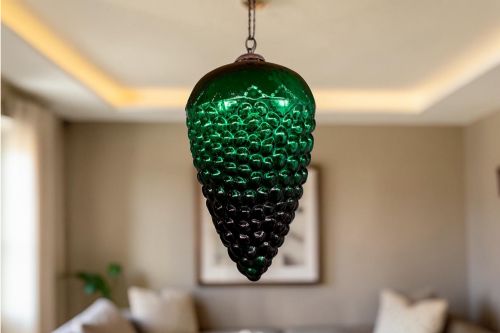
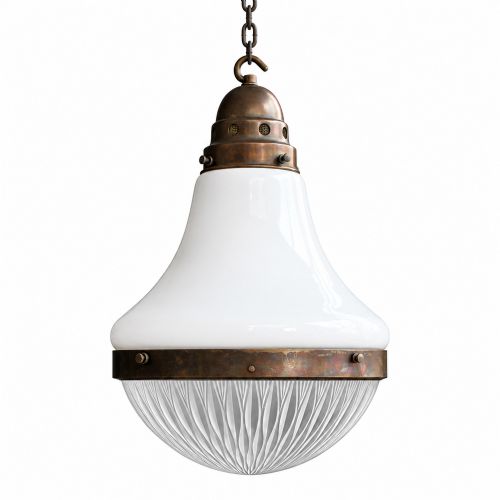
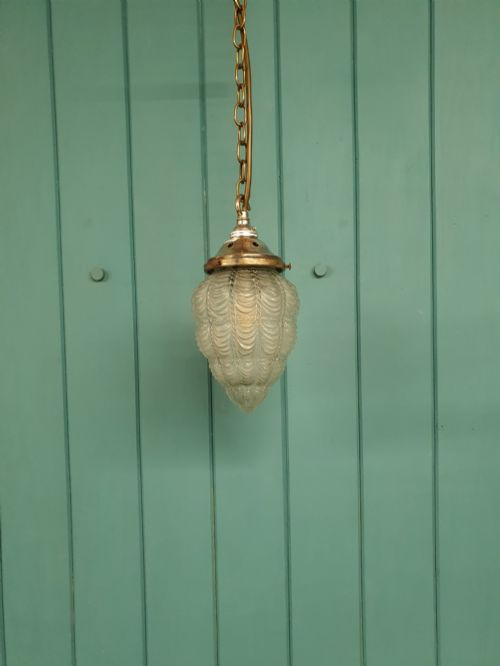


Moulded Glass Fixture
A moulded glass fixture brings soft illumination and striking geometric form to a room through pressed or frosted panels paired with metal hardware.
Moulded Glass Fixture
A moulded glass fixture is primarily found in ceiling lights, pendant lights, wall lights, and chandeliers originating from the Edwardian era through the 1930s. These pieces encompass styles such as Art Deco and French Chateau, providing both functional illumination and decorative presence.
Buyers browsing this selection most frequently encounter ceiling lights and pendant lights dating from the 1920s and 1930s. These often feature frosted glass, pressed glass, or opaline glass mounted on brass, chrome, or bronze frames.
How they were made
Makers utilised pressed and frosted glass techniques to create heavy panels and shades with tactile surface patterns. Molten material was forced into metal moulds to produce repeatable geometric or figural reliefs.
The glass components were then secured to structural mounts made of brass, chrome, copper, or gilt metal. These metal frameworks were cast or turned to support the weight of the thick glass shades.
Moulded Glass Fixture Retail Price Guide 2026
Typical asking prices for moulded glass fixture among the pieces listed under this phrase on Sellingantiques today, from the lower quarter to the upper quarter. They describe what is for sale here now, not the wider market.
A set of four gilt metal flying cherub light fittings brings winged ornamentation directly to the ceiling.
What varies in quality
The crispness of the glass moulding defines the upper tier of pieces, where geometric patterns and figurative details remain sharp and well-defined. Lesser examples exhibit softer relief work and surface inconsistencies from worn moulds.
The choice of structural metal also marks a distinction in grade, ranging from simple finished metals to substantial bronze or chrome frames. Superior pieces integrate the metal mount seamlessly with the glass components.
Lalique·Jean Gauthier
The Moulded Glass Fixture Glossary
- Pressed Glass
- Glass formed by pressing molten metal into a mould using a plunger. This technique allowed manufacturers to produce ornate decorative patterns efficiently.
- Frosted Glass
- Glass treated to scatter light and create a translucent appearance. It softens glare while retaining a smooth touch.
- Opaline Glass
- An opaque or semi-translucent glass that diffuses a milky glow. It appears frequently in period lighting for its gentle light distribution.
- Slip Shade
- A moulded glass shade designed to slide into a metal frame or arms. These pieces form the characteristic stepped profiles of Art Deco fixtures.
Moulded Glass Fixture: Frequently Asked Questions
What periods do these lights come from?
These fixtures span from the Edwardian period through the 1910s, 1920s, and 1930s. The majority of available examples reflect the distinct geometry of the Art Deco era.
Earlier pieces lean towards Edwardian refinement, while later items embrace bolder French Chateau and industrial influences.
How were these fixtures originally used?
They served as primary or ambient light sources in domestic interiors, suspended from ceilings or mounted directly onto walls. Pendants and chandeliers illuminated central living spaces, while smaller sconces lit hallways and bedrooms.
Table lamps provided task lighting for desks and side tables using the same heavy glass shades.
What materials make up the frames?
The structural mounts and frames consist of metals such as brass, chrome, copper, bronze, and gilt metal. These were chosen to support the heavy glass shades safely.
Finish choices often mirrored the prevailing interior design trends of the decade.