



Moulded Drawer Fronts
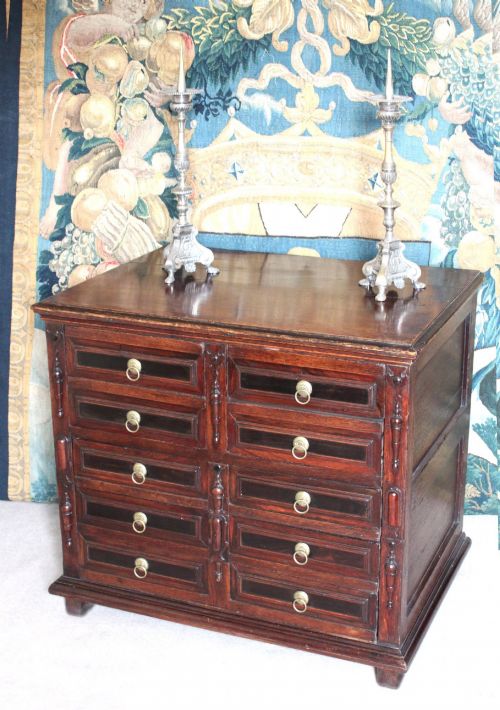
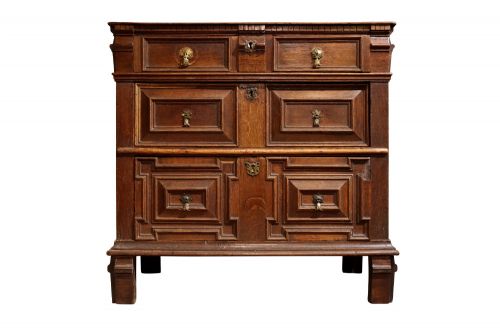
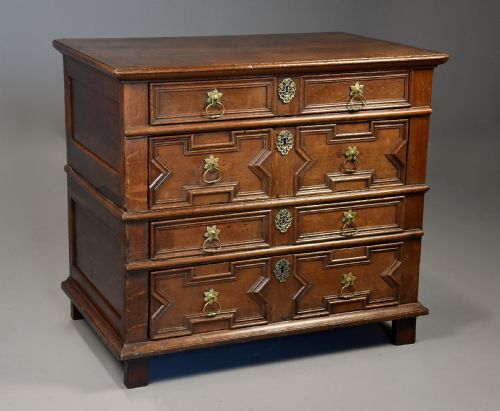
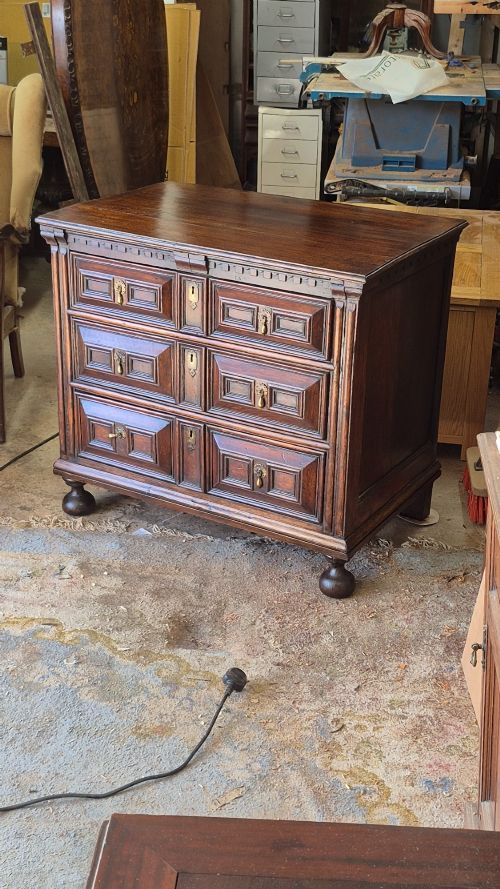
Moulded drawer fronts bring deep geometric relief and rich timber grain to early English and European case furniture.
Moulded Drawer Fronts
When you search for moulded drawer fronts, you are looking at early case furniture where timber faces are shaped with raised mouldings, often arranged in geometric patterns. These pieces primarily date from the seventeenth and eighteenth centuries, with occasional revival pieces appearing from later periods.
The most common forms on this page are oak chests of drawers, servers, low dressers, and writing bureaux. These survivors display structural joinery typical of the Stuart, Jacobean, and early Georgian eras, alongside French Provincial examples.
Makers of these items utilised solid hardwoods to create functional storage enriched by applied decoration rather than flat surfaces. The resulting pieces range from small drawer chests to larger servers, all defined by their distinctive front elevations.
Materials and construction
Carpenters constructed these pieces predominantly from solid oak, sometimes embellishing the drawer fronts with contrasting timbers such as snakewood and fruitwood decoration or wood inlay. These woods were shaped by hand to form the characteristic geometric panels and applied mouldings.
Hardware played an integral part in the manufacture, incorporating brass and iron drop handles, escutcheons, and hinges that complemented the heavy timber construction. Joinery relied on traditional pegged frames and solid board backs rather than modern adhesives.
Some seventeenth-century drawers are so tightly fitted they act like bellows, gently puffing air out when you push them home.
Judging quality in early drawer fronts
Quality rests in the crispness of the timber moulding and the complexity of the geometric patterns applied to the drawer faces. Pieces that retain their original applied decoration without later replacement show superior craftsmanship.
The condition of the surface finish also distinguishes better examples, particularly those exhibiting a faded, untouched patina developed over centuries of handling. Integration of contrasting woods like snakewood and fruitwood further elevates the visual merit of the piece.
The Moulded Drawer Fronts Glossary
- Geometric moulding
- Raised wooden strips applied to a flat surface in repeating geometric shapes such as rectangles, octagons, and crosses. This technique created rich surface texture on seventeenth-century cabinetwork.
- Patina
- The surface sheen and mellow colour developed by timber over long periods through use, waxing, and exposure to light. A desirable patina shows age authentically without heavy modern intervention.
- Snakewood
- A dense, heavily figured tropical hardwood utilised for decorative banding and contrasting details. Its distinct markings made it popular for high-status cabinet work.
- Bureau
- A writing cabinet featuring a sloping fall-front that opens to reveal internal compartments and small drawers. Early examples often incorporate moulded drawer fronts beneath the writing surface.
- Dresser
- A low side table or server equipped with drawers, used for serving food and storing household goods. Seventeenth-century versions frequently feature geometrically moulded drawer faces.
Moulded Drawer Fronts: Frequently Asked Questions
What is a moulded drawer front?
A moulded drawer front is a timber drawer face decorated with applied shaped strips of wood, frequently arranged in geometric patterns. These designs add depth and shadow to the front elevation of early chests and bureaux.
Cabinetmakers working in the seventeenth and eighteenth centuries used this technique to ornament otherwise plain solid wood surfaces, creating tactile furniture that caught the light.
How do I date an oak chest?
Dating an oak chest involves examining the construction methods, handle hardware, and timber patination. Seventeenth-century pieces typically feature hand-riven oak boards, pegged joinery, and deep geometric mouldings.
Later revival pieces or eighteenth-century examples often display subtle shifts in proportions, secondary woods, and hardware styles that distinguish them from earlier Stuart or Jacobean work.
Where were these pieces used?
These chests, bureaux, and servers originated as practical storage furniture for principal rooms in prosperous homes. They held textiles, documents, and domestic valuables while serving as prominent decorative items.
Today, they function well in hallways, living rooms, and bedrooms, providing robust surface space and deep drawers suited to modern storage needs.
How do I care for antique oak?
Antique oak furniture requires stable indoor humidity levels and protection from direct heat sources to prevent the timber from splitting. Regular gentle dusting with a dry cloth keeps the surface clean without stripping the aged finish.
Occasional application of traditional beeswax feeds the wood and helps maintain the deep patina developed over centuries of use.