

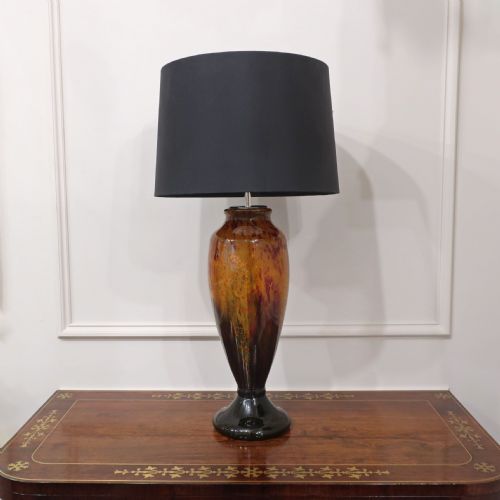


Mottled Art Glass
These mottled art glass pieces bring rich colour and texture to a room, catching the light through marbled finishes and layered swirls.
Mottled Art Glass
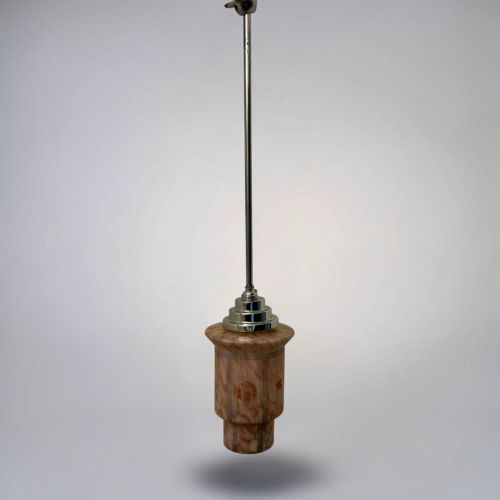
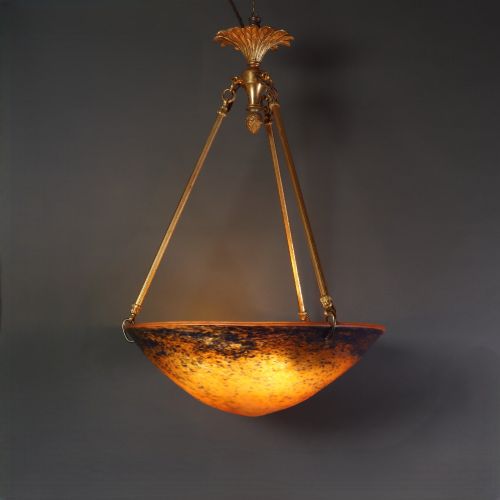
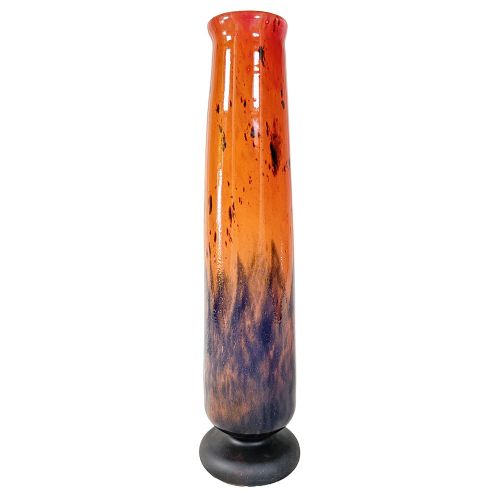
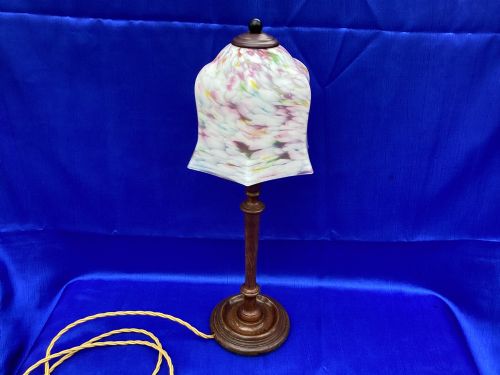
When you search for mottled art glass, you encounter a selection of vessels and light fittings spanning the nineteenth century up to the nineteen-thirties. The most common forms on this page include vases, bowls and table lamps, alongside ceiling lights and wall brackets.
The objects draw on periods such as Art Nouveau, Art Deco and the Arts and Crafts movement, reflecting the design priorities of those eras. Scottish production is well represented by Monart glass bowls and vases, while French workshops provide notable examples of blown glass and mounted lighting.
Lighting ranges from complete chandeliers and hanging plafonniers to table lamps utilising marble, brass, chrome and wrought iron bases. Vases appear in various shapes, from simple baluster profiles to baskets, goblets and posy vessels.
What varies in quality
Quality depends heavily on the control of the glass matrix and the richness of the colour distribution within the piece. The finest examples show a deliberate, balanced dispersion of mottled tones rather than muddy or uneven patches.
The standard of the accompanying metalwork also distinguishes the range. Original mountings in wrought iron, brass or chrome that integrate seamlessly with the glass indicate superior craftsmanship compared to later or replacement fittings.
Mottled Art Glass Retail Price Guide 2026
Typical asking prices for mottled art glass among the pieces listed under this phrase on Sellingantiques today, from the lower quarter to the upper quarter. They describe what is for sale here now, not the wider market.
Listings feature items made from glass, enamel, marble, wrought iron, brass and chrome across nineteenth-century and twentieth-century periods.
Charles Schneider·Daum·Monart Glass·Dugué·Muller Freres
The Mottled Art Glass Glossary
- Mottled glass
- Glass containing patches of cloudy colour or uneven tones distributed through the material. This effect is achieved by manipulating powders or metallic oxides during the blowing process.
- Plafonnier
- A shallow bowl-shaped ceiling light fixture designed to sit close to the ceiling. These fittings frequently utilise mottled or frosted art glass shades.
- Pate de verre
- A glass-crafting method where finely crushed glass is packed into a mould and fused in a kiln. The technique produces a dense, sugar-textured surface with subtle colour graduation.
- Baluster vase
- A vessel featuring a rounded body that tapers upward into a narrow neck, resembling the shape of a traditional architectural baluster.
- Enamel inclusions
- Coloured glass or enamel particles fused into the body of the main vessel during blowing. They create suspended flecks and patterns beneath the smooth outer surface.
Mottled Art Glass: Frequently Asked Questions
How do I clean mottled art glass lighting?
Dust the glass gently with a soft, dry cloth to remove surface particles. For more thorough cleaning, detach the shade from any metal mountings if possible and wipe it down with a damp cloth using mild soap.
Avoid submerging pieces that feature delicate metalwork, brass frames or wiring in water. Dry the glass completely before reattaching it to the light fitting.
Were these glass shades made for electricity originally?
Many lighting components from the early twentieth century were produced during the transition period between gas lighting and electric illumination. Some plafonniers and chandeliers were manufactured specifically for electricity, while others were adapted from oil or gas configurations.
It is common to find period light fittings with modern wiring installed to meet contemporary safety standards. The glass shades themselves generally date to the production years indicated.
What is pate de verre?
Pate de verre translates as glass paste, a kiln-casting technique where powdered glass is mixed with a binder and packed into a mould. When heated, the particles fuse together to create a dense object with a distinctive frosted or granular texture.
This method allows makers to blend multiple translucent colours across the surface of a bowl or lamp shade. The resulting texture diffuses light softly through the mottled walls.