



Mother of Pearl Inlay Caddy
These mother of pearl inlay caddy pieces catch the light with shimmering shell panels set into rich timber and lacquer, offering a tactile slice of the past for any surface.
Mother of Pearl Inlay Caddy
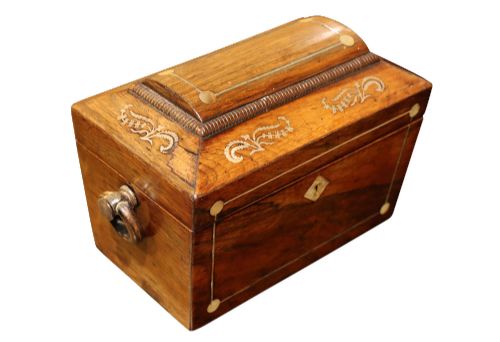
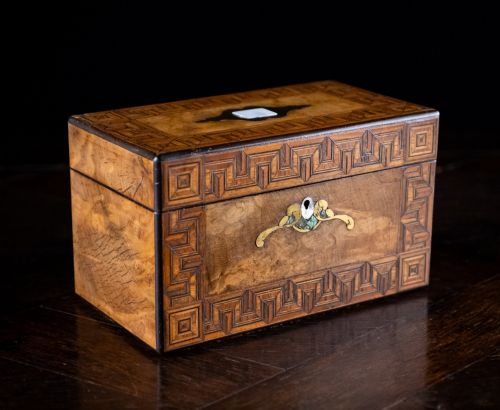
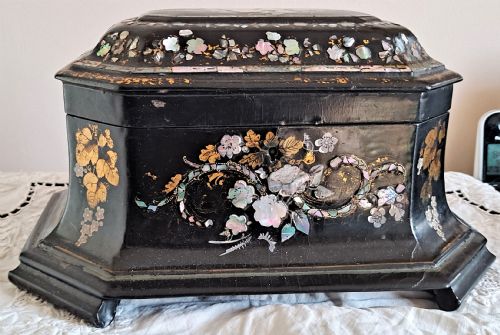
A mother of pearl inlay caddy is a small lidded box designed originally to store tea, though surviving examples on this page span several closely related forms including decorative boxes, keepsake boxes, sewing boxes, table cabinets, and desk accessories.
The objects seen here originate predominantly from the nineteenth century, taking in the Georgian, Regency, William IV, and Victorian periods.
Buyers are most likely to encounter rosewood and papier-mâché tea caddies, alongside walnut, coromandel, and thuya wood boxes decorated with iridescent shell motifs.
Materials and construction
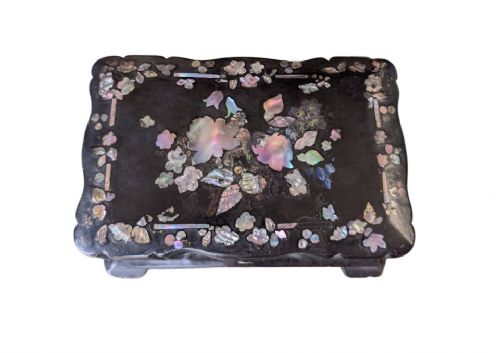
Maker's hands combined dense hardwoods like rosewood and walnut with papier-mâché and lacquer bases, carving thin plates of mother-of-pearl into floral, foliate, and bird shapes.
Inlaid sections were pressed flush into prepared recesses within the timber or dark lacquer, often accompanied by brass stringing, parquetry, or gold leaf highlights.
Mother of Pearl Inlay Caddy Retail Price Guide 2026
Typical asking prices for mother of pearl inlay caddy among the pieces listed under this phrase on Sellingantiques today, from the lower quarter to the upper quarter. They describe what is for sale here now, not the wider market.
Assessing quality
Quality rests upon the precision of the inlay work and the harmony between the iridescent shell and the underlying timber or lacquer surface.
Pieces at the higher end display intricate, well-preserved figural or foliate motifs with intact engraving on the shell and dense, richly grained timbers.
The Mother of Pearl Inlay Caddy Glossary
- Mother-of-Pearl
- The iridescent inner layer of certain mollusc shells, valued for its shimmering colour play when cut into thin decorative plaques. It is frequently employed in nineteenth-century box decoration.
- Papier-mâché
- A composite material made from paper pulp or layers of paper bound with glue, pressed and dried into a rigid form. It provides a smooth dark surface ideal for mother-of-pearl inlay.
- Sarcophagus Shaped
- A box form featuring a sloping, pedestal-like profile reminiscent of classical monumental tombs. This silhouette is common among nineteenth-century tea caddies.
- Parquetry
- A geometric mosaic of wood pieces used for surface decoration on boxes and furniture. It appears alongside shell inlay on certain walnut pieces.
- Stringing
- Thin inlay lines of contrasting wood or brass used to outline panels and edges on wooden boxes. It frames the central decorative elements.
Mother of Pearl Inlay Caddy: Frequently Asked Questions
What was a tea caddy used for?
A tea caddy served as a secure container for storing valuable dry tea leaves when tea was an expensive commodity.
Most contained internal lidded compartments to keep different varieties separated and fresh.
How do I care for a mother of pearl box?
Keep wooden and papier-mâché boxes away from direct sunlight and sudden temperature shifts to protect the delicate shell inlay.
Dust gently with a dry, soft cloth and avoid liquid polishes that can seep beneath the edges of the shell.
How do I date a rosewood caddy?
Dating relies on combining the overall box shape, such as a sarcophagus profile, with the construction of the interior compartments and the style of the inlay.
Nineteenth-century examples often transition from Regency geometric austerity to ornate Victorian floral and bird motifs.
What is papier-mâché?
Papier-mâché is a durable moulded material formed from paper layers or pulp mixed with adhesive binders.
When lacquered and polished, it yields a deep black finish that contrasts sharply with iridescent shell inlay.