




Moorish Marquetry Table
These moorish marquetry table pieces combine intricate geometric patterns with rich dark woods, offering a striking focal point for any room.
Moorish Marquetry Table
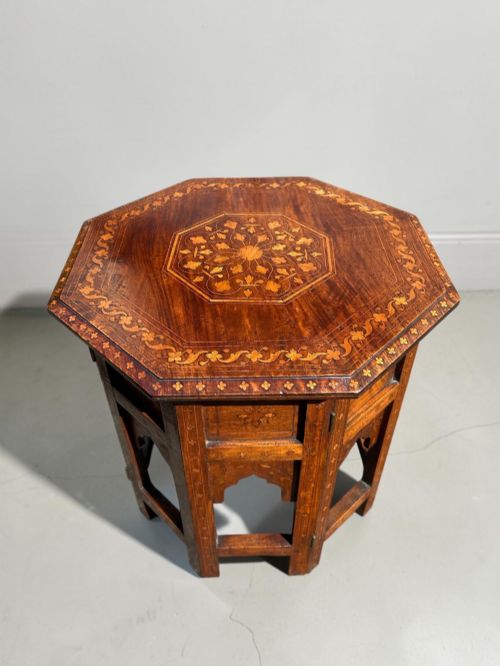
When you search for a moorish marquetry table, you encounter decorative occasional and side tables defined by complex geometric surface patterns. These pieces emerge primarily from the nineteenth century, reflecting the widespread Victorian taste for exotic revival furniture and Eastern craftsmanship.
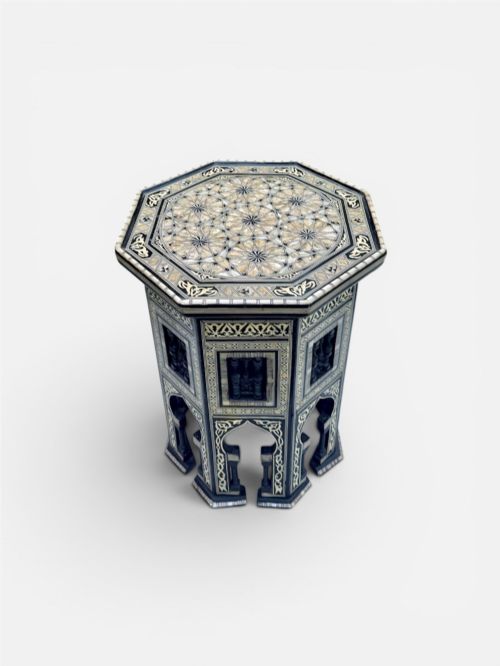
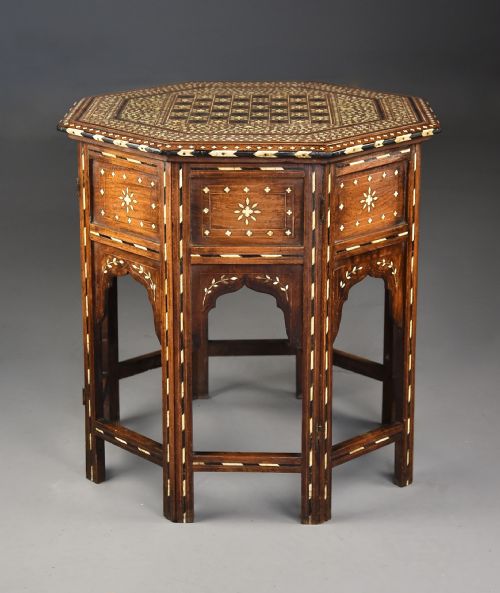
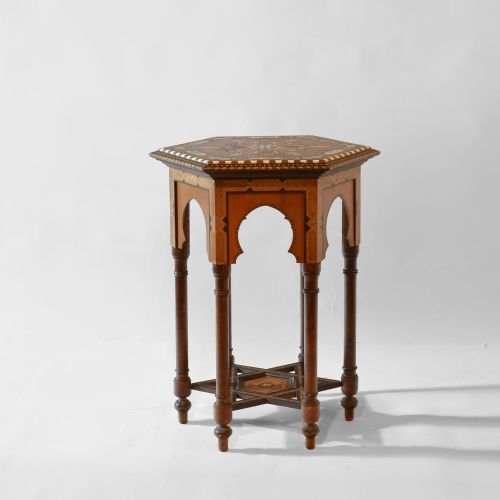
The octagonal form dominates the selection, accompanied by hexagonal tables and occasional console designs. Originating from various traditions including Anglo-Indian workshops, Damascus production, and Liberty and Co retail offerings, these items bring distinct architectural silhouettes into domestic interiors.
Buyers most frequently meet nineteenth-century examples featuring multi-sided tops and intricate surface decoration. Alongside these, occasional twentieth-century iterations and Italian Renaissance revival bone-inlaid pieces appear, broadening the stylistic range within this specific category of antique tables.
Materials and construction
The construction relies on dense timbers such as walnut, rosewood, ebony, teak, and various fruitwoods to form the structural core. Artisans then meticulously inset contrasting elements into the wooden surface to create elaborate geometric and floral motifs.
Surface ornamentation incorporates delicate pieces of bone and mother-of-pearl, cut precisely and fitted flush into the timber substrate. This combination of dark woods and luminous inlay generates the characteristic high-contrast visual texture associated with these tables.
Moorish Marquetry Table Retail Price Guide 2026
Typical asking prices for moorish marquetry table among the pieces listed under this phrase on Sellingantiques today, from the lower quarter to the upper quarter. They describe what is for sale here now, not the wider market.
Materials recorded across these tables include walnut, rosewood, ebony, teak, fruitwood, bone, and mother-of-pearl.
Judging quality and execution
Quality rests upon the precision of the inlay work and the tightness of the geometric joins across the wooden surface. Finer examples display meticulous alignment in the bone and mother-of-pearl sections, whereas lesser pieces show wider gaps in the wooden channels.
The selection of timber similarly dictates distinction, with dense woods like ebony and figured walnut elevating the piece. The complexity of the multi-sided frame construction and the depth of the carved detailing further separate standard production from exceptional craftsmanship.
Liberty and Co
The Moorish Marquetry Table Glossary
- Marquetry
- Decorative veneer work applied to a wooden structure to form geometric patterns or pictures. This technique utilises contrasting woods and organic materials to ornament the tabletop.
- Octagonal
- Having eight sides and eight angles. This polygonal shape is standard for many Middle Eastern and Anglo-Indian occasional tables.
- Mother-of-pearl
- The iridescent inner layer of mollusc shells used for decorative inlay. Artisans slice this material thin to create luminous highlights within wooden geometric designs.
- Moorish Revival
- An architectural and decorative style popular in the nineteenth century. It incorporates elements of traditional Islamic design into European and British furnishings.
Moorish Marquetry Table: Frequently Asked Questions
What are moorish marquetry tables?
These pieces are decorative low or occasional tables adorned with intricate geometric inlays of wood, bone, and mother-of-pearl. They reflect nineteenth-century European enthusiasm for Eastern and Islamic design traditions.
Craftsmen utilised regional timbers like walnut and teak to build multi-sided structures, creating portable surfaces suited for display rather than heavy dining.
How were these tables used?
Historical interiors utilised these items as occasional, side, or games tables to display decorative objects and lamps. Their compact footprints allowed them to fit easily into drawing rooms and parlours.
Because many feature folding or octagonal bases, they could be moved or stored according to the requirements of the household.
How do I live with one?
Position the table away from direct sunlight and extreme temperature fluctuations to protect the delicate wooden veneers and inlaid bone elements. Regular dusting with a soft dry cloth maintains the polished finish without harming the intricate joints.
Avoid placing damp items or unsealed plant pots directly on the surface, as moisture can lift the traditional adhesives used in the marquetry.
How do I tell periods apart?
Nineteenth-century examples often display specific retail associations or stylistic crossovers, such as Anglo-Indian Hoshiarpur production or Liberty retail designs. Earlier pieces, like sixteenth-century Italian items, rely more heavily on Renaissance bone inlay motifs rather than Islamic geometry.
Examining the wood species, backing construction, and the type of shell or bone used helps determine whether a piece belongs to the nineteenth-century revival period or later twentieth-century production.