





Moorish Accent Table
These moorish accent tables bring intricate geometric patterns and exotic wood craftsmanship directly into the modern interior.
Moorish Accent Table
A moorish accent table functions primarily as a small side, lamp, or occasional table designed to introduce distinct regional ornament into domestic spaces. The selection spans the nineteenth century through the early twentieth century, encompassing Victorian and later periods of production.
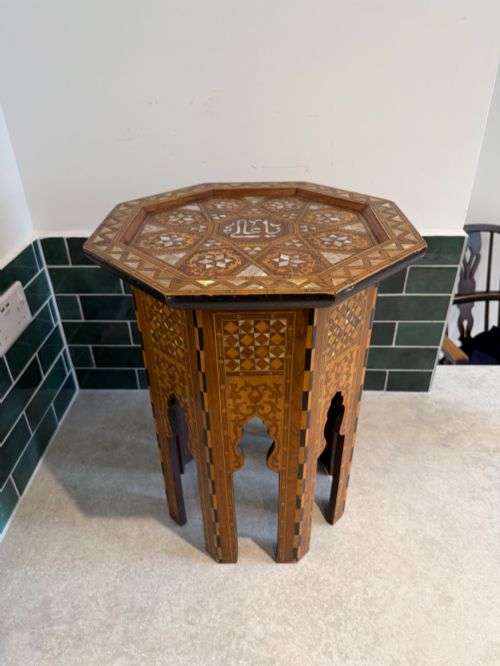
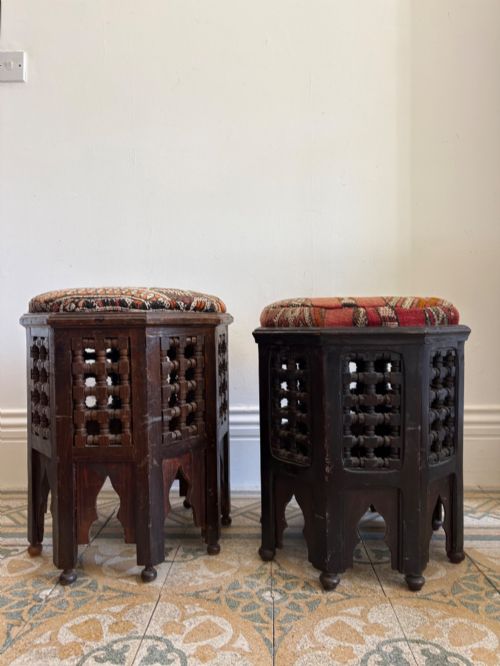
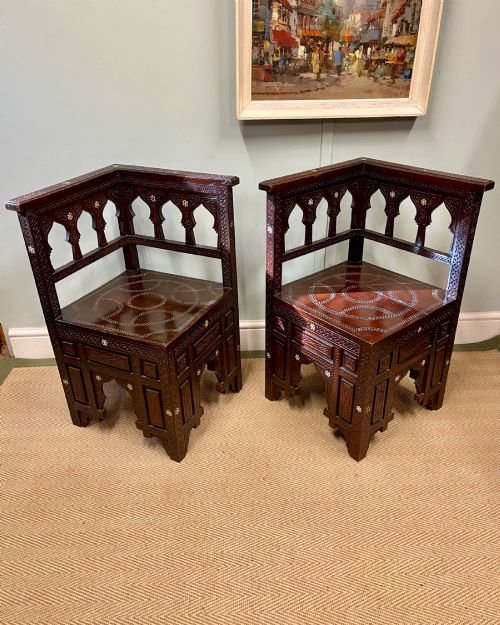
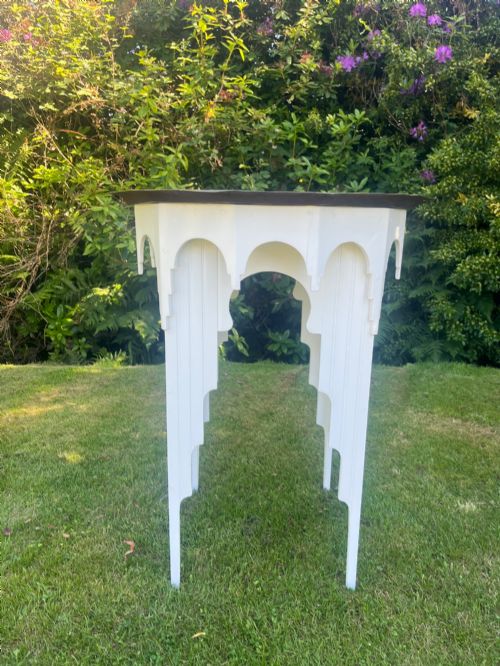
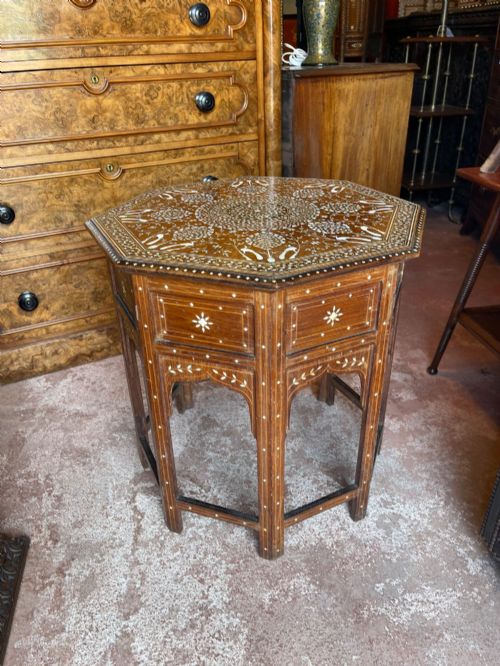
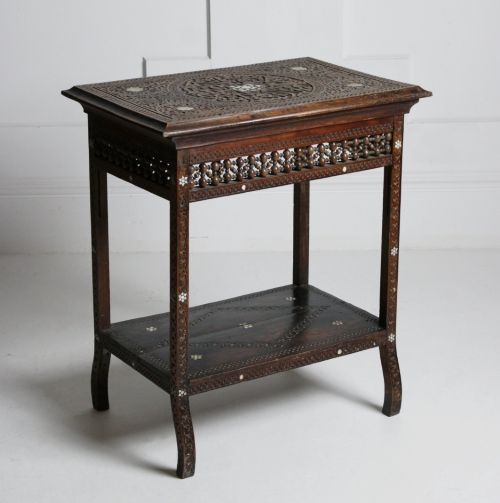
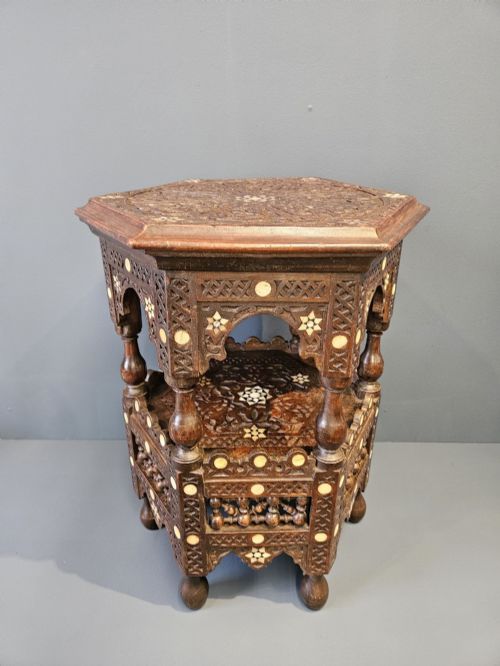
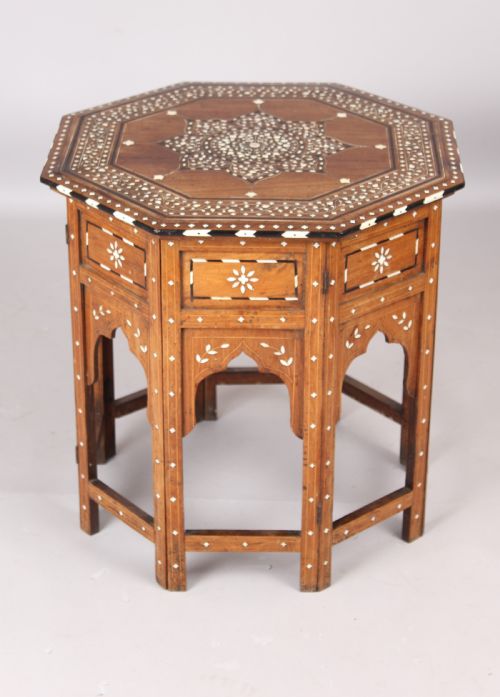
Most examples take octagonal or hexagonal forms, though square corner tables and round brass top variants also appear across the listings. These pieces frequently manifest as Syrian side tables, Hoshiarpur tables, or Anglo-Moresque occasional furnishings rooted in Moorish Revival and Persian styles.
How they were made
Construction relies heavily on dense hardwoods such as walnut, teak, rosewood, and mahogany, shaped through intensive hand carving. Artisans build up complex structural forms using local timbers suited to detailed surface work.
Surface decoration integrates intricate bone inlay, mother-of-pearl, and occasionally black lacquer or brass tops. These contrasting materials form elaborate geometric and floral motifs embedded flush into the wood.
Moorish Accent Table Retail Price Guide 2026
Typical asking prices for moorish accent table among the pieces listed under this phrase on Sellingantiques today, from the lower quarter to the upper quarter. They describe what is for sale here now, not the wider market.
Period assignments range from the Victorian era through the 1930s, with a strong concentration in the late nineteenth century.
What varies in quality
Quality rests principally upon the precision of the carving and the density of the inlay work. Finer pieces display crisp, deep relief and securely fitted tesserae of bone and pearl without noticeable gaps in the geometric lattices.
The choice and figuring of the underlying timber also distinguish finer examples from standard production. Well-chosen walnut or rosewood with intact, high-precision inlay represents the upper tier of these regional tables.
Liberty & Co
The Moorish Accent Table Glossary
- Moorish Revival
- An architectural and decorative style popular in the nineteenth century that mimics elements of traditional Islamic art from Spain and North Africa. It heavily influences the geometric woodwork seen on these tables.
- Hoshiarpur
- A city in Punjab known for producing intricate inlaid wooden furniture exported widely during the late nineteenth century. Tables from this tradition feature dense bone and shesham wood micro-mosaic work.
- Anglo-Moresque
- A hybrid design movement combining traditional Moorish geometric ornament with Western furniture forms suitable for Victorian homes. These pieces often incorporate drop flaps or specific European table heights.
- Octagonal
- Having eight sides, a common geometry for the tops and bases of these occasional tables. This shape allows for symmetrical placement of complex inlaid star patterns.
- Inlay
- A technique where pieces of contrasting material like bone or mother-of-pearl are embedded into recesses cut into the wooden surface. It creates a smooth, decorative mosaic effect.
Moorish Accent Table: Frequently Asked Questions
What is a moorish accent table?
A moorish accent table is a small occasional or side table influenced by Islamic design, typically featuring hand-carved woodwork and detailed geometric inlay.
These pieces served as decorative display surfaces in Victorian and Edwardian interiors, bringing exotic craftsmanship into Western homes.
How do I clean an inlaid table?
Dust the surface regularly with a soft, dry cloth to prevent dirt from settling into the intricate carved grooves and bone inlay.
Avoid liquid cleaners or harsh polishes, as excess moisture can loosen the delicate mother-of-pearl and bone tesserae from the wood.
Are these tables sturdy enough for daily use?
Most occasional and side tables from this tradition are built as light accent pieces rather than heavy-duty utility furniture. They handle lamps and small decorative objects comfortably.
Placing them away from heavy foot traffic protects the protruding carved edges and delicate inlay work from accidental knocks.
How can I tell the period?
Dating relies on examining the timber species, the style of the carving, and the specific nature of the inlay work. Nineteenth-century examples often display denser, more varied materials.
Attribution to firms like Liberty & Co or specific production hubs like Hoshiarpur helps narrow down the decade of manufacture.