






Moonlit Landscape
A moonlit landscape captures nightfall through maritime scenes, misty Scottish lochs, and quiet streets.
Moonlit Landscape
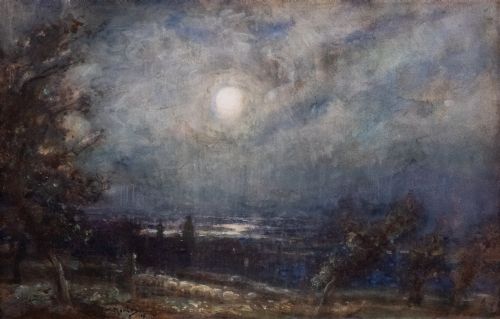
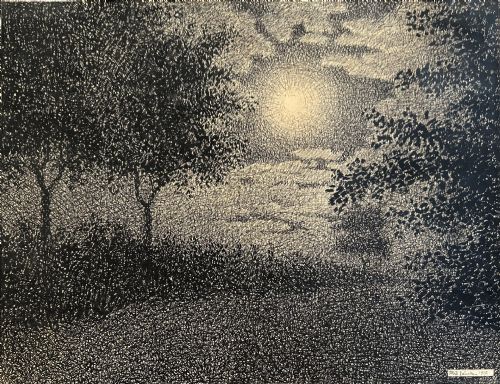
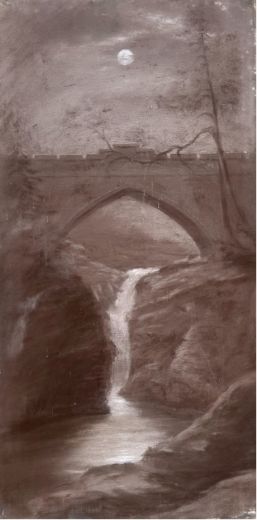
A moonlit landscape represents nocturnal scenery, moving from coastal waters and maritime shipping lanes to inland lakes, castles, and country views. These works capture the interplay of moonlight, shadow, and water reflections across various settings.
The examples gathered here span the nineteenth and twentieth centuries, encompassing Victorian nocturnes, Edwardian watercolours, and mid-century impressionism. Buyers frequently encounter oil paintings on canvas and delicate watercolours on paper reflecting these periods.
Regional British views feature prominently alongside continental scenes, taking in Scottish highlands, Medway shipping, and Provençal horizons. Painters utilise different scales, from intimate street scenes to expansive maritime sweeps.
How they were made
Artists deployed oil on canvas to build rich, layered dark tones and luminous highlights, capturing the specific glow of moonlight upon water or stone. Watercolour on paper allowed for swift, translucent washes to render misty atmospheres and fading evening light.
Charcoal served alongside paint on canvas for textured preparatory work or finished monochromatic studies, capturing the stark contrasts of late nineteenth-century Scottish scenery. Frames typically consist of carved and gilded wood complementing the dark palettes.
Moonlit Landscape Retail Price Guide 2026
Typical asking prices for moonlit landscape among the pieces listed under this phrase on Sellingantiques today, from the lower quarter to the upper quarter. They describe what is for sale here now, not the wider market.
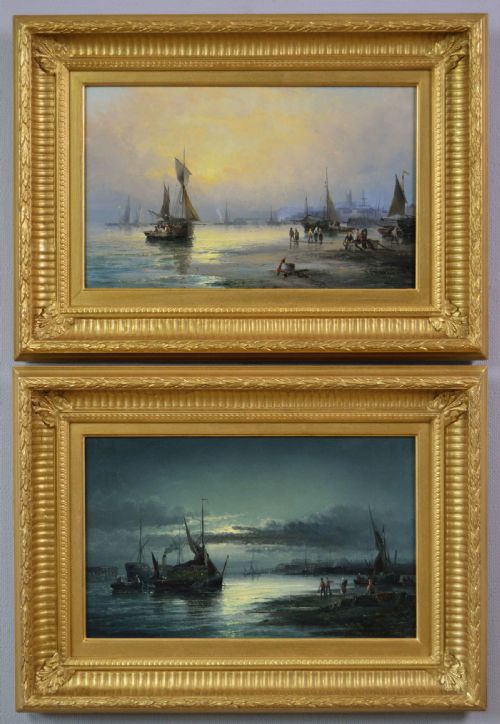
Artists occasionally chased the moon across multiple canvases, creating pairs of maritime views to double the midnight magic.
What varies in quality
Quality rests upon the handling of light and shadow, distinguishing works that achieve genuine atmospheric depth from those with flat or heavy transitions. Skilled brushwork conveys the motion of water and the subtle diffusion of light through night clouds.
Compositional balance separates fine examples, where elements like shipping vessels, ancient castles, or winding streets anchor the nocturnal expanse. The preservation of the original canvas, paper, and gilt wood frame also contributes to the standing of a piece.
Hans Harlander·Thomas William Morley·William Manners·Thomas Bush Hardy·George Cole·Hubert Thornley·Walter Meegan·William Crampton·Henri Joseph Harpignies
The Moonlit Landscape Glossary
- Nocturne
- A painting depicting a night scene, often focusing on the moody or romantic aspects of landscapes and seascapes after dark. This genre gained particular prominence during the Victorian era.
- Maritime Impressionism
- A style capturing light and movement in marine settings, prioritising atmospheric overall impressions rather than strict topographical detail. Artists often apply looser brushstrokes to render water and sky.
- Gilt
- A thin layer of gold leaf applied to wooden frames or decorative surfaces to add a reflective metallic sheen. This finish was widely utilised throughout the nineteenth and twentieth centuries.
- Wash
- A technique in watercolour painting where diluted pigment is applied across paper to create smooth, semi-transparent areas of colour. It often forms the background sky or water in nocturnal compositions.
- Scottish Romanticism
- An artistic movement focusing on the dramatic wilderness, ancient castles, and moody weather of Scotland. Works in this tradition emphasise emotional engagement with the landscape.
Moonlit Landscape: Frequently Asked Questions
What periods do these paintings come from?
The works span from the nineteenth century through the mid-twentieth century, capturing shifts in artistic approach across several decades.
Victorian and Edwardian eras are particularly well represented alongside early and mid-twentieth-century examples.
How should I hang a dark painting?
Dark nocturnal works require careful placement away from direct glare to prevent reflections on the glass or varnished canvas.
Positioning them near targeted picture lighting helps reveal the subtle tonal details hidden within the shadows.
Are these works painted outdoors?
Many night scenes were composed in the studio using preliminary sketches, charcoal studies, or watercolours executed on site.
The challenges of observing light at night meant artists relied on memory and rapid preparatory notes.
How do I care for antique watercolours?
Works on paper require protection from direct sunlight to prevent fading of the delicate watercolours and paper supports.
Displaying them in stable environments away from high humidity preserves the paper and framing materials.