




Monochrome Royal Portrait
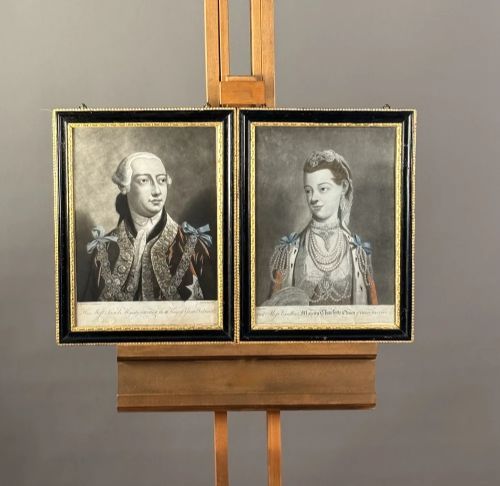
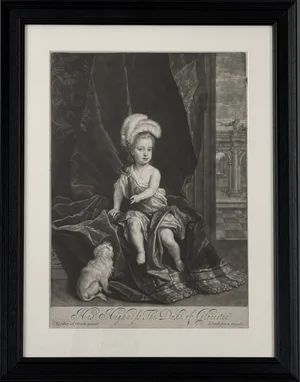
A monochrome royal portrait is a historic black and white likeness of a sovereign or court figure that brings immediate gravitas and royal lineage to a room.
Monochrome Royal Portrait
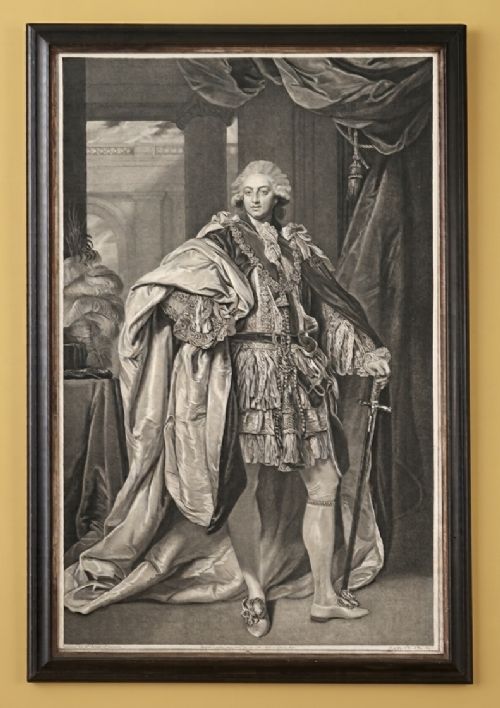
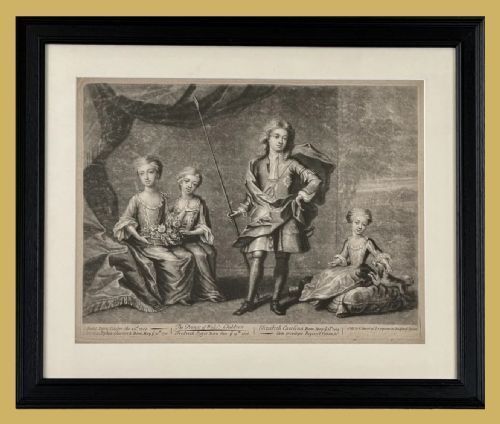
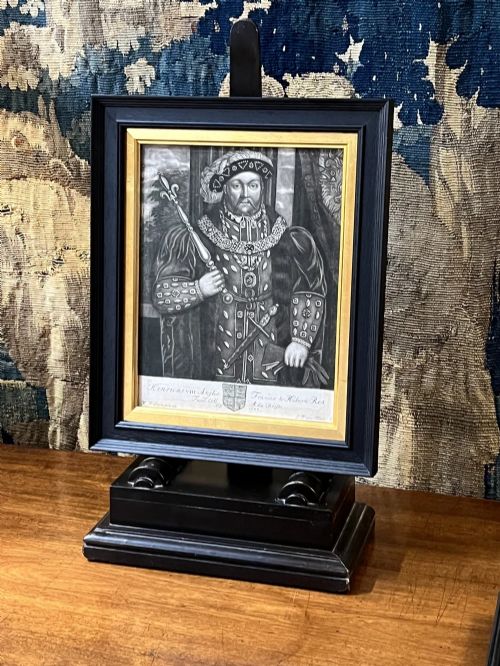
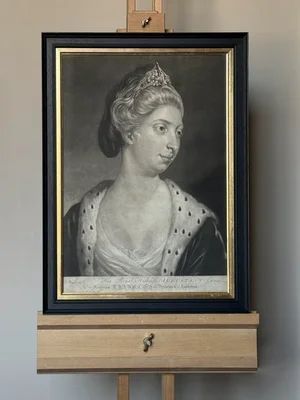
When you search for a monochrome royal portrait, you encounter historic prints and engravings depicting monarchs, princes and royal children from the seventeenth, eighteenth and nineteenth centuries. These works record the likenesses of figures such as Queen Caroline, Prince William Henry and King George III, capturing court hierarchy in ink on paper. The versions most commonly met on this page are eighteenth-century mezzotints, which translate grand painted oils into rich tonal prints.
The objects span Georgian, Regency, Baroque and British periods, reflecting the shifting portraiture styles of their eras. Most examples take the form of framed wall art, often preserved in period timber frames that complement the dark ink of the print. Collectors find both single plates and historic pairs depicting royal couples or family groups.
How they were made
Framing materials complete the construction, utilising timber, ebonised wood and gilt wood to house the delicate paper sheets. Some frames incorporate gold leaf accents and glass to protect the historic print from atmospheric damage. The physical structure relies on traditional framing techniques appropriate to the seventeenth, eighteenth and nineteenth centuries.
Listings feature paper, glass, timber and gold leaf materials across seventeenth, eighteenth and nineteenth-century periods.
What varies in quality
Quality in a monochrome royal portrait rests on the depth of the ink impression and the skill of the printmaker in translating the original painted portrait. Early mezzotint impressions yield rich, velvety blacks and crisp details, whereas worn plates produce greyer, flatter tones that lose the subtle modeling of the face and drapery. The fidelity of the transfer from artists like Thomas Murray or Sir Godfrey Kneller determines the artistic success of the plate.
The preservation of the paper and the integrity of the frame also define the tier of the piece. Clean paper sheets with strong contrasts sit at the upper end, alongside examples retained in their original ebonised wood or gilt wood frames. The reputation of the engraver, such as John Smith or John Faber Snr, marks a clear distinction in historical standing.
John Smith·Thomas Murray·John Faber Snr·Hans Holbein the Younger·Thomas Frye
The Monochrome Royal Portrait Glossary
- Mezzotint
- A printmaking process where the copper plate is roughened uniformly and smoothed selectively to create tones and shades. This technique allows for rich dark backgrounds and smooth transitions of light across the portrait.
- Engraving
- A method of cutting design lines directly into a metal plate with a sharp tool to hold ink. It produces sharp, defined lines rather than the tonal gradients typical of mezzotints.
- Ebonised wood
- Timber treated with a chemical stain or finish to imitate ebony. It provides a deep black frame that contrasts with the white paper of the print.
- Gilt wood
- Wood coated with a thin layer of gold leaf or gold paint. It frequently appears on Georgian and Regency frames surrounding royal portraits.
- Baroque
- An artistic style spanning the seventeenth and early eighteenth centuries characterised by drama and grandeur. Portraits from this period emphasise rich drapery and formal court presence.
Monochrome Royal Portrait: Frequently Asked Questions
What periods do these portraits cover?
The pieces span the seventeenth, eighteenth and nineteenth centuries, including the Georgian and Regency eras. They record British royalty from the Tudor period onwards through contemporary or later historic printings.
Most items listed belong to the eighteenth century, reflecting the peak of mezzotint portraiture in Britain.
How were these royal portraits displayed?
Historically, these framed prints hung in country houses, civic halls and private libraries to demonstrate loyalty to the crown. They served as affordable alternatives to painted oils while maintaining formal court dignity.
Today, they function as traditional wall art that anchors a period interior scheme.
How do I care for a paper print?
Protect the paper and ink by hanging the artwork away from direct sunlight, which causes fading and paper yellowing. Maintain stable room humidity to prevent warping of the historic timber frames and paper degradation.
Ensure the glass remains intact to shield the delicate engraving from dust and atmospheric moisture.
What is a mezzotint?
A mezzotint is an intaglio printmaking technique where the artist works from dark to light by roughening a metal plate. This method creates characteristic velvety blacks and subtle tonal shifts without relying on line work alone.
It became the preferred medium for reproducing grand oil paintings in monochrome during the seventeenth and eighteenth centuries.