




Monochrome Horse Art
Monochrome horse art captures equine form through stark ink and graphite tones, offering collectors a direct link to historic draughtsmanship.
Monochrome Horse Art
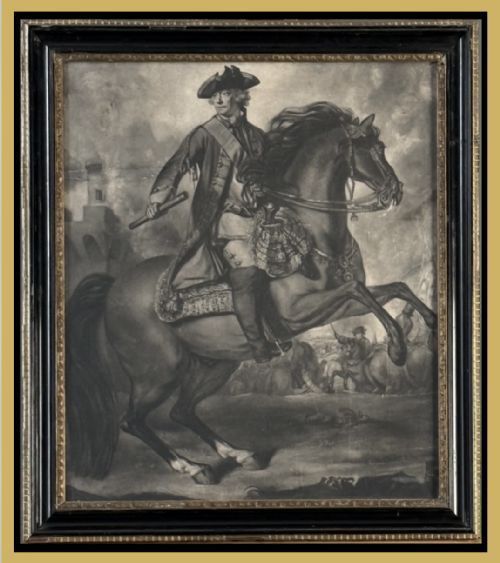
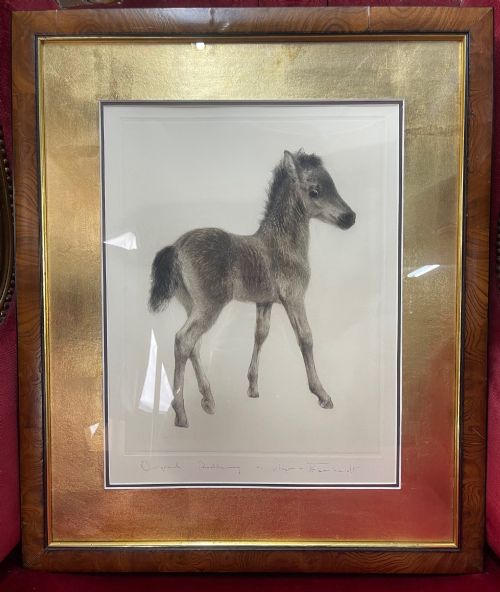
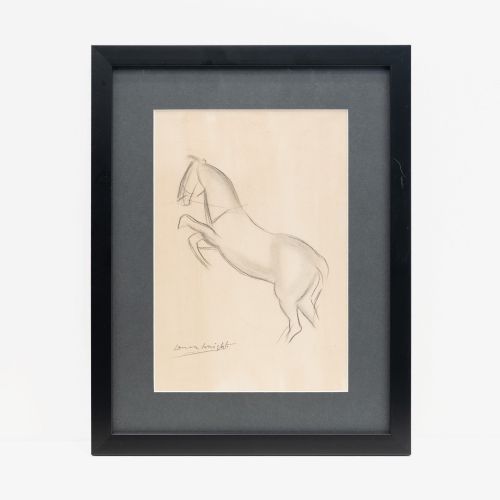
Monochrome horse art comprises historic works on paper depicting horses through ink, graphite, watercolour, and printmaking techniques. These pieces range from detailed etchings and drypoints to traditional watercolours and brass rubbings.
The selection on this page draws from several distinct eras, notably the eighteenth century, the Victorian period, and the early twentieth century. Works from these periods frequently capture equestrian subjects in varied contexts, from formal portraits to dynamic natural movements.
Buyers encountering this category will find a mix of framed prints, original drawings, and etchings created by notable artists and printmakers. Each piece reflects the specific aesthetic concerns of its originating era, whether Georgian formality or twentieth-century observation.
Materials and methods
Artists working within monochrome horse art relied heavily on paper supports paired with ink, graphite, or watercolour. Printmakers utilised copper or metal plates to produce fine etchings and drypoints, often securing rich tones through careful wiping and ink application.
Framed works frequently incorporate glass protection alongside wood frames, occasionally highlighted with gilt or gold leaf. Techniques such as brass rubbings also appear, transferring textured details onto paper surfaces using specialised rubbing mediums.
Monochrome Horse Art Retail Price Guide 2026
Typical asking prices for monochrome horse art among the pieces listed under this phrase on Sellingantiques today, from the lower quarter to the upper quarter. They describe what is for sale here now, not the wider market.
Listings feature paper, ink, graphite, and watercolour across periods spanning the eighteenth, nineteenth, and early twentieth centuries.
Judging quality in monochrome works
Quality in monochrome horse art rests upon the precision of the draughtsmanship and the crispness of the impression in printed works. Masterful handling of line and tone allows artists to convey muscular tension and equine anatomy with absolute economy.
The sophistication of the composition and the standing of the individual artist or printmaker further distinguish superior examples. Earlier impressions from etched plates retain sharper textural detail, whereas later strikes can lose the subtle nuances intended by the creator.
Edward Fisher·Sir Joshua Reynolds·Kurt Meyer Eberhardt·Dame Laura Knight·Herbert Dicksee·William Manners·William J Hodgson
The Monochrome Horse Art Glossary
- Drypoint
- A intaglio printmaking technique where the artist scratches directly into a metal plate with a sharp needle, producing a soft, velvety burr that holds ink. This method yields limited impressions due to the delicate nature of the burr.
- Etching
- A process where lines are bitten into a metal plate with acid before ink is applied and pressed onto paper. It allows for highly detailed tonal gradations.
- Mezzotint
- A printmaking method where the copper plate is roughened entirely to produce dark tones, then scraped and burnished to create highlights. This technique excels at rendering smooth tonal transitions.
- Brass rubbing
- The practice of placing paper over a monumental brass or relief and rubbing over it with pigment to capture the design. Early twentieth-century examples often record ancient or commemorative horse motifs.
- Watercolour
- A paint consisting of pigment suspended in a water-soluble vehicle, used here to create monochromatic washes of grey, brown, or black. It permits subtle atmospheric effects across historic paper.
Monochrome Horse Art: Frequently Asked Questions
What defines monochrome horse art?
Monochrome horse art consists of works executed without full colour, relying instead on the interplay of black, grey, brown, or white tones. These pieces use mediums like graphite, ink, etching, and monochrome watercolour to focus entirely on line, shadow, and form.
The absence of colour directs attention toward the anatomy of the animal and the skill of the draughtsman. This category spans multiple centuries, reflecting changing artistic approaches to equine subjects.
How should I display these pieces?
Historic works on paper require careful framing behind protective glass to guard against dust, handling, and environmental moisture. Direct sunlight causes fading in historic inks and watercolours, so placement away from bright windows is essential.
Keeping them in stable indoor conditions preserves the integrity of both the paper support and any accompanying wooden or gilt frames. Professional framing using acid-free materials prevents long-term degradation.
How do I identify the period of a work?
Dating monochrome horse art involves examining the paper type, framing style, and the characteristic technique of the period. Eighteenth-century mezzotints and nineteenth-century etchings each carry distinct technical markers and paper watermarks.
Signatures, artist attributions, and stylistic conventions further anchor a piece to a specific era. Comparing the subject matter to known historical periods helps narrow down the date of creation.
Are these works original art?
The category includes both unique original drawings and historical printmaking formats such as etchings and mezzotints. Original watercolours, graphite drawings, and drypoints represent one-of-a-kind creations by the artist's hand.
Historical printed works are created in limited editions from plates or blocks prepared by the maker. Each format holds its own place within historic art traditions.