


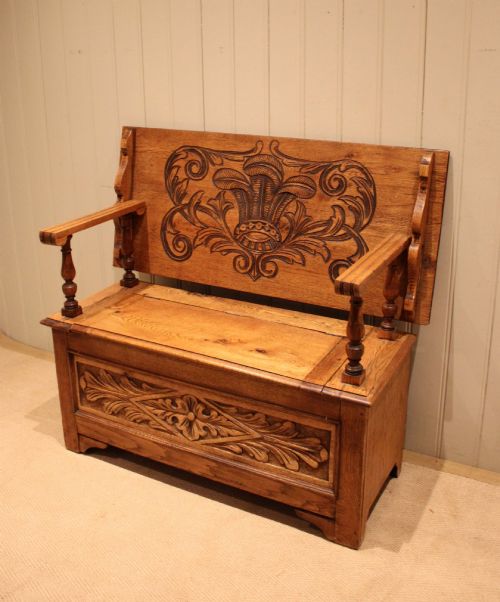



Monks Table Chair
These monks table chair pieces are versatile dual-purpose items that convert from seating to tables, offering practical historic charm for compact spaces.
Monks Table Chair
A monks table chair combines a seat with a pivoting back that folds flat to form a table top, serving as a dual-purpose piece for domestic interiors. The selections on this page span from 17th Century originals to later revival periods, alongside Georgian vernacular pieces.
Most examples encountered here are constructed from oak, ranging from dark finishes to golden tones, and take forms such as benches, settles, and armchair variants. Many include lift-up seats or drawers beneath the base for hidden storage.
Revival pieces from the Victorian and early twentieth century emulate earlier Jacobean and Gothic styles, featuring carved panel work and sturdy proportions suited to hallways and living spaces.
Materials and Construction
Solid oak provides the primary structural timber across the majority of these listings, chosen for its durability and suitability for heavy domestic use. Iron hinges and pivot mechanisms allow the wooden back to transition smoothly between the vertical seating position and the horizontal table configuration.
Joinery techniques involve traditional framing and panel construction, often enhanced by hand carving on the backs and arm supports. Secondary timbers such as pine appear in vernacular country pieces, while occasional examples incorporate fabric upholstery.
Monks Table Chair Retail Price Guide 2026
Typical asking prices for monks table chair among the pieces listed under this phrase on Sellingantiques today, from the lower quarter to the upper quarter. They describe what is for sale here now, not the wider market.
The listings here feature solid oak as the dominant material, complemented by iron fittings and occasional pine in vernacular pieces.
Evaluating Quality
The distinction between standard and superior pieces rests on the crispness of the carved detail and the integrity of the timber. Early examples demonstrate skilled hand craftsmanship in their joints and pivoting mechanisms, whereas later revival items rely on machine-cut elements.
Proportion and surface patination further differentiate the range, with well-preserved vernacular and 17th Century items showing deep natural ageing on the oak surfaces compared to heavier, darker Victorian treatments.
The Monks Table Chair Glossary
- Settle
- A wooden bench with a high back, solid arms, and often a enclosed base. This form provides protection from draughts in older interiors.
- Vernacular
- Domestic or agricultural objects built by local craftspeople using regional traditions and materials. These pieces prioritise utility and local character over high-style academic design.
- Chair Table
- An early multi-functional furniture form combining a chair or bench base with a table top. The folding mechanism allows the occupant to use the piece for dining or sitting.
Monks Table Chair: Frequently Asked Questions
How do you convert a monks table chair?
The upper back section pivots on side pins or hinges, allowing it to swing over the arms until it rests horizontally. This action transforms the high back into a flat table surface.
Securing pegs or gravity holds the top in place depending on the specific period and mechanism design.
Where were these pieces used historically?
These items stood in halls, kitchens, and living quarters where floor space remained at a premium. Their dual function saved room by combining dining and seating furniture into a single footprint.
Country houses and smaller cottages utilised them for daily meals and fireside sitting.
How do I spot a 17th century piece?
Early pieces display distinct tool marks, pegged mortise and tenon joinery, and timber shrinkage consistent with centuries of age. The oak develops a dry, deep patination that differs from later chemical stains.
Revival copies from the Victorian era often feel heavier and show mechanical sawing methods.
What is stored under the seat?
Many designs feature a hinged seat lid that opens to reveal a box cavity beneath. Historically, households used this compartment for blankets, documents, or dry goods.
Some examples also incorporate drawers built into the frieze below the seat base.