




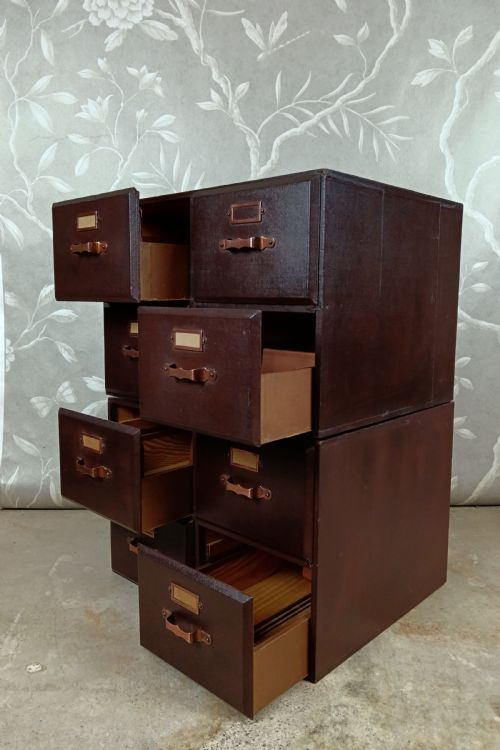


Modular Wooden Cabinet
A modular wooden cabinet offers adaptable storage across periods from the nineteenth century to the mid-twentieth.
Modular Wooden Cabinet
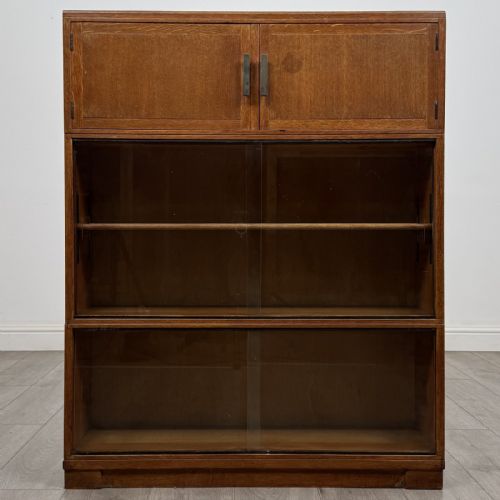
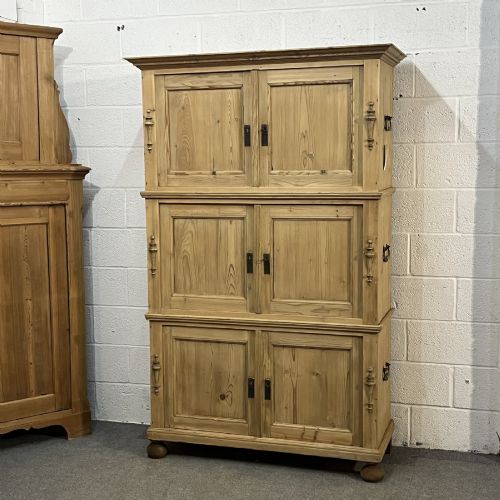
A modular wooden cabinet groups sectional bookcases, stacking barristers and sectional filing sets built to adapt to changing storage needs. Buyers seeking a modular wooden cabinet will regularly encounter sectional bookcases and stacking units constructed during the early twentieth century alongside nineteenth century campaign pieces.
The selections span styles from Edwardian and Arts and Crafts to Mid-Century Modern, Art Deco and Japanese Meiji. Formats range from tall narrow bookcases and library card filing drawers to step chests and display boxes.
How they were made
Construction relies heavily on solid mahogany, oak and European pine paired with brass hardware, glass panels, lead and metal components. Timbers are selected for structural durability in sectional units designed to stack or separate.
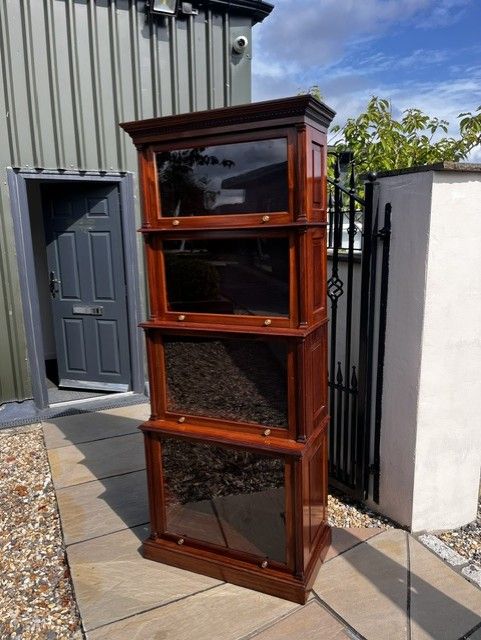
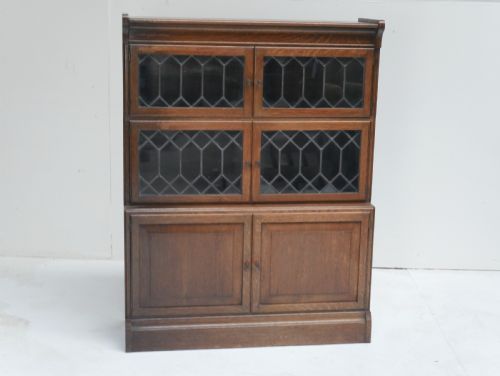
Sectional mechanisms allow individual tiers or boxes to lock together or lift apart. Glazed doors on stacking bookcases use glass held within wooden frames, often accompanied by brass pulls.
Modular Wooden Cabinet Retail Price Guide 2026
Typical asking prices for modular wooden cabinet among the pieces listed under this phrase on Sellingantiques today, from the lower quarter to the upper quarter. They describe what is for sale here now, not the wider market.
Listings feature oak, mahogany, and European pine across periods ranging from the nineteenth century through the 1950s.
What varies in quality
Quality rests in the precision of the sectional joinery and the selection of timber figures such as solid mahogany and oak. Pieces produced by recognised makers demonstrate tighter tolerances in stacking tiers and smoother operation of glazed lifting doors.
Secondary materials like brass hardware and internal metal framing differentiate standard utilitarian storage from finer cabinetwork. The integrity of the original finish and the crispness of moulded details define the upper tier of these modular forms.
Heals·Minty·Globe Wernicke
The Modular Wooden Cabinet Glossary
- Stacking bookcase
- A sectional bookcase composed of independent modular tiers that sit one upon another. These units often feature glazed up-and-over doors.
- Campaign cabinet
- Portable furniture designed for travel, typically featuring recessed brass handles and reinforced corners. These chests divide into modular sections for ease of transport.
- Kaidan tansu
- A traditional Japanese step chest configured in modular modular sections used for storage and stair access. They combine heavy timber construction with sliding or hinged doors.
- Sectional
- Furniture built in distinct modular parts that function independently or combine into a larger assembly. This construction allows flexible room arrangements.
Modular Wooden Cabinet: Frequently Asked Questions
What is a modular wooden cabinet?
A modular wooden cabinet is any sectional storage piece built from parts that stack or join together. These include barrister bookcases, library filing sets, and sectional display boxes.
They offer flexible configuration while utilising traditional materials like oak, mahogany, and pine alongside glass and brass.
How do stacking bookcases work?
Stacking bookcases consist of separate wooden tiers that rest on a base and support a top cornice. Each tier typically houses its own shelf and a glazed lifting door.
This modular design allows sections to be added, removed, or rearranged depending on space requirements.
Where were campaign cabinets used?
Campaign cabinets were built for military officers and travellers requiring sturdy, transportable storage. They utilise modular sections and protected corners to withstand frequent journeys.
Their robust construction makes them durable additions to modern interiors.
How do I identify a step chest?
A step chest, or kaidan tansu, is a Japanese modular storage unit built in the form of a staircase. Each step conceals drawers, cupboards, or sliding compartments.
These pieces combine functional access to upper levels with practical modular storage.