

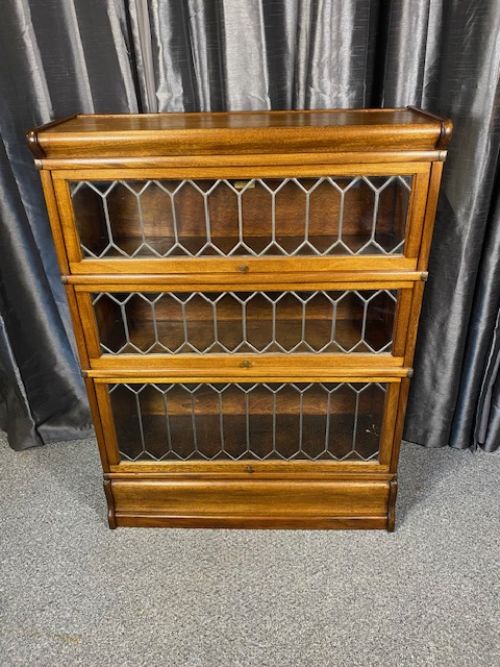


Modular Oak Display Cabinet
A modular oak display cabinet offers versatile storage through stacking sections, bringing period craftsmanship into modern rooms.
Modular Oak Display Cabinet
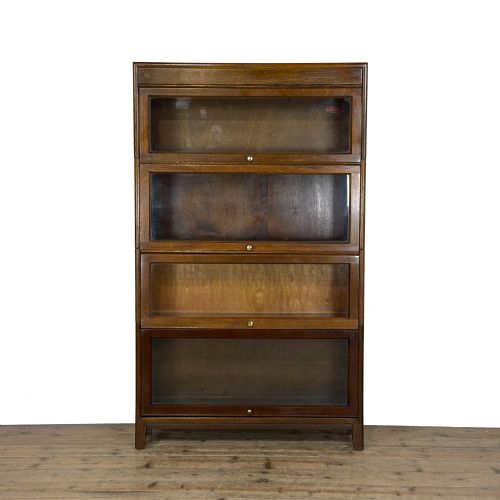
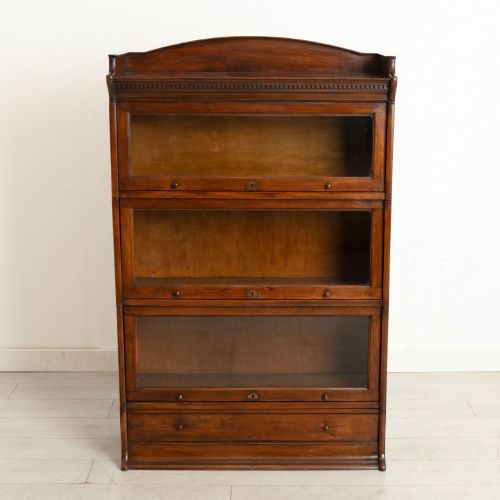
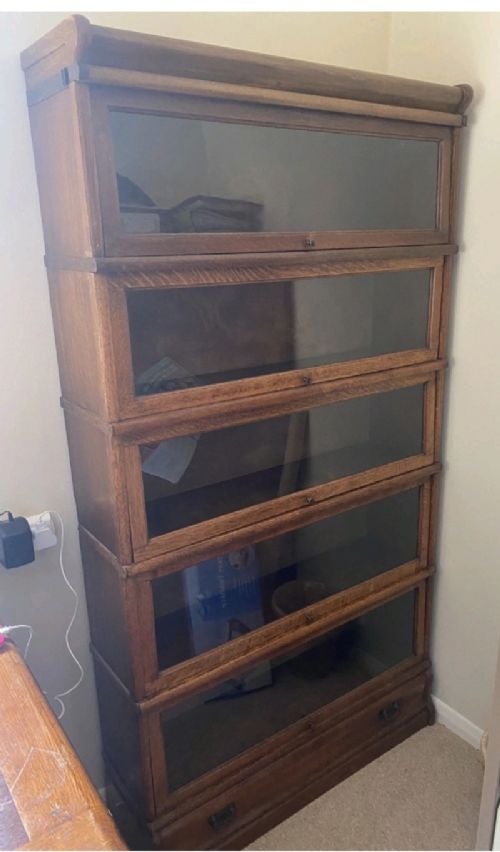
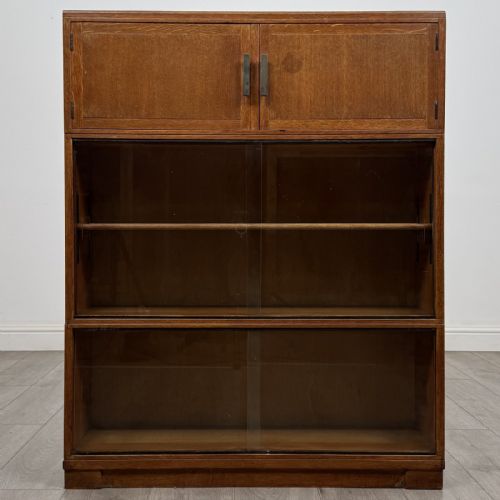
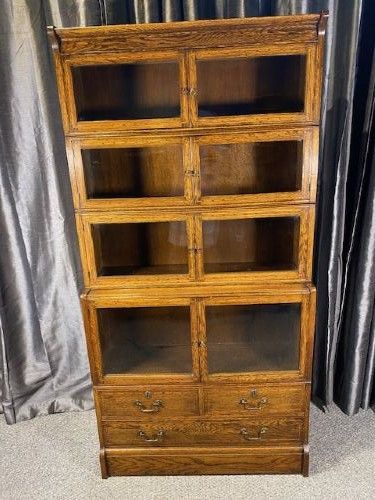
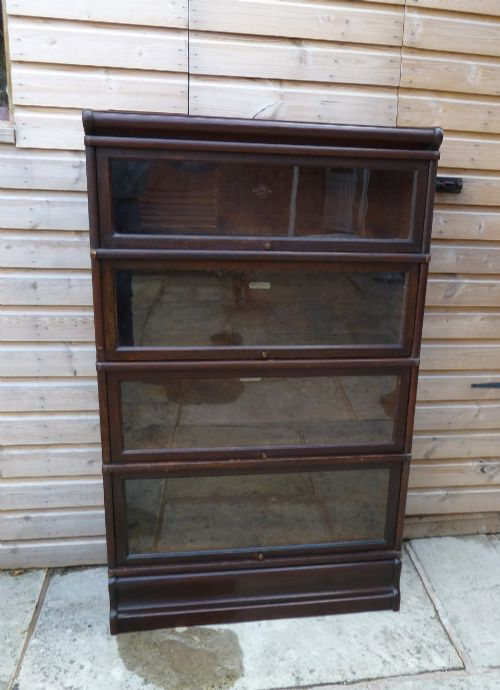
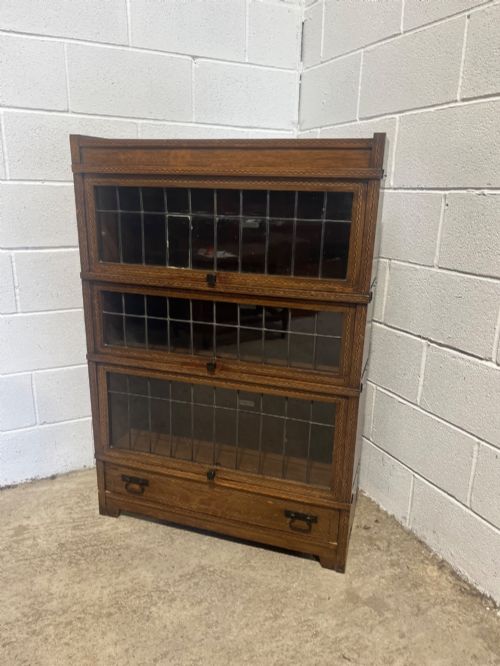
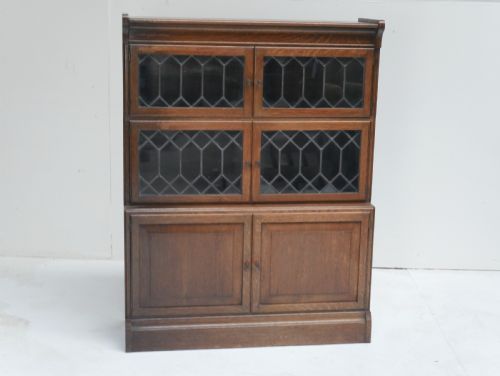
A modular oak display cabinet brings together sectional stacking units designed to hold books and display objects. These pieces appear across Edwardian, Arts and Crafts, Art Deco, and Mid-Century Modern periods, reflecting changing domestic needs.
Most examples found here take the form of Barristers bookcases, stacking bookcases, and shelving units. Makers such as Globe Wernicke, Minty, Lebus, and Heal's dominate the forms, alongside pieces from the Phoenix Gallery.
The construction relies on modular tiers, allowing sections to be added, removed, or rearranged. Glazed doors protect the contents while maintaining visibility across the wooden framework.
Materials and construction
Solid oak provides the primary structural timber, complemented by wood veneer, plywood, and wood inlay. Metal, brass, and lead appear in the hardware, hinges, and glazed door framing.
Makers utilised stacking mechanics to build sectional cabinets that lock together tier by tier. Glazing techniques incorporate clear glass and leaded panes to enclose the modular shelving compartments.
Modular Oak Display Cabinet Retail Price Guide 2026
Typical asking prices for modular oak display cabinet among the pieces listed under this phrase on Sellingantiques today, from the lower quarter to the upper quarter. They describe what is for sale here now, not the wider market.
Materials documented across these sectional units include solid oak, wood veneer, plywood, brass hardware, lead, and glass.
Factors influencing quality
The standard of timber selection and the precision of the stacking mechanism separate individual cabinets. Solid oak framing with intact wood inlay demonstrates higher production values than later veneer alternatives.
Original glass panes, functional brass hardware, and unaltered finishes maintain the integrity of sectional cabinets. Complete multi-tier configurations from established makers retain greater consistency across their stacked modules.
Globe Wernicke·Heals·Minty·Lebus·Phoenix Gallery
The Modular Oak Display Cabinet Glossary
- Globe Wernicke style
- A stacking bookcase design featuring modular glazed sections that lift and slide into the cabinet. This mechanism allowed owners to expand their shelving vertically.
- Sectional bookcase
- A shelving unit built from separate tiers that stack on top of each other without permanent fixings. Each tier functions as an independent box with its own shelf and door.
- Limed oak
- A wood finish treatment created by applying a white pigment to oak to highlight the grain. This technique gained popularity during the interwar decades.
- Leaded glass
- Small panes of glass joined together by lead cames to form decorative window patterns on cabinet doors. This method draws on Arts and Crafts traditions.
- Wood inlay
- Pieces of contrasting timber fitted into the surface of the oak to create decorative patterns. This ornamental detail appears on Edwardian examples.
Modular Oak Display Cabinet: Frequently Asked Questions
How do modular sections separate?
The individual tiers lift away from each other once the top cornice and base are removed. Each section operates as an independent wooden box.
Interlocking pins or simple gravity holds the modular levels in alignment without requiring permanent fixings or metal brackets.
Are the glass doors removable?
The glazed doors typically slide along internal tracks or swing outward on specialised pivoting arms. You can detach them for cleaning or transport by sliding them out of their housing slots.
Original glass often shows minor bubbles and slight surface variations indicative of early manufacturing methods.
Can I add extra tiers?
Matching extra sections depends on finding cabinets with identical dimensions and compatible stacking mechanisms from the same maker. Variations in depth and width across different periods prevent universal interchangeability.
Checking the manufacturer stamp helps confirm compatibility when sourcing additional modular tiers.
How do I clean the oak finish?
Dust the surfaces regularly with a dry, soft cloth to prevent grime buildup on the wood grain and carved details. Avoid silicone polishes that penetrate old finishes and attract dirt over time.
Apply a traditional beeswax sparingly to nourish the oak and maintain a natural protective sheen across the cabinet.