


Modernist Table Light
These modernist table light pieces bring the clean lines and industrial materials of the interwar years straight into your room.
Modernist Table Light
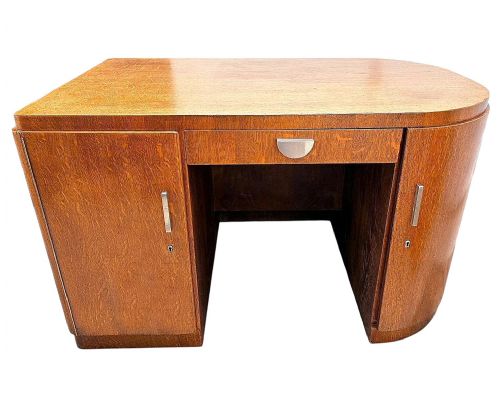
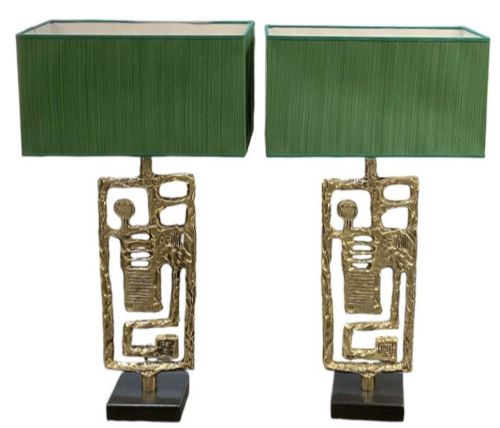
A modernist table light brings together the functional geometry of the 1920s and 1930s with industrial forms. You will encounter desk lamps, tall brass and chrome fittings, and sculptural pieces alongside related desks and tables.
The selections span the machine age, Art Deco and Bauhaus styles, capturing an era of experimental domestic design. French and English origins dominate the current items, often pairing metalwork with glass or bakelite.
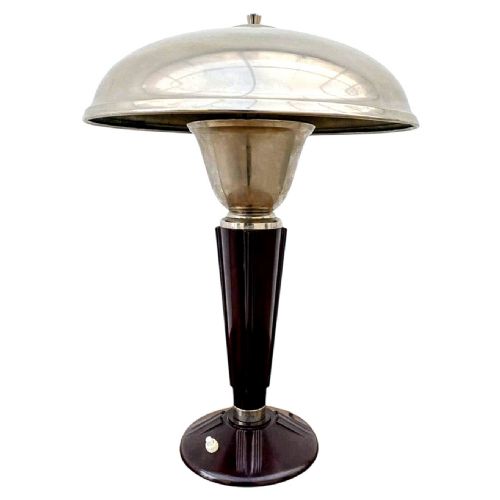
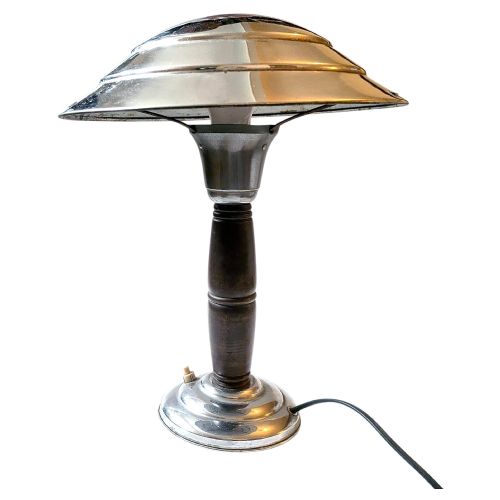
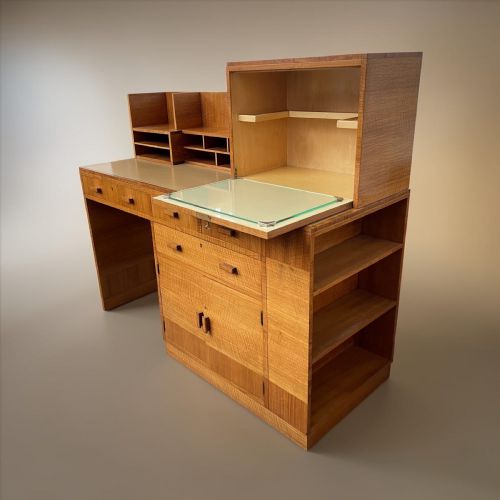
While the phrase points directly to illumination, the broader design vocabulary includes oak and mahogany occasional furniture matching the same austere aesthetic. The most frequent finds are chrome and bakelite desk lamps from around 1930.
Materials and construction methods
Makers utilised heavy chrome, brass, and nickel plating over base metals to create reflective, durable surfaces. Bakelite provided a novel moulded dark plastic element for lamp bases and switches.
Glass components such as opaline shades or Muller Bros glass parts were integrated to diffuse industrial illumination. Timber elements incorporate oak, blonde oak, and mahogany in straightforward geometric forms.
Metal spinning, casting, and plating techniques defined the fabrication of the lamp bodies. Wood pieces rely on clean joinery without excessive ornamentation.
Listings feature items exclusively from the 1920s, 1930s, and 1960s, constructed in chrome, brass, nickel, bakelite, glass, oak, and mahogany.
What distinguishes quality in these pieces
Substantial weight in the metal components and heavy gauge chrome or brass separate solid construction from lighter alternatives. The precision of the joints and the integrity of any moulded bakelite parts indicate superior output.
The integration of specialised glass shades, such as signed or marked French art glass, elevates the standing of a lamp. Original surface patination and intact maker markings provide further distinction among surviving examples.
Eileen Grey·Esperia·Heal's·Muller Bros·Hille·Elkington and Company
The Modernist Table Light Glossary
- Bakelite
- An early form of synthetic thermosetting plastic moulded into smooth, dark components for electrical fittings and lamp bases. It resists heat and holds a deep lustre.
- Chrome
- A thin plating of chromium over metal that provides a bright, reflective finish typical of machine age design. It prevents corrosion while delivering a sleek metallic surface.
- Opaline
- A milky, translucent white glass used for lamp shades to soften and diffuse electric light. It creates an even glow across workspace environments.
- Machine Age
- An early twentieth-century design movement celebrating industrial efficiency, steel, and mechanical forms. Its aesthetic relies on unadorned function and streamlined geometry.
- Bauhaus
- A German school of design emphasising functionalism, simple geometric forms, and industrial materials. Its influence appears in pared-down tubular metal lighting.
- Art Deco
- A popular style from the interwar period characterised by stylized motifs, symmetrical geometries, and luxurious materials. It bridges traditional craftsmanship and industrial production.
Modernist Table Light: Frequently Asked Questions
How do I identify a true period modernist table light?
Look for authentic construction materials such as heavy brass, nickel, chrome, and early moulded bakelite rather than modern reproductions. Period pieces typically date from the 1920s and 1930s, showing appropriate manufacturing techniques of the machine age.
Examine the wiring access, switch types, and weight of the base. Genuine examples from France or England often carry distinct maker signatures or characteristic glass shades from the era.
Where were these lights placed originally?
These lamps sat upon executive desks, drafting tables, and occasional side furniture in homes and offices. Their directional illumination suited the functional workspace requirements of the interwar period.
They complemented matching modernist furniture such as oak desks and dressing tables. Their architectural silhouettes served as both task lighting and sculptural room accents.
How should I care for chrome and bakelite?
Clean chrome and metal surfaces with a dry or lightly dampened soft cloth to preserve the plating. Avoid abrasive cleaners that can strip historical finishes or scratch the metal.
Bakelite requires gentle dusting and can be treated with mild mineral oils to maintain its sheen. Keep these materials away from excessive moisture and direct heat sources.
What styles accompany these lamps?
The lighting designs frequently align with Art Deco, Bauhaus, and machine age aesthetics. These styles share a vocabulary of clean lines, geometric forms, and industrial metals.
You will also find associated furniture items like occasional tables, desks, and dressers sharing the same stripped-back architectural approach. This creates a cohesive interior from the interwar decades.