


Silver Task Light
A silver task light brings industrial focus and gleaming metal lines to a room, channelling the purposeful energy of the early twentieth century.
Silver Task Light
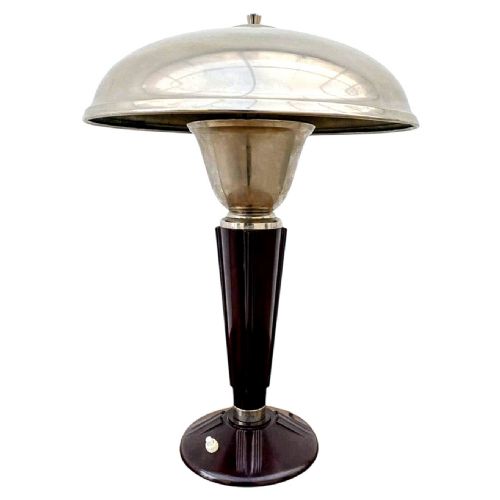
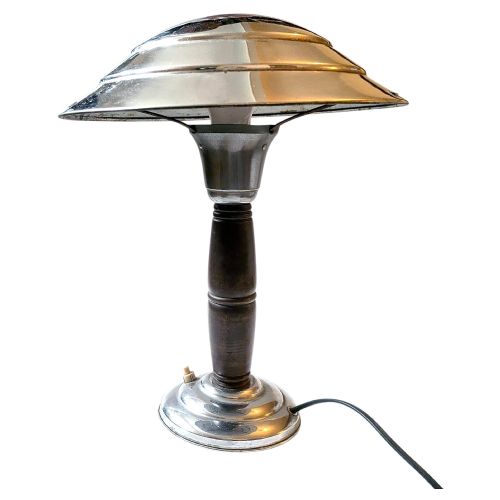
A silver task light encompasses adjustable desk lamps, table lamps and floor lamps designed for directional illumination during the Art Deco, Machine Age and Modernist movements of the 1920s and 1930s. These pieces originate from French and British workshops, reflecting a period when functional workspace lighting embraced clean geometric forms.
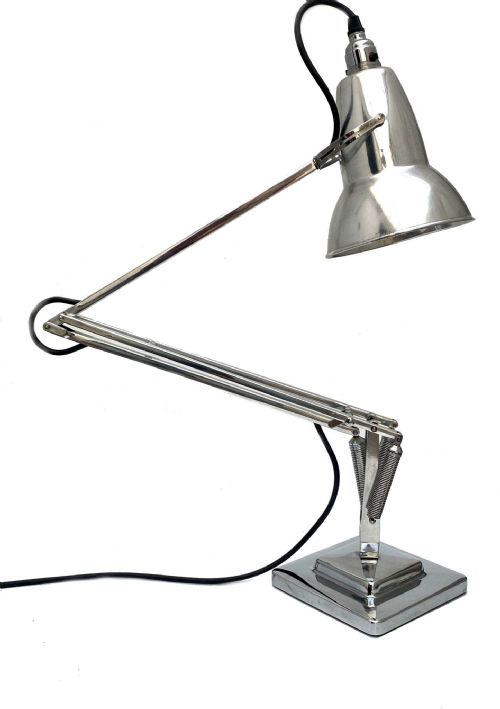
On this page, the version a buyer is most likely to meet is the chrome desk lamp, often featuring adjustable arms and articulated joints. These pieces combine utilitarian mechanics with polished metallic surfaces suited to period and contemporary interiors alike.
How they were made
These lamps rely on rigid metal construction utilising chrome, steel, nickel and brass to form sturdy bases, stems and shades. Metal spinning and stamping techniques shape the reflective components, while internal wiring and pivoting joints allow directional control.
Secondary elements incorporate glass shades, bakelite switches and wooden accents to contrast with the polished metallic finishes. The fabrication prioritises mechanical articulation, using tension springs and swivel joints to maintain position during daily use.
Bakelite components warm up slightly under the glow of an old bulb, carrying a faint scent of early plastics that bridges a century.
What varies in quality
Quality in these lamps rests on the precision of the engineering and the integrity of the original metal plating. Superior examples exhibit robust weight distribution, smooth articulation in the adjustable arms and seamless joints without excessive wear.
The distinction between standard production items and finer pieces lies in the sophistication of the mechanism, such as balanced spring systems, and the preservation of the original surface finish, whether polished chrome or brushed nickel.
The Silver Task Light Glossary
- Art Deco
- A design style characterised by sleek lines, geometric symmetry and modern materials that dominated the 1920s and 1930s. It represents the aesthetic shift toward streamlined industrial production.
- Machine Age
- An era of design spanning the interwar period that celebrated the aesthetics of heavy industry, technology and efficient function. Objects from this time often display exposed metal and utilitarian forms.
- Bakelite
- An early form of synthetic plastic prized for its durability and heat resistance during the early twentieth century. It frequently appears on switches, bases and handles of period lighting.
- Chrome plating
- An electrolytic coating of chromium over a base metal that provides a bright, corrosion-resistant finish. This treatment creates the signature mirror-like shine seen on interwar task lighting.
- Anglepoise
- A type of balanced spring-arm lamp invented in the 1930s that maintains position through constant tension. It remains a benchmark of adjustable mechanical design.
Silver Task Light: Frequently Asked Questions
What is a silver task light?
A silver task light is an adjustable desk or floor lamp designed to provide direct, focused illumination for reading or working. These pieces typically date from the 1920s and 1930s and are constructed from polished chrome, steel or nickel.
They reflect the functional design priorities of the Art Deco and Machine Age periods, combining mechanical articulation with metallic finishes.
Where were these lamps used?
These lamps were primarily designed for utilitarian spaces such as offices, drafting studios, workshops and banks where direct, adjustable light was essential for detailed tasks. Their functional efficiency made them standard equipment for professional environments.
Over time, their striking metallic appearance transitioned them into domestic settings, where they served as functional desk accessories and statement table lamps.
How do I style a vintage task light?
A vintage task light works well as a functional desk lamp in a home office or library, where its adjustable arm directs light precisely where needed. Pairing the polished chrome finish with wooden or leather surfaces creates a balanced contrast.
They also function effectively on sideboards or bedside tables, introducing industrial character and period geometry into contemporary or traditional interiors.