
Mirrored Vanity Table
A mirrored vanity table brings together practical morning routine and polished timber, offering a dedicated surface for daily grooming.
Mirrored Vanity Table
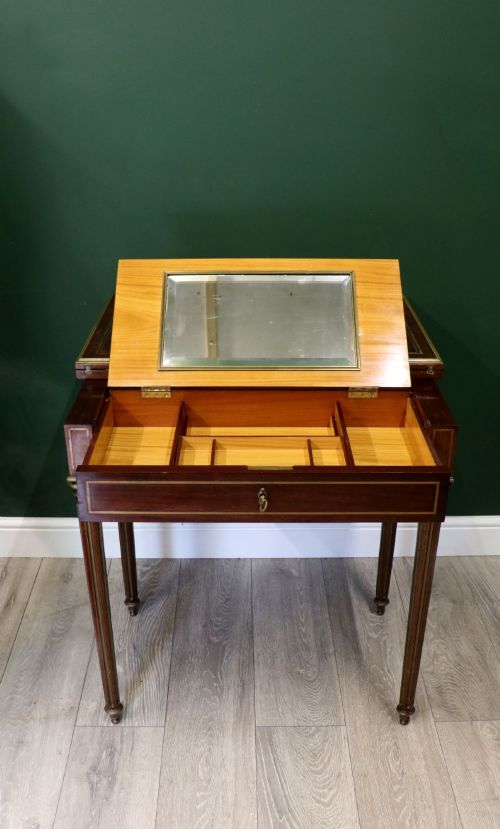
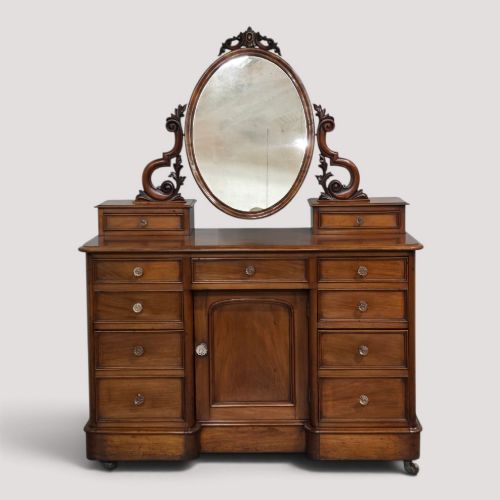
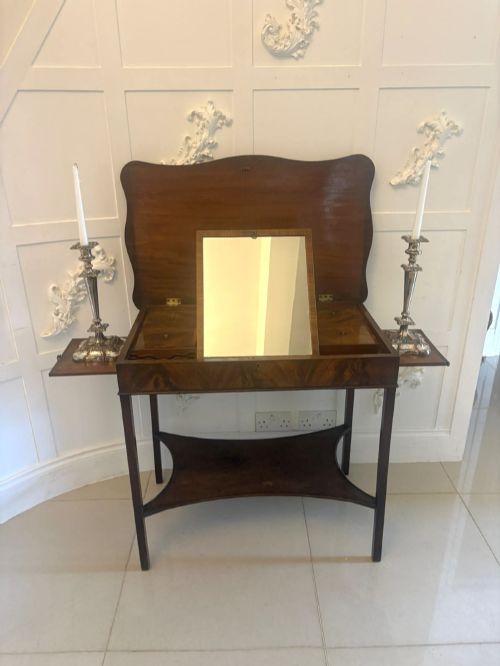
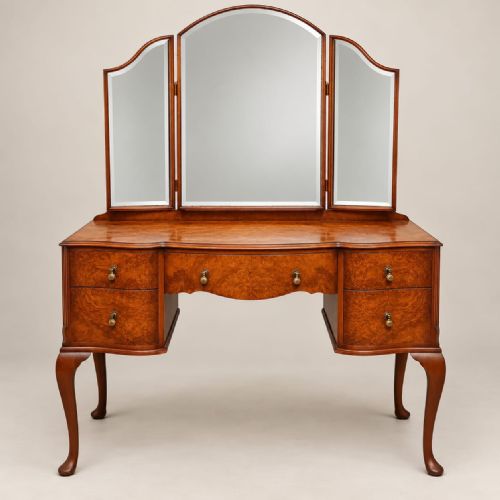
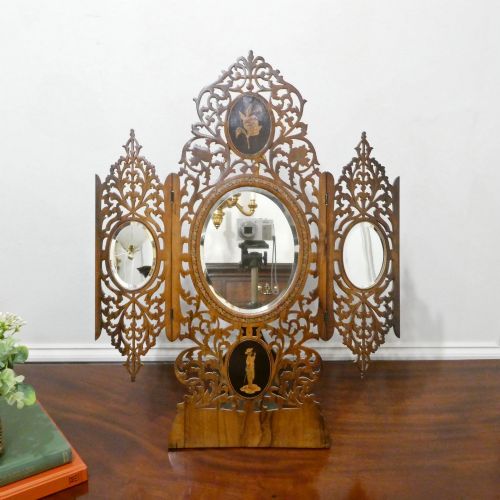
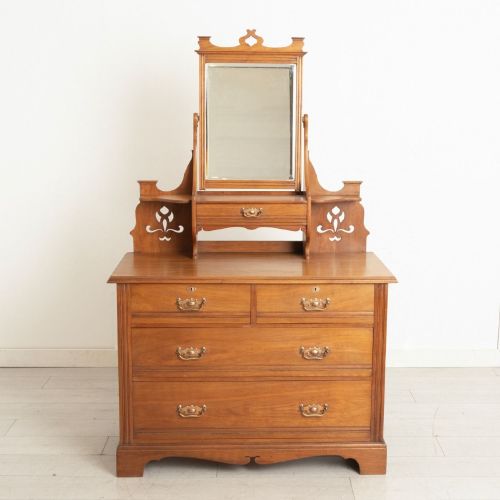
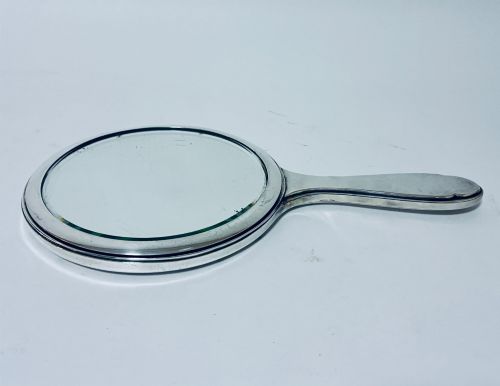
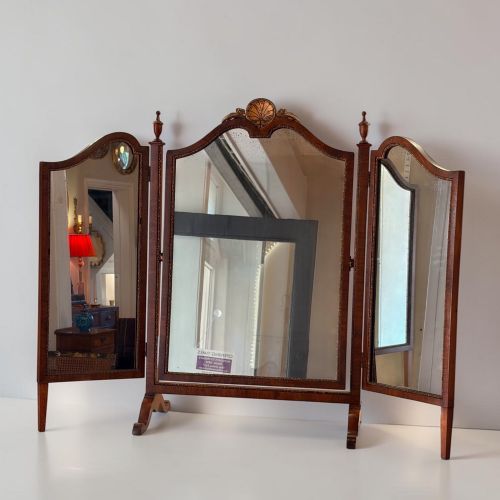
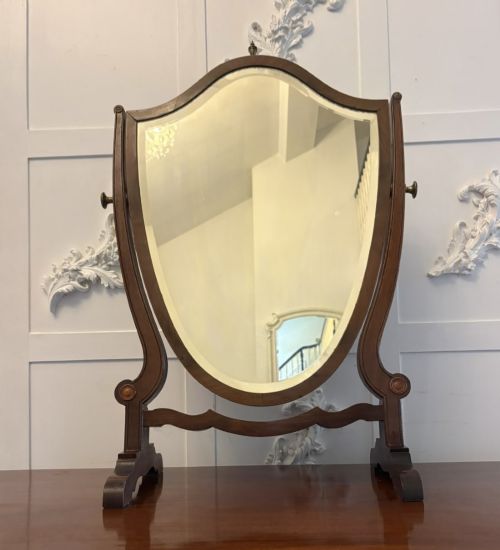
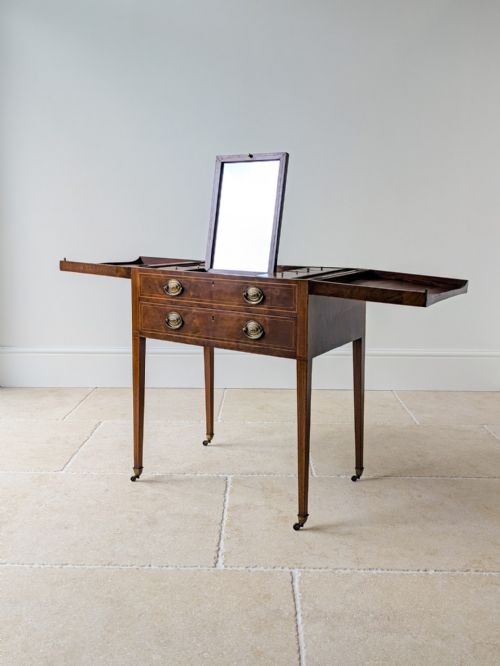
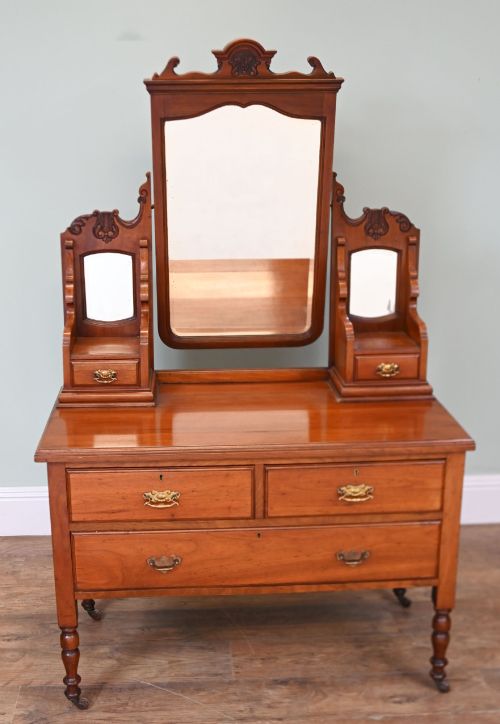
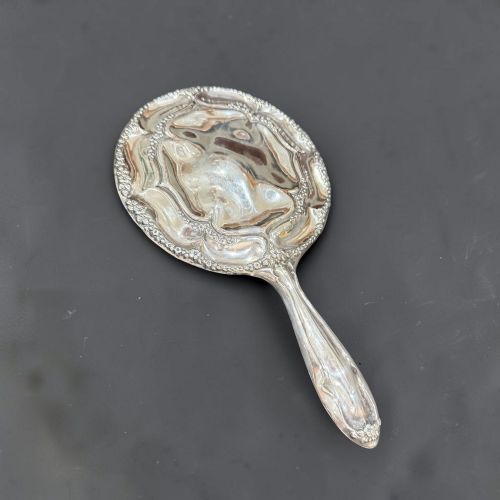
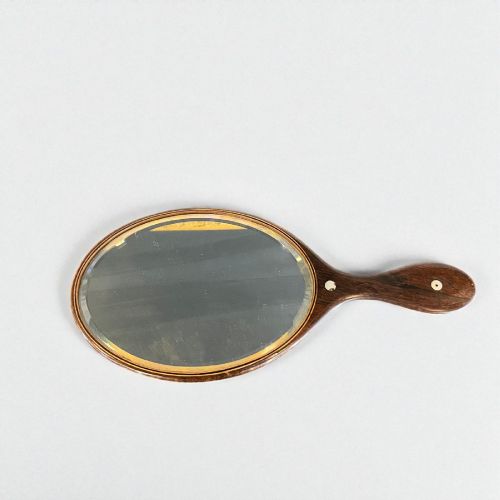
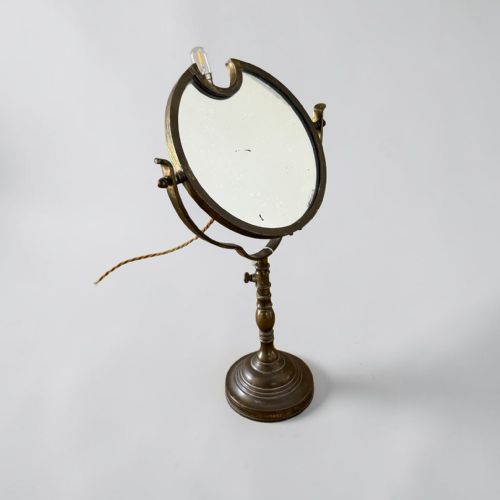
When you search for a mirrored vanity table, you encounter a range of forms spanning centuries of British and continental design, from compact table-top toilet mirrors to full pedestal dressing chests.
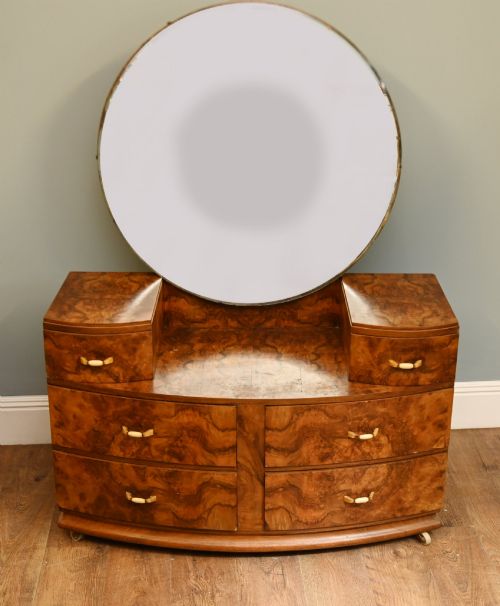
The most common examples on this page are mahogany and walnut pieces from the Georgian, Victorian, and Art Deco periods, encompassing both standalone swing mirrors and integrated dressing tables.
Pieces originating from workshops like Heal and Sons or Maples of London sit alongside simpler provincial timber furniture, offering variations in scale from diminutive toilet glasses to large triple-mirror bedroom suites.
Materials and construction
Cabinetmakers constructed these pieces primarily using solid and veneered timbers such as mahogany, walnut, oak, and satinwood, frequently selecting figured or burr veneers for the primary visual surfaces.
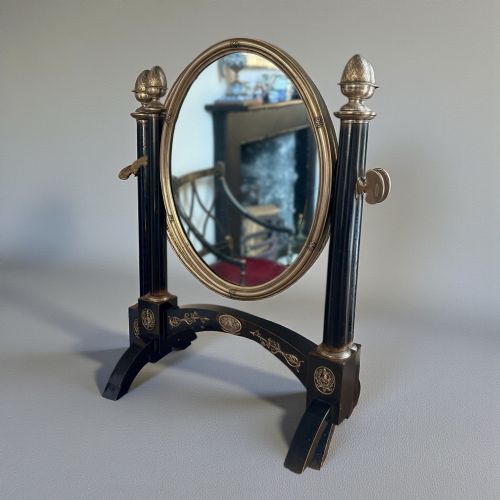
Detailing often involved brass or ormolu mounts, boxwood stringing, and hand-carved ornamentation, paired with mercury or silvered mirror glass held within pivoting or adjustable frames.
The documented periods stretch from the 17th century through Georgian, Victorian, and Edwardian eras into Art Deco designs of the 1930s.
Distinctions in quality
The standard of a mirrored vanity table rests on the depth of timber selection, such as richly figured Cuban mahogany or burr walnut, and the crispness of any hand-carved mouldings or brass mounts.
Superior construction is evident in the integrity of the drawer dovetails, the smooth operation of pivot mechanisms on swing mirrors, and the retention of original silvered glass rather than modern replacements.
Heal and Sons·Maples of London·WMF·P & MA Nicholson
The Mirrored Vanity Table Glossary
- Toilet mirror
- A smaller mirror designed to sit atop a chest of drawers or a dedicated dressing table, popular from the Georgian era onwards.
- Cheval mirror
- A full-length floor-standing mirror mounted in a frame that allows it to swing freely on vertical pivots.
- Orormolu
- Gilded bronze ornamentation applied to furniture, frequently seen on French Empire and revival pieces.
- Shield mirror
- A dressing glass shaped like an heraldic shield, commonly supported by upright scroll arms on a serpentine base.
Mirrored Vanity Table: Frequently Asked Questions
How do I date a mirrored vanity table?
Dating relies on observing timber choices, construction methods like dovetailing, and the bevel or silvering style of the glass plate itself. Earlier pieces often employ oak secondary woods and hand-beveled glass.
Comparing the specific hardware, such as brass swing-nuts or cast handles, against known period designs helps narrow the decade of manufacture.
Were these tables used in bedrooms?
These pieces served primarily in bedrooms, dressing rooms, and boudoirs as personal grooming stations for hair styling and applying cosmetics.
Smaller table-top versions sat upon existing chests, while larger pedestal units provided integrated drawer storage for personal effects.
What is the difference between a toilet mirror and a dressing table?
A toilet mirror is a portable tabletop glass on a small stand, whereas a dressing table is a larger, freestanding piece of furniture with an integrated surface and often fixed or triple mirrors.
Many examples combine the two by mounting a swing mirror directly onto a low bureau or pedestal base.
How do I care for antique mirror glass?
Antique mirror glass requires gentle cleaning with a soft, dry cloth to prevent moisture seeping behind the silvering layer. Avoid standard ammonia-based glass cleaners which can corrode the old backing.
Positioning the piece away from direct sunlight preserves both the timber finish and the delicate integrity of the antique glass.