

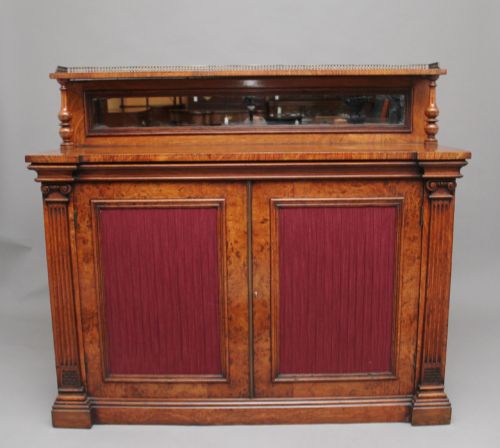


Mirrored Back Oak Sideboard
A mirrored back oak sideboard brings depth and reflective light to a room, uniting timber storage with integrated glass.
Mirrored Back Oak Sideboard
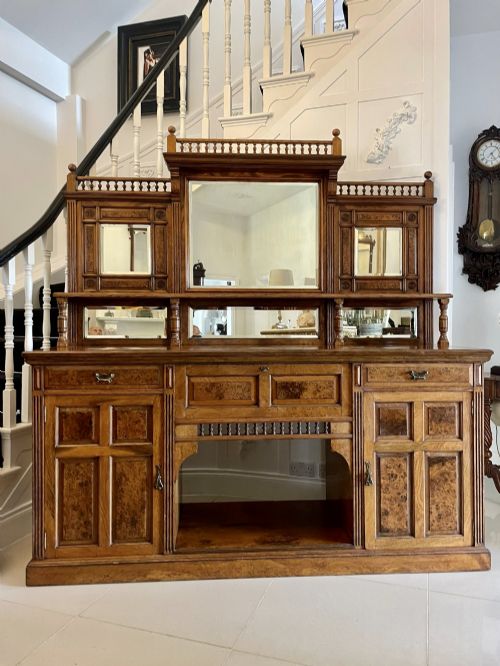
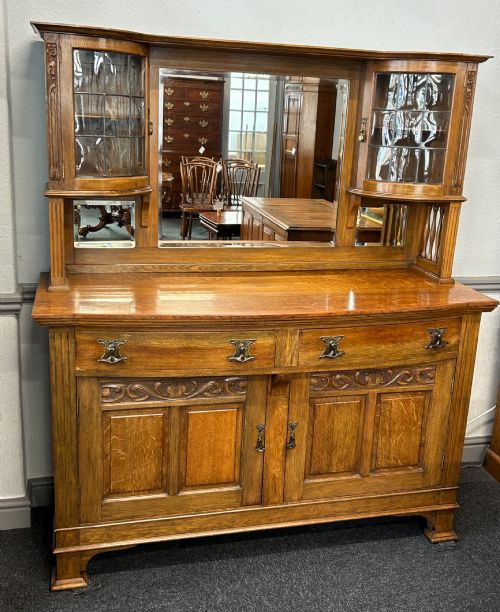
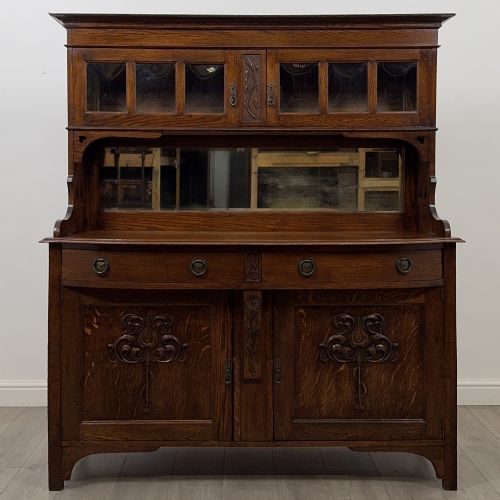
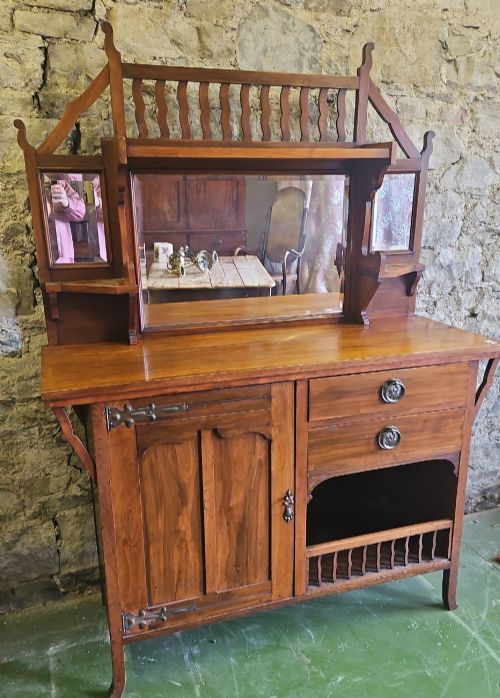
When you search for a mirrored back oak sideboard, you encounter substantial dining room and reception furniture designed primarily during the Victorian and Edwardian eras, alongside pieces from the 19th century and early 20th century. These items combine a lower cupboard and drawer base in oak or pollard oak with an upper superstructure housing a mirror plate.
The version you meet most often on this page is the Victorian or Edwardian carved oak example, frequently incorporating Arts and Crafts or Gothic Revival styling. They range from grand proportions with heavily carved motifs like the Green Man to lighter golden oak designs produced around 1910 and 1930.
How they were made
Cabinet makers utilised solid oak and pollard oak for the structural carcass and drawer fronts, often combining pine as a secondary timber for internal linings and panel backs. Carved ornamentation, geometric mouldings, and specimen wood inlays decorated the main body.
Mirror glass formed the upper back panel, held within timber frames alongside brass or copper hardware such as drop handles and hinges, while iron provided internal structural reinforcement for larger cabinets.
Listings span the Victorian and Edwardian periods, stretching from 1860 through to the 1930s, constructed primarily in oak, pollard oak, and glass.
What varies in quality
The degree of hand-carving and the selection of timber dictate the standing of a mirrored back oak sideboard, with figured pollard oak and detailed geometric or figural carving marking out superior workshops. Plain golden oak versions from later decades offer simpler domestic utility.
Construction methods also separate standard production from master cabinet making, evident in the choice of secondary timbers like pine and the integration of the mirror back superstructure into the lower sideboard base.
T Simpson and Son
The Mirrored Back Oak Sideboard Glossary
- Pollard oak
- Timber taken from trees that have been pollarded, producing tightly knotted and highly figured grain patterns. It was favoured for grand Victorian cabinet work.
- Mirror back
- An upright superstructure fitted with a mirror plate attached to the rear of a sideboard. It reflects light and displays decorative framing.
- Arts and Crafts
- A design movement prioritising traditional craftsmanship and simple forms over mass production. It appears frequently in Edwardian oak furniture.
- Gothic Revival
- An architectural and decorative style drawing on medieval ecclesiastical motifs. Pieces in this manner often display pointed arches and heavy tracery.
- Sideboard
- A long low piece of furniture used for storing dining utensils and serving food. It usually combines cupboards, drawers, and surface space.
Mirrored Back Oak Sideboard: Frequently Asked Questions
How do I clean the mirror glass?
Use a soft cloth with a mild vinegar solution applied to the cloth rather than sprayed directly onto the glass. This prevents moisture from seeping behind the silvering.
Take care not to let cleaning liquids touch the surrounding oak frame or any brass hardware, as moisture can damage the antique timber finish.
Are these sideboards heavy?
These pieces are constructed from solid oak and incorporate large mirror plates, making them exceptionally heavy and robust. Moving them generally requires at least two people.
The upper mirror back portion sometimes detaches from the lower sideboard base, which assists with transport and placement in a room.
What rooms suit these sideboards?
Dining rooms and large hallways provide the traditional setting for such substantial timber furniture. The reflective glass helps brighten darker entrance spaces.
Ensure the wall space and ceiling height can accommodate the grand proportions of a mirrored back sideboard before placing it in a domestic interior.
How do I distinguish Victorian from Edwardian pieces?
Victorian examples often display heavier carving, darker finishes, and elaborate Gothic Revival or Renaissance Revival details. Pollard oak is frequently utilised in this period.
Edwardian pieces tend toward lighter golden oak tones and cleaner Arts and Crafts lines, reflecting a shift towards brighter domestic interiors around 1900 to 1910.