
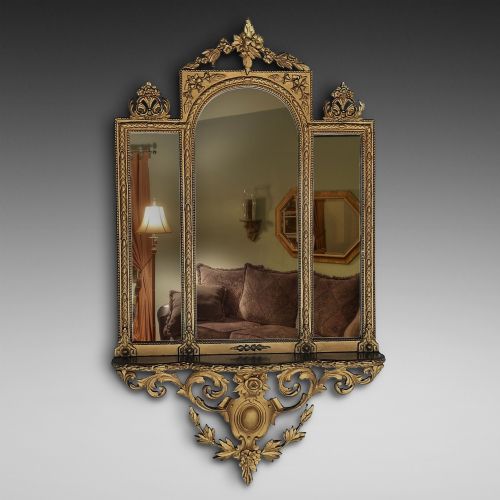
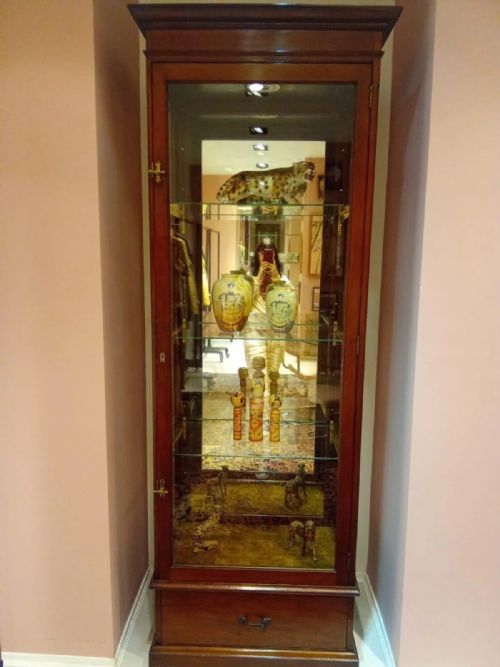
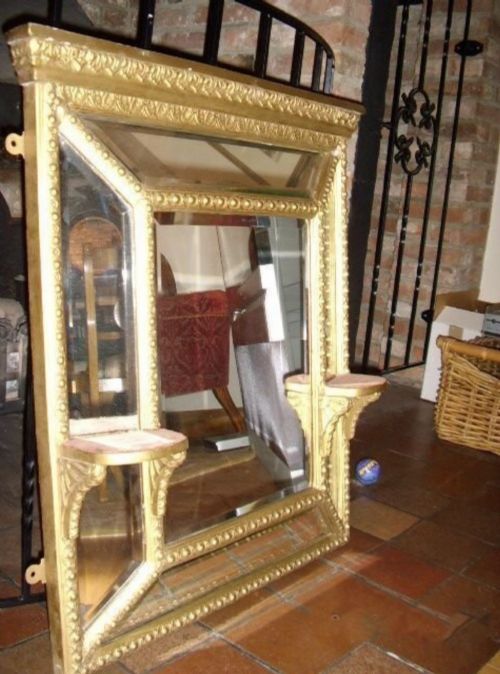

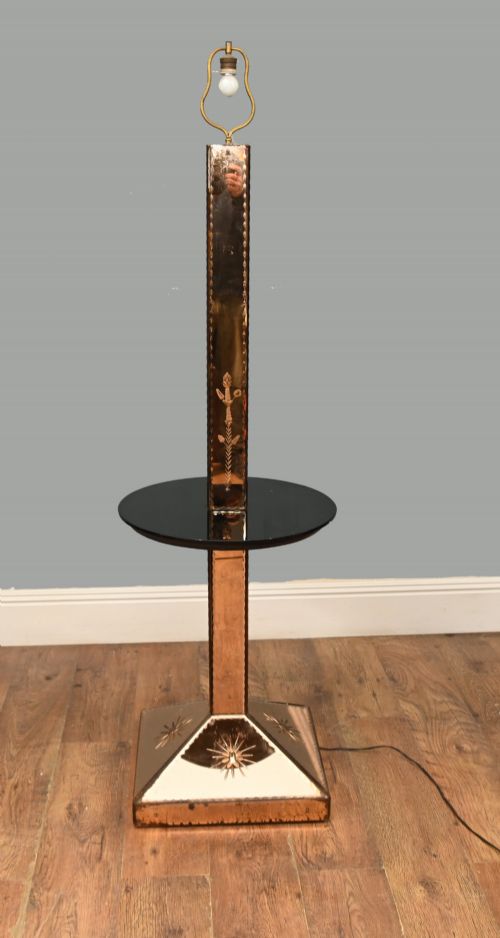
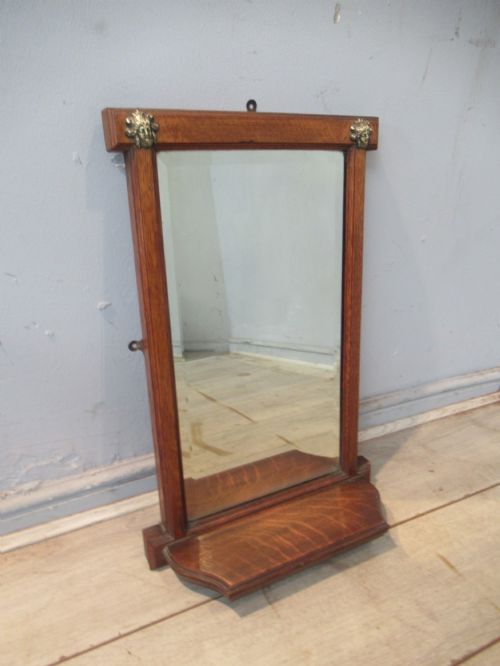


Mirror with Glass Shelf
A mirror with glass shelf combines reflective glass with a handy ledge for small items, bridging the gap between decoration and daily utility.
Mirror with Glass Shelf
A mirror with glass shelf serves both practical and decorative purposes in domestic spaces, combining a reflective surface with a functional ledge. Buyers seeking this form will encounter pieces spanning the Victorian and Edwardian eras, alongside various nineteenth-century examples.
The selection includes wall mirrors, overmantel mirrors, and hall mirrors that incorporate shelves or brackets. These pieces range from compact hallway accessories to large architectural overmantel designs intended for principal rooms.
Origin and style variations include English and Italian pieces, drawing on Victorian Rococo Revival, Empire, and Arts and Crafts aesthetics. Walnut, mahogany, oak, and giltwood form the structural frameworks supporting the glass components.
Materials and construction methods
Makers utilised traditional hardwoods such as mahogany, walnut, oak, and rosewood to build sturdy frames capable of supporting both heavy mirror plates and projecting shelves. Giltwood and gesso found application on more ornate Victorian overmantel and pier mirrors.
Glass technology of the period produced bevelled edges and flat mirror plates, complemented by separate glass shelves or wooden brackets designed to hold display items. Velvet coverings and brass elements also appear as decorative accents across the various styles.
Distinguishing quality in period mirrors
Quality reveals itself in the depth of the carving, the precision of the giltwood or gesso application, and the structural integrity of the frame joints. Superior pieces demonstrate careful timber selection and refined proportion between the mirror plate and the attached shelf.
The clarity and finish of the mirror glass, particularly where bevelling is present, separate standard workshop output from finer examples. Intricate detailing in Victorian Rococo Revival or Empire pieces indicates a higher level of artisan skill.
The Mirror with Glass Shelf Glossary
- Overmantel mirror
- A large wall mirror specifically designed to hang above a fireplace mantelpiece. These often incorporate brackets or shelves for small ornaments.
- Giltwood
- Timber carved and coated with gold leaf or a gold-coloured finish. This material is common in ornate nineteenth-century frames.
- Pier glass
- A tall mirror designed to hang on the wall space between windows. They frequently feature small consoles or shelves beneath the glass.
- Bevelled glass
- Mirror glass with angled edges cut and polished to a thinner edge. This technique catches the light and adds depth to the reflection.
- Gesso
- A plaster-like mixture applied to wood frames as a base for gilding or painting. It allows for intricate moulded decorative details.
Mirror with Glass Shelf: Frequently Asked Questions
Where should I hang a mirror with glass shelf?
These mirrors suit entrance hallways, reception rooms, and living spaces where a small ledge proves useful for keys or small decorative objects.
Ensure the wall construction safely supports the combined weight of the timber frame, mirror plate, and projecting shelf.
How do I date an antique mirror?
Dating relies on examining the timber species, construction techniques, framing styles, and the characteristics of the glass plate itself.
Victorian and Edwardian pieces show distinct aesthetic choices, from heavy Rococo Revival carving to simpler Arts and Crafts designs.
Can the glass shelf hold heavy items?
Most period shelves are designed for light decorative objects, small trinkets, or hallway essentials rather than heavy loads.
Check the strength of the supporting brackets and fixings before placing any items on the glass.
What is an overmantel mirror?
An overmantel mirror is a wide or tall looking glass created to sit directly above a fireplace mantel.
Many examples from the nineteenth century include integrated shelves or gilded brackets for display purposes.