





Miniature Wood Box
A miniature wood box concentrates the joinery and presence of full-scale furniture into a small compass, prized by collectors for intimate desk or table display.
Miniature Wood Box
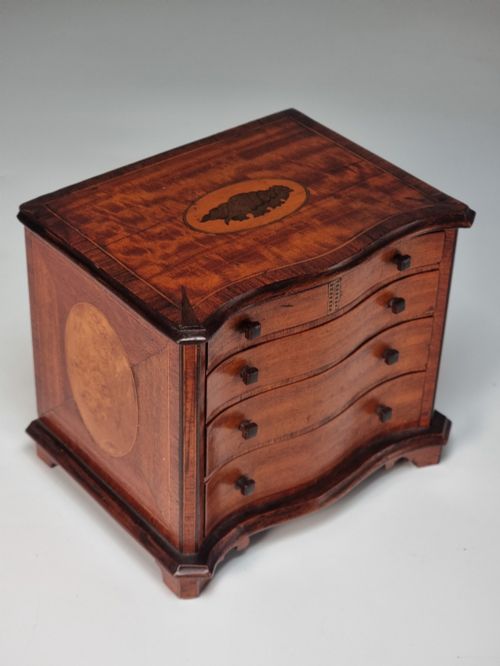
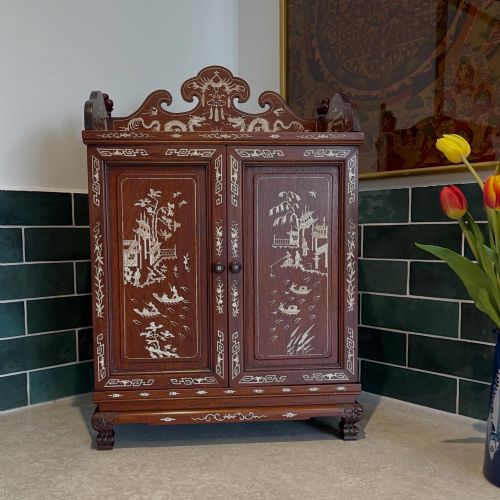
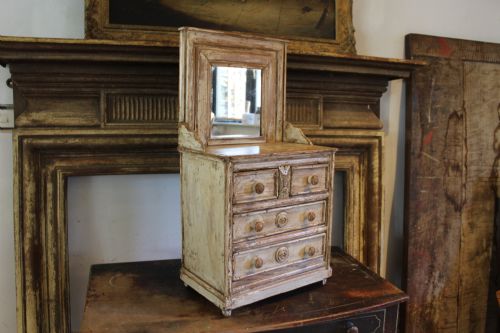
A miniature wood box encompasses small cabinets, apprentice pieces, and drawers spanning the eighteenth through the early twentieth centuries. These objects take the form of miniature chests of drawers, table cabinets, and coffer bach pieces constructed by regional and international makers.
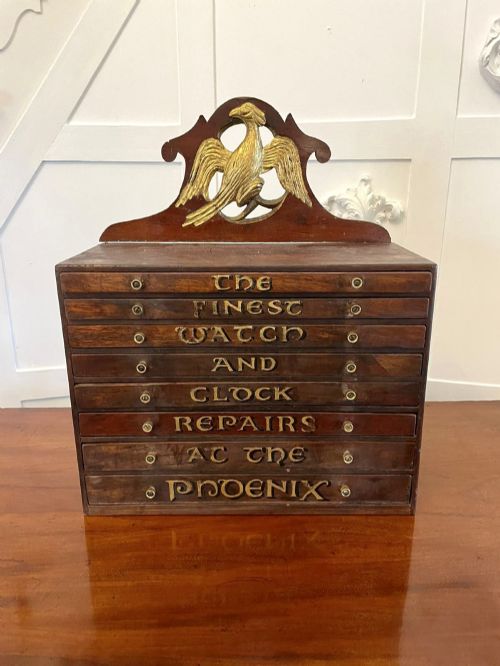
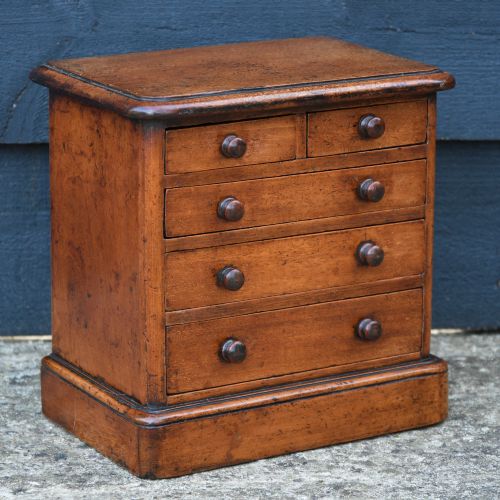
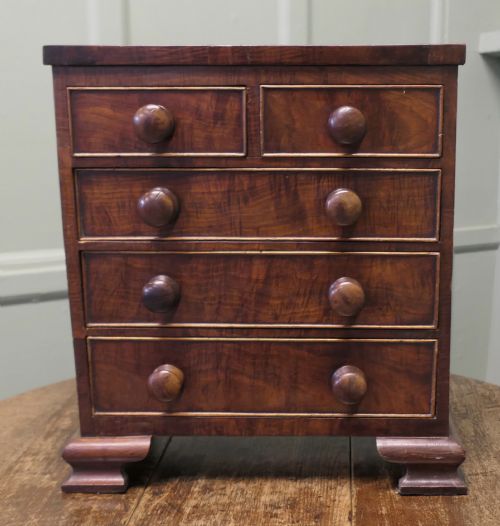
The most frequent examples encountered on this page are mahogany miniature chests of drawers from the Victorian and Georgian periods. Alongside these, buyers find specialised storage forms including jewellery boxes, tea caddies, and collectors cabinets fitted with numerous small drawers.
Materials and construction methods
Cabinet makers utilised dense hardwoods such as mahogany, walnut, oak, and fruitwood, often selecting veneers like satinwood, amboyna, and kingwood for decorative surfaces. Secondary woods and lesser timbers appear in vernacular pieces, while brass hardware, mother of pearl inlay, and bone accents provide functional closures and detailing.
Joinery techniques mirror those of domestic furniture scaled down for miniature work, employing dovetail joints for drawer construction and precise mortise and tenon frames. Surface finishes rely on traditional polish and wax applications that develop a deep patina across centuries of handling.
Miniature Wood Box Retail Price Guide 2026
Typical asking prices for miniature wood box among the pieces listed under this phrase on Sellingantiques today, from the lower quarter to the upper quarter. They describe what is for sale here now, not the wider market.
Listings feature eighteenth-century Georgian coffer bach pieces alongside nineteenth-century Victorian apothecary and microscope slide cabinets.
Distinctions in construction and finish
The division between standard workshop production and superior work rests on the precision of the dovetailing and the choice of timber figure. Cabinets possessing symmetrical veneer matching, intact original brasses, and smooth drawer action demonstrate higher original manufacture.
Condition and originality separate exceptional pieces from altered examples, particularly where interior velvet linings, locks, or keys survive intact. Pieces retaining their deep natural patina without excessive modern restoration command greater interest from serious collectors.
A. F. Lloyd
The Miniature Wood Box Glossary
- Apprentice piece
- A small-scale item demonstrated to a guild to prove a woodworker's mastery before attaining full master status. These objects display the exact joinery methods used on large furniture.
- Coffer bach
- A small Welsh oak chest fitted with drawers beneath a hinged lid, traditionally used for storing precious items. The term translates directly from Welsh as little coffer.
- Treen
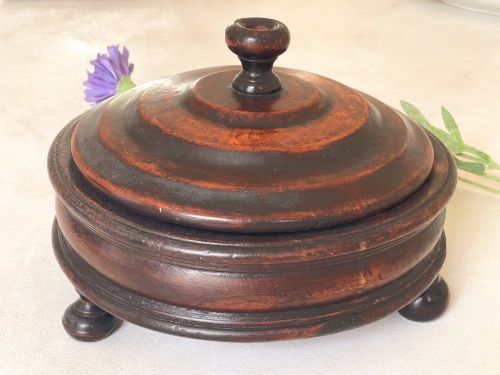
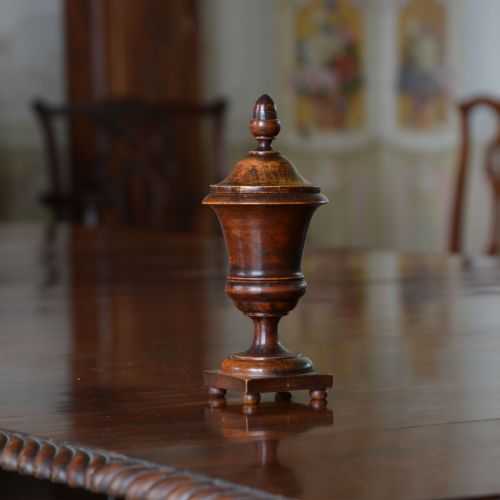
- Small handmade wooden domestic objects fashioned by turners and woodworkers. This category includes items such as snuff boxes, campana urns, and small treen shoes.
- Marquetry
- The art of applying decorative veneer pieces to a structure to form geometric or floral patterns. Craftsmen utilised contrasting woods like ebony and kingwood to achieve rich tonal variation.
- Serpentine
- A furniture front characterised by a central convex curve flanked by two concave curves. This undulating shape requires exceptional woodworking skill in miniature dimensions.
Miniature Wood Box: Frequently Asked Questions
What were miniature wood boxes used for?
These small vessels served varied domestic purposes, holding jewellery, sewing supplies, snuff, or personal documents on tables and desks.
Collectors also utilised specific multi-drawer iterations for organising natural history specimens, microscope slides, or watch repair components.
How do I date a miniature chest?
Dating relies on examining the secondary timbers, the style of the drawer dovetails, and the overall aesthetic of the period hardware.
Georgian examples tend to show hand-cut dovetails and solid mahogany construction, whereas Victorian pieces frequently employ machine-sawn elements and varied decorative veneers.
Are apprentice pieces genuine?
Many items traditionally called apprentice pieces represent high-quality travelling salesman samples or independent small-scale cabinet making rather than formal guild tests.
Regardless of the exact workshop origin, these miniature chests reflect the serious construction standards of full-sized domestic furniture.
How should I care for antique wood?
Maintain stable room humidity away from direct sunlight and heat sources to prevent timber shrinkage and veneer lifting across the miniature surfaces.
Apply a microcrystalline wax sparingly when the wood appears dry, buffing gently with a soft cloth to preserve the historic patina.